President Vladimir Putin has taken the world community by surprise with his sudden order for withdrawing Russian forces from Syria even though the stated objective of fighting terrorism and the Islamic State is far from accomplished.
The withdrawal of Russian soldiers and jets began on Tuesday though no date was set by the Kremlin for completing the process. Putin’s announcement coincided with the resumption of peace talks in Geneva against the backdrop of a fragile ceasefire since February 27.
Some experts have suggested that Putin’s decision was driven by fears that Russia could get dragged into a prolonged conflict at a time when the country’s economy has been hit hard by the fall in oil prices. Casualties in Syria too could have swung public opinion against Putin.
Others, however, believe Putin’s Syria gambit had only one purpose – to restore Russia’s image in the eyes of the world community after the country’s disastrous intervention in eastern Ukraine, which resulted in Moscow’s isolation and tough sanctions from the US and the European Union.
Even a close ally such as India was hard pressed to defend the line taken by Russia regarding the annexation of Crimea.
{{/usCountry}}Even a close ally such as India was hard pressed to defend the line taken by Russia regarding the annexation of Crimea.
{{/usCountry}}If indeed Putin’s objective was to make the world community look at Russia again as a player, he appears to have succeeded.
“Russia’s intervention has also enabled Mr Putin to show off its military might and forced the United States to treat it as an equal in securing stability in Syria,” the editorial board of The New York Times said in an opinion piece on Tuesday.
In his announcement on Monday, Putin said Russia would pull out the “main part” of its forces from Syria because the situation on the ground had changed. “I consider the mission set for the defence ministry and the armed forces on the whole has been accomplished,” he said.
Also Read | Obama, Putin discuss Russia’s planned military drawdown from Syria
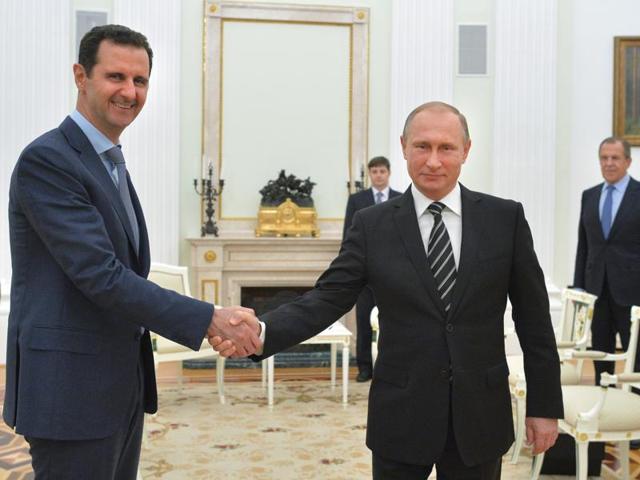
Russia launched an air campaign to bolster the regime of its close ally, Syrian President Bashar al-Assad, in September. As recently as January, reports suggested that Russian troops could stay in Syria “indefinitely” under an agreement signed by the two countries.
The Russian air strikes helped Syrian forces retake territory from rebels and a statement from Assad’s office said he had agreed to the withdrawal of Russian troops.
Trotting out figures to highlight Russia’s successes in Syria, defence minister Sergei Shoigu said his country had “managed to cease the supply of resources to terrorists and destroy more than 2,000 militants”. Syrian troops had liberated more than 400 settlements and more than 10,000 km of territory with the support of the Russian Air Force, which conducted more than 9,000 sorties, he added.
But clearly, the five-year-old conflict in Syria is far from over. The IS remains a potent force and Russia is hedging its bets by retaining a presence at the airbase in Hmeymim and the naval base in Tartus.