August 12, 2026, could become one of the most interesting and searched dates for both skywatchers and astrology followers this year. A rare convergence will take place on August 12, with a total solar eclipse, the New Moon, and the peak of the Perseid meteor shower, all occurring during the same period, alongside a six-planet lineup.
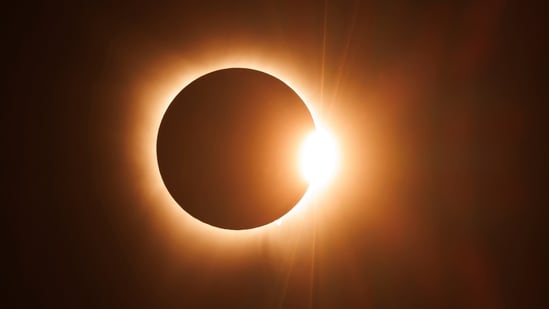
For astrology followers, the date carries another layer of meaning. The eclipse falls in Leo and comes soon after the lunar nodes move into the Leo-Aquarius axis. Astrologers view this as a period connected with identity, self-expression, personal growth and letting go of old patterns.
It is important to note that astronomy and astrology explain these events differently. The celestial events are scientifically observed, while their astrological meanings come from astrological traditions.
Also Read Total solar eclipse 2026: Meaning, date, timings and astrological significance
What is a planetary parade?
A planetary parade is a popular term for a period when several planets appear to line up across the sky from Earth's viewpoint.
Around August 12, Mercury, Mars, Jupiter, Saturn, Uranus and Neptune are expected to form a broad planetary lineup. However, not every planet will be easy to see without equipment. Uranus and Neptune are particularly difficult to spot with the naked eye.
{{/usCountry}}Around August 12, Mercury, Mars, Jupiter, Saturn, Uranus and Neptune are expected to form a broad planetary lineup. However, not every planet will be easy to see without equipment. Uranus and Neptune are particularly difficult to spot with the naked eye.
{{/usCountry}}The lineup is best treated as a separate skywatching event occurring around the eclipse period, rather than as part of the eclipse itself.
When is the total solar eclipse?
The total solar eclipse will take place on August 12, 2026. NASA says the path of totality will cross northern Russia, Greenland, Iceland, the Atlantic Ocean, Spain and a small part of Portugal. Parts of the northern US, including areas from Alaska to North Carolina, will see a partial eclipse instead.
The eclipse happens during a New Moon because the Moon moves between Earth and the Sun. The New Moon will also create darker skies for the Perseid meteor shower later that night.
Also Read Total Solar Eclipse August 12 2026: Here's why it's a rare convergence in astrology
Why is the August 12 eclipse astrologically significant?
In Western astrology, this year's total solar eclipse is in Leo. Astrologers associate Leo with confidence, creativity, visibility and self-expression.
The eclipse also comes as the lunar nodes shift into Leo and Aquarius, making the event especially interesting for astrology followers who track nodal cycles. Some astrologers interpret the South Node connection with themes of release, asking you to reconsider identities, habits or approval-seeking patterns that no longer fit.
Rather than treating the eclipse as a guarantee of sudden change, you can use its symbolism as a prompt for reflection. Ask yourself where you have been living according to other people's expectations and where you want to make more authentic choices.
How could this rare convergence affect you?
The astronomical events themselves do not have a scientifically established effect on your personality, relationships or future. Their significance in astrology comes from symbolic interpretation.
If you follow astrology, August 12 can therefore serve as a useful checkpoint. You might journal about what you want to leave behind, review a goal that no longer feels right or think about how you want to show up in the next chapter of your life.
Meanwhile, if you are interested in astronomy, the date offers plenty to watch. You can follow the eclipse, look for the planetary parade before sunrise and head outside after dark for the Perseids.