Interview: Priscilla Morris - “My novel is an attempt to understand Bosnian war”
The author’s debut novel, Black Butterflies, shortlisted for the Women’s Prize for Fiction 2023, explores the Siege of Sarajevo through the story of an artist
What inspired you to write a story set in the backdrop of the Bosnian war and specifically focused on the experiences of the city of Sarajevo?
My mother comes from Sarajevo, Bosnia, in the former Yugoslavia, and my father is English. I grew up in London. When war broke out, my grandparents were trapped in Sarajevo without a phone connection, electricity, water, or heating, and with very little food. My family watched helplessly as the war unfolded on the news each night. Many years later, I started writing Black Butterflies to form an understanding of the brutal war that tore my mother’s country apart and turned many of my relatives into refugees.
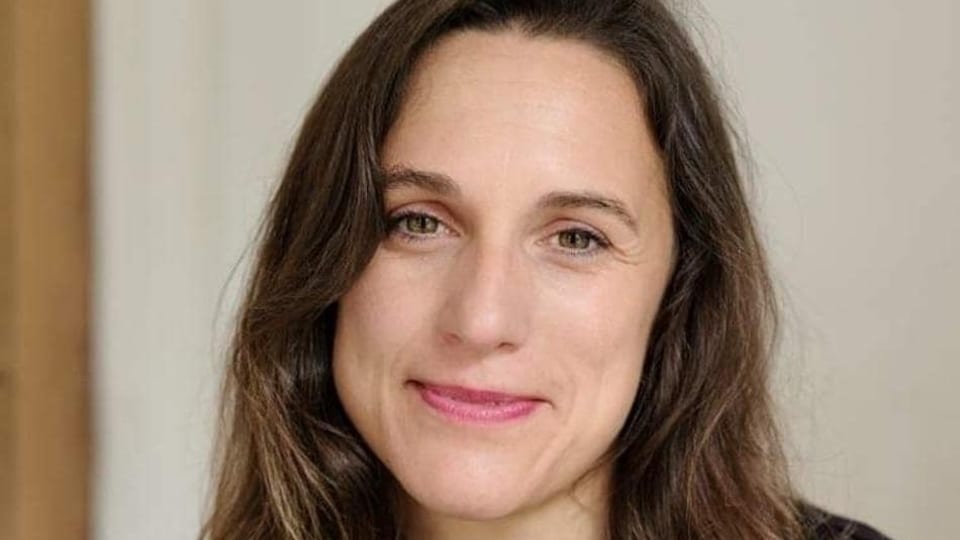
Priscilla Morris (Courtesy the author)
How did your family’s experiences during the war shape your understanding of the conflict and influence the narrative of the book?
Fictionalised and entwined together, two family stories provide the narrative backbone of Black Butterflies and have shaped how I see the war and its consequences. The first — and the catalyst for the novel — is the story of my artist great-uncle, who was a respected landscape painter from Sarajevo. Aged 68 at the time of the war, he lost his studio and life’s work in a catastrophic fire that burnt down the National Library. He escaped with his wife to England and, after a long period of recovery, reconnected with nature and started to paint again. I was inspired by the way in which art helped him overcome the dislocation of war.
Zora, the protagonist of Black Butterflies, is also an artist. The second story was my father’s rescue of my grandparents. After 10 months of war and very little contact from his parents-in-law, he bought a flak jacket and travelled to Sarajevo, where he spent a very challenging three weeks trying to find a way out for them. He succeeded and brought them back to London. They were gaunt and traumatised, jumping each time a door slammed. Sadly, they struggled to adapt to a new life at an old age, having left all their friends and belongings behind and not being able to speak the language.
Can you elaborate on the research process you undertook to accurately depict Sarajevo and its cultural heritage?
Accuracy was hugely important for me. I went to live in Sarajevo for five months in 2010 to get to know the geography of the city and to talk to people who had lived through the siege. It was their stories that informed my understanding of the day-to-day texture of life under siege. I also drew information from numerous histories, political books, novels, ethnographies, journalist’s reports, documentaries, films, diaries and letter collections.
The book captures the emotional turmoil and resilience of the characters amidst the destruction. How did you approach depicting the psychological impact of war on individuals like Zora?
The book is written in the present tense, which makes the unfolding situation immediate and unnerving with no inkling of what is around the corner. We are kept very close to Zora’s thoughts and emotions, experiencing along with her how normal everyday life turns abruptly side down and slides into war. The excellent ethnography Sarajevo Under Siege by Ivana Maček (2009) describes the cyclical process of shock followed by normalisation that people go through when experiencing long, drawn out, life-threatening situations, which is exactly what a siege is. I wanted to show how Zora oscillates between denial, shock, anger, despair and normalisation of the situation and how, later on in the book, her physical and mental state deteriorate, although she continues to call on reserves of creativity, strength and resilience. It’s an emotional ride.
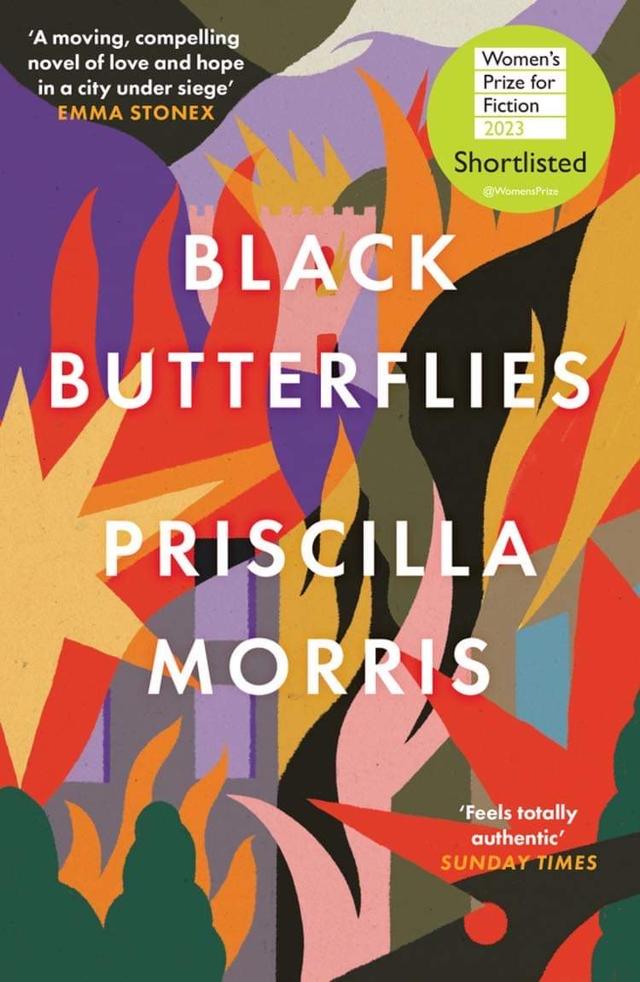
Exploring the power of art as an antidote to the degradation and dehumanisation of war. (Duckworth)
Art plays a significant role in the story, both as a means of expression for Zora and as a source of solace. How did you explore the transformative power of art during times of conflict?
I was interested in exploring the power of art as a form of antidote to the degradation and dehumanisation of war. Zora’s art — and also Mirsad’s storytelling — are shown to connect, uplift, and confer strength and dignity. Zora’s response to great personal tragedy is to create prolifically and this is her way of processing and coping with the war; of making meaning out of the chaos. She continues to give art lessons and her students see her as a heroic figure, who refuses to be worn down. Mirsad tells Bosnian folktales to gatherings of neighbours huddled around the stove in the dark, freezing midwinter.
Fascinatingly, creativity really did flourish in Sarajevo under siege. During the second year, artistic activity burgeoned — plays and musicals were put on in shelled theatres and candle-lit art exhibitions were organised. I talked to two artists and one actor, who all spoke of the need they felt to create and perform. Exhausted, malnourished, terrified, living on the lowest level of human existence, people still very much wanted and needed to engage with art.
The book portrays the resilience and strength of the community in Sarajevo. How did you approach capturing the spirit and camaraderie of the people in the midst of adversity?
During the war, old traditions of neighbourliness were revived. People started visiting each other for coffee (or, more likely, chicory-flavoured water) and helped one another fetch bread and water. My grandparents told me how they had one stove between two floors in their apartment block and how they would all gather round it to cook their single daily meal. I wove similar experiences into the book, showing how Zora forges close friendships with her neighbours. They come to rely on each other and gather together in Zora’s flat to keep warm, share food and tell stories during the freezing winter.
Zora grapples with the question of leaving versus staying. How did you approach exploring this internal conflict and the broader theme of survival during war?
Zora loves Sarajevo deeply, so much so that she turns a blind eye to the danger that is surrounding her until it is too late. Her internal dilemma of whether to stay or go is projected onto her surroundings and is played out in phone calls with her family and discussions with her neighbours. Walking through the streets of Sarajevo, she sees the sun glinting on the river, the handsome Hapsburg houses, the old men playing giant chess outside the Serbian Orthodox church, the roses blooming in mosque gardens and the greening mountains — and we feel her visceral love of her home town. She throws herself into her art, obsessively painting a beautiful Ottoman bridge that she can no longer walk to because it’s now in Serb territory. Meanwhile, her husband and daughter, safely in England, beg her to leave. At one point, a full blockade is established and the choice of staying or going is taken away. Snipers start shooting at people as they cross the street, buildings are shelled, the food, power and water supplies are cut. The question then becomes one of survival.
Were there any specific challenges you faced while writing this book, particularly when dealing with the sensitive subject matter of war and its aftermath?
Yes, several. First, as this concerns my family, it felt as if I was writing very close to the bone, as if I were prodding something hot and dangerous. I was anxious about getting things wrong, misrepresentation or even somehow making things worse, so I did a lot of research and asked friends in Bosnia to read and reread my manuscript. Second, the war happened 30 years ago and the trauma and divides are still very raw and present in Bosnia today. In many ways the interpretation of events has not settled. The people I spoke to, and sometimes the history books I read, often gave conflicting accounts and so even building a timeline of the siege was a challenging task. Third, the subject matter was, of course, harrowing and I was depressed for a year when I came back from Sarajevo. It took me a long time to digest all I’d heard, and for the characters of Zora, Mirsad, Samir, Una and Lenkato emerge from deep inside me and take me by the hand into the siege.
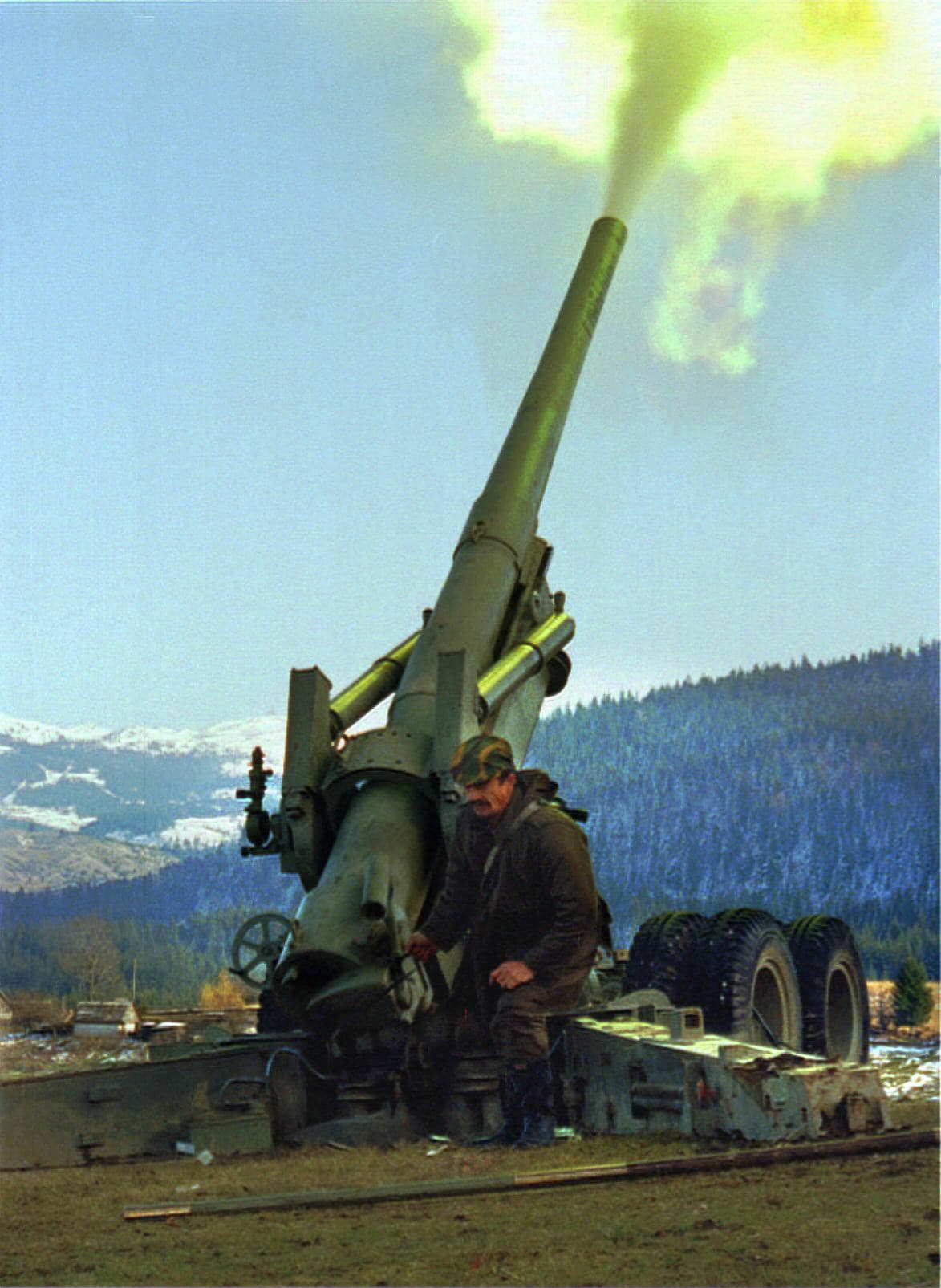
Bosnian Serb soldiers fire a heavy 155mm cannon during fighting with Muslim-Croat forces near the central Bosnian town of Travnik on 23 November, 1992. (Ranko Cukovic / Reuters)
The novel offers a glimpse into the multicultural nature of Sarajevo prior to the conflict. Why was it important to highlight this aspect of the city’s identity?
This was one of the main reasons I wanted to write Black Butterflies. Sarajevo used to be famed for its traditions of multi-cultural tolerance, warmth and hospitality, where Muslims and Christians lived peacefully side by side, and where one in three marriages were mixed. This was the Sarajevo I knew and loved, my mother’s family being a mix of Bosnian Serbs (Orthodox), Bosnian Muslims and Slovenes (Catholic) — but it was one that started to disappear during the war. I wanted to show how quickly things can fall apart if nationalistic voices are listened to.
There is no explanation for or justification of Zora’s relationship despite her marital status. Was there any real-life inspiration for this portrayal?
Zora, at the point you’re talking about, had given up all hope of ever seeing her family again. She was living day to day in survival mode. Several of the people I spoke to mentioned the proliferation of affairs during the war, both because spouses were often separated from each other and because of the need for human connection during such an extreme time. You were thankful at the end of each day if you were still alive.
What are some of the lasting effects of the Bosnian war on the people and the social fabric of Sarajevo?
PTSD, depression, economic instability, increased divides and suspicion between the ethno-nationalities and a re-emergence of religion. But I’m happy to say that the Sarajevan spirit of tolerance, hospitality, resilience, warmth and laughter — Sarajevans laugh a lot — has also survived.
The book highlights the destruction of cultural heritage, such as the burning of the library. Can you discuss the significance of preserving cultural heritage in times of conflict and the role it plays in shaping collective identity?
Cultural heritage was intentionally targeted and destroyed as part of the ethnic cleansing campaigns. Wiping out buildings and structures that have come to be part of one group’s identity is one way of trying to weaken and eradicate all traces of that group. In Bosnia and Herzegovina, evidence of Ottoman culture was often targeted: famous mosques and the beautiful Old Bridge at Mostar were decimated. The National and University Library in Sarajevo was built by the Habsburgs in a pseudo-Moorish style. When it was destroyed, 1.5 million books in all languages went up in flames and it quickly became a symbol of Sarajevo under siege. It was seen as an act of “memoricide” — an attempt to erase the memory of pluralist Sarajevo. It’s absolutely crucial to preserve and rebuild such cultural heritage to maintain collective identity.
What are you working on next?
A novel about a 49-year-old Italian teacher living in London. She feels voiceless and near invisible and goes through a late blooming. More than that, I won’t say! But I’m loving working on something new.
Shireen Quadri is the editor of The Punch Magazine Anthology of New Writing: Select Short Stories by Women Writers.

 E-Paper