Of status, desire and agency
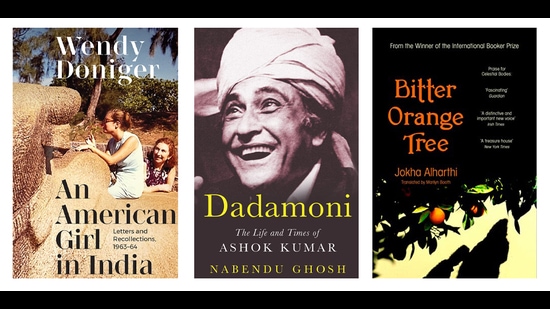
Zuhur, an Omani student at a British university, is caught between the past and the present. As she attempts to form friendships and assimilate in Britain, she can’t help but ruminate on the relationships that have been central to her life. Most prominent is her strong emotional bond with Bint Amir, a woman she always thought of as her grandmother, who passed away just after Zuhur left the Arabian Peninsula.
As the historical narrative of Bint Amir’s challenged circumstances unfurls in captivating fragments, so too does Zuhur’s isolated and unfulfilled present, one narrative segueing into another as time slips, and dreams mingle with memories.
The eagerly awaited new novel by the winner of the Man Booker International Prize, Bitter Orange Tree is a profound exploration of social status, wealth, desire, and female agency. It presents a mosaic portrait of one young woman’s attempt to understand the roots she has grown from, and to envisage an adulthood in which her own power and happiness might find the freedom necessary to bear fruit and flourish.*
Letters and recollections
Twenty-two-year-old Wendy Doniger arrived in Calcutta in August 1963, on a scholarship to study Sanskrit and Bengali. It was her first visit to the country. Over the coming year — a lot of it spent in Tagore’s Shantiniketan — she would fall completely in love with the place she had till then known only through books.
The India she describes in her letters back home to her parents is young, like her, still finding its feet, and learning to come to terms with the violence of Partition. But it is also a mature civilization which allows Vishnu to be depicted on the walls in a temple to Shiva; a culture of contradictions where extreme eroticism is tied to extreme chastity; and a land of the absurd where sociable station masters don’t let train schedules come in the way of hospitality. The country comes alive though her vivid prose, introspective and yet playful, and her excitement is on full display whether she is telling of the paradoxes of Indian life, the picturesque countryside, the peculiarities of Indian languages, or simply the mechanics of a temple ritual that she doesn’t understand. And amid her studies she manages to travel, north to the Mughal forts and south to the ancient temples, and make new friends — the feisty Chanchal from Lahore and the affable Mishtuni, as well as some very famous ones — including Jamini Roy and Ali Akbar Khan.
{{/usCountry}}The India she describes in her letters back home to her parents is young, like her, still finding its feet, and learning to come to terms with the violence of Partition. But it is also a mature civilization which allows Vishnu to be depicted on the walls in a temple to Shiva; a culture of contradictions where extreme eroticism is tied to extreme chastity; and a land of the absurd where sociable station masters don’t let train schedules come in the way of hospitality. The country comes alive though her vivid prose, introspective and yet playful, and her excitement is on full display whether she is telling of the paradoxes of Indian life, the picturesque countryside, the peculiarities of Indian languages, or simply the mechanics of a temple ritual that she doesn’t understand. And amid her studies she manages to travel, north to the Mughal forts and south to the ancient temples, and make new friends — the feisty Chanchal from Lahore and the affable Mishtuni, as well as some very famous ones — including Jamini Roy and Ali Akbar Khan.
{{/usCountry}}Those who have read and admired Wendy Doniger will be delighted to find much of her later work anticipated in these letters, and the few who haven’t will get to see, through the eyes of a sensitive, sharp-eyed and witty young scholar, India as they have never seen it before.*
The Life and Times of Ashok Kumar
Ashok Kumar (1911–2001), fondly known as Dadamoni, is one of the great icons of Hindi cinema. This warm, intimate biography traces his remarkable journey, from reluctant actor to Bollywood’s first superstar and, in his later years, a much-loved presence on national television.
Born in Bhagalpur (then in the Bengal Presidency), Ashok Kumar was enthralled by the ‘bioscope’ as a child. In his twenties, he quit his law studies and came to Bombay to become a film director. But life — rather, Himanshu Rai, the founder of Bombay Talkies — had different plans for him. Despite the director’s reservations, he was cast in the lead role opposite Devika Rani in the 1936 film Jeevan Naiyya when the original hero went missing. The same year, Ashok Kumar was paired with Devika Rani again in Achhut Kanya, which was a blockbuster. The transformation of the accidental hero into a charismatic star-actor had begun. Over the next six decades, he proved himself to be a master of the craft, playing cop and thief; genial grandfather and sly matchmaker; villain and hero; heartbroken lover and suave rake with equal ease in numerous films, including Kismet, Mahal, Parineeta, Kanoon, Gumrah, Chalti Ka Naam Gaadi, Aashirwad, Mamta, Jewel Thief, Khoobsurat and Khatta Meetha. But as Nabendu Ghosh writes, Ashok Kumar’s world was much larger — he was also a charming conversationalist, mentor, homeopath, astrologer, painter, linguist, limericist and, above all, loyal friend and devoted husband and father. This book is also a mini-history of the early decades of Bombay’s Hindustani cinema, and its pages are rich with little anecdotes featuring legends like — besides Devika Rani — Saadat Hasan Manto, Sashadhar Mukherjee, Leela Chitnis, Dilip Kumar, Dev Anand, Meena Kumari and BR Chopra. Sarojini Naidu and Jawaharlal Nehru make brief appearances too, as does Morarji Desai.
For anyone interested in Hindi cinema of yesteryears — in its cosmopolitanism, camaraderie and charm — this thoroughly engaging book is a must read.*
*All copy from book flap.