In pursuit of acceptance
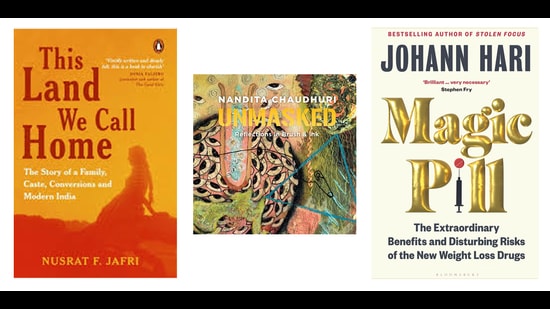
1871, the British enacted the Criminal Tribes Act in India, branding numerous tribes and caste groups as criminals. In This Land We Call Home, Nusrat F Jafri traces the roots of her nomadic forebears, who belonged to one such “criminal” tribe, the Bhantus from Rajasthan.
This affecting memoir explores religious and multicultural identities and delves into the profound concepts of nation-building and belonging. Nusrat’s family found acceptance in the church, alongside a sense of community, theology, songs and carnivals, and quality education for the children in missionary schools. The family’s conversion to Christianity in response to caste society highlights their struggle for dignity. Parallelly, we see the family’s experiences during Gandhi’s return to India in 1915, the Partition, the World Wars, the Emergency and the prime ministers’ assassinations.
In a way, this is a story like and unlike the stories all of us carry within us — the inherited weight of who we are and where we come from, our tiny little freedoms and our everyday struggles and, mostly, the intricate jumble of our collective ancestry. Nusrat pays homage to her foremothers, the first feminists, and her forefathers, the ones who tried hard to fit into a caste society only to be disappointed, eventually choosing alternative faiths in pursuit of acceptance.*
Of shame, willpower and healing
{{/usCountry}}Of shame, willpower and healing
{{/usCountry}}In January 2023, Johann Hari started to inject himself once a week with Ozempic, one of the new drugs that produces significant weight loss. He wasn’t alone – some predictions suggest that in a few years, one in four of the British population will be taking these drugs. While around 80 per cent of diets fail, someone taking one of the new drugs is likely to lose up to a quarter of their body weight in six months. To the drugs’ defenders, this is a moment of liberation from a condition that massively increases your chances of diabetes, cancer and an early death.
Still, Hari was wildly conflicted. Can these drugs really be as good as they sound? Are they a magic solution – or a magical illusion? Finding the answer to this high-stakes question led him on a journey from Iceland to Minneapolis to Tokyo, and to interview the leading experts in the world on these issues. He found that along with the drugs’ massive benefits come 12 significant potential risks. He also learned that these drugs radically challenge what we think we know about shame, willpower and healing.
These drugs are about to change our world, for better and for worse. Everybody needs to understand how they work – scientifically, emotionally and culturally. Magic Pill is an essential guide to the revolution that has already begun – and which one leading expert argues could be as transformative as the invention of the smartphone.*
Graphic metaphors with a common thread
British artist Nandita Chaudhuri’s works peel away the onion layers of human behaviour. The poems and paintings in this volume rely on graphic metaphors to convey a common thread. Introspection, coupled with profound, thought-provoking stories explore and re-engage with deep impressions and stored images snatched from life. The two mediums, when juxtaposed, delve into emotions that would not have been possible alone, creating cross currents as they dissolve into each other. They display the connectivity between the soul and the universe and also the paucity and dissociation between them. An interplay of narratives throughout the book enables a storyline that depicts the object and the crevices within. Together, they create a unique multilayered sensory experience, conveying deep introspection.*
*All copy from book flap.