The many shades of truth
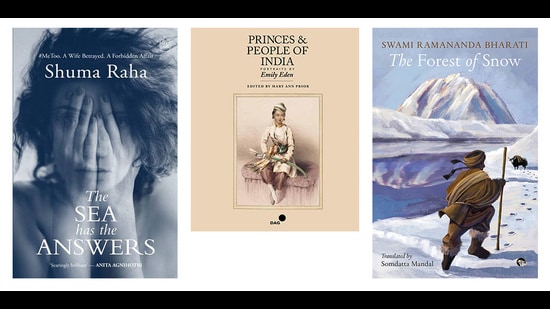
Urmimala Das’s elegant, upper-crust life is shot to pieces when several former women colleagues of her husband accuse him of sexual harassment and assault. Devastated, she leaves home and goes to a seaside town where she hopes to achieve a measure of calm. As she grapples with her dilemmas about the future of her marriage and the lingering trauma of her past, Urmi finds herself plunging into an affair with a much younger man.
Set in Kolkata and a small town by the sea, The Sea Has the Answers is the layered story of a woman’s search for self realisation and the rekindling of her sexuality. It also delves into the psyche of a powerful man who stands exposed, and throws light on some of the grey areas around consent.
Narrated in vibrant, often lyrical, prose, the novel is a nuanced exploration of power and its abuse, misogyny, betrayal, self-deception and the many shades of truth — all of which play out against the backdrop of the social realities of contemporary India.*
A view of early 19th century India
A visual record of nineteenth-century India by an artist, writer and keen observer, this volume includes Emily Eden’s celebrated portfolio of hand-coloured lithographs based on sketches made during her travels across northern India between 1836 and 1842 (Portraits of the Princes and People of India, 1844, which included her own descriptive texts). Her subjects are kings and courtiers, warriors and attendants, travellers and servants and her work is an extraordinary visual record of a society in transition. The most compelling works are the ones associated with the court of Maharaja Ranjit Singh, whose Punjab kingdom was one of the most powerful political forces in the region.
Edited by Mary Ann Prior, the book features contributions from leading scholars like Brigid Allen, Eleanor Nesbitt and FS Aijazuddin who write on the intersections of art, politics, gender and empire. An exhibition of the works featured in the book will be on display at DAG, New Delhi until 1 August 2026. .*
{{/usCountry}}Edited by Mary Ann Prior, the book features contributions from leading scholars like Brigid Allen, Eleanor Nesbitt and FS Aijazuddin who write on the intersections of art, politics, gender and empire. An exhibition of the works featured in the book will be on display at DAG, New Delhi until 1 August 2026. .*
{{/usCountry}}An early record of Himalayan travel
In 1898, the wandering saint Swami Ramananda Bharati set out from the Garhwal Himalayas towards one of the most remote and revered destinations in the world: Mount Kailash and Manasarovar in Tibet. Travelling through perilous mountain passes, glacial valleys and isolated border villages, Bharati journeyed not merely as a pilgrim in search of divine grace, but as an observant traveller deeply attentive to the people, landscapes and contradictions of the Himalayan world.
The Forest of Snow chronicles this extraordinary expedition across the high Himalayas — through Joshimath, Niti, Hoti Pass and beyond — capturing the majesty of snowbound peaks, roaring rivers and sacred shrines, alongside the hardships of life at the edge of empire.
Bharati writes vividly of Bhutia traders preparing for their annual caravans into Tibet, highland communities who migrate with the changing seasons, weather-beaten caves sheltering pilgrims, mountain food that consists only of tea, butter and barley flour, and the tense borderlands shaped by colonial surveillance and Tibetan restrictions. Along the way, he encounters an unforgettable cast of companions and strangers: clever interpreters, eccentric lamas, drunken villagers, Tibetans suspicious of English spies, and even dacoits.
Blending spiritual reflection with sharp ethnographic observation, Bharati’s narrative moves beyond conventional pilgrimage writing to offer one of the earliest modern Bengali accounts of travel into Tibet. First serialised in 1901 as Himaranya, and later recovered from incomplete manuscripts, The Forest of Snow stands today as a rare and compelling record of Himalayan travel at the turn of the twentieth century.*
*All copy from book flap.