Chilean writer Benjamin Labatut’s The MANIAC is a triptych whose first part tells the story of the Austrian physicist Paul Ehrenfest, who killed his son Wassik (who had Down’s syndrome) and then himself. The second part features a fictionalised biography of the Hungarian polymath, John von Neumann while the third examines a five-game Go match between a program developed by DeepMind, the AlphaGo, and Lee Sedol, the superstar Go player from Korea. This last part is a deep dive into the tussle between the human mind and the power of artificial intelligence. The book, whose title is borrowed from MANIAC I, the computer built using von Neumann’s architecture, is an unusual fictional delight. It not only stretches the boundaries of what can be labelled fiction but also attempts to uncover the limits of reason in those celebrated for their reasoning ability.
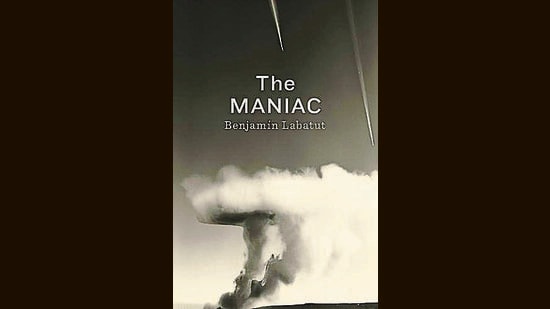
Why is Labatut interested in these “mad scientists”, as he puts it? In an interview with The Guardian, he notes that “humankind is never gonna rid itself of its impulse towards apotheosis; we’re driven by this thirst for the absolute that’s cooked into our minds.” But of late, it seems like most people are interested in knowing how machines can develop their own “minds” and work on behalf of humans. Perhaps this is why this year’s Nobel Prize in Chemistry was shared between David Baker, Demis Hassabis and John Jumper. Hassabis is the co-founder and CEO of Google DeepMind and Jumper is its director. DeepMind’s initial tryst with getting a machine to perform an impossibly intuitive task was to get it to play the Go game, which forms the thrilling third part of Labatut’s book.
Acutely researched and extraordinarily narrated in writing reminiscent of reportage, The MANIAC seems to measure the entropy of the human mind. The story captures the scientific temperament while examining the intentions of these scientists in exploring the bizarre and the irrational. Even as readers wonder at the expert minds, including Albert Einstein and Richard P Feynman, that feature in this book, they experience the fear that arises out of the possibility of entering a dark age. The book, however, convinces you that our world has not just entered this age but has reached an advanced stage of it. What’s left to be seen are the consequences, and a sample of many such possibilities is featured in this exquisite work of fiction.
{{/usCountry}}Acutely researched and extraordinarily narrated in writing reminiscent of reportage, The MANIAC seems to measure the entropy of the human mind. The story captures the scientific temperament while examining the intentions of these scientists in exploring the bizarre and the irrational. Even as readers wonder at the expert minds, including Albert Einstein and Richard P Feynman, that feature in this book, they experience the fear that arises out of the possibility of entering a dark age. The book, however, convinces you that our world has not just entered this age but has reached an advanced stage of it. What’s left to be seen are the consequences, and a sample of many such possibilities is featured in this exquisite work of fiction.
{{/usCountry}}Saurabh Sharma is a Delhi-based writer and freelance journalist. They can be found on Instagram/X: @writerly_life.
READ MORE: HT REVIEWERS PICK THEIR FAVOURITE BOOKS OF 2024