
 E-Paper



Interview: Chitra Banerjee Divakaruni, author, Independence
On her new book that follows the lives of three sisters at the end of the British occupation of India to illustrate what independence means for a country and for its women

 Prefer HTon Google


What inspired Independence? Was the story of three sisters navigating Bengal’s pre and post-Partition landscape something you had been working on?
My previous novel, The Last Queen, about Maharani Jindan, wife of Maharaja Ranjit Singh, who fought valiantly but ultimately unsuccessfully against the British created in me a great desire to write about the end of the British occupation of India — when they are forced to leave and India gains her freedom. I started thinking of a story, and the sisters came to me! I had not exactly planned this story. It was kind of serendipitous, and it seemed powerful, like ancient tales with three sisters in them.
Tell us about the process of writing the book? Did you rely on first-hand accounts as part of your research?
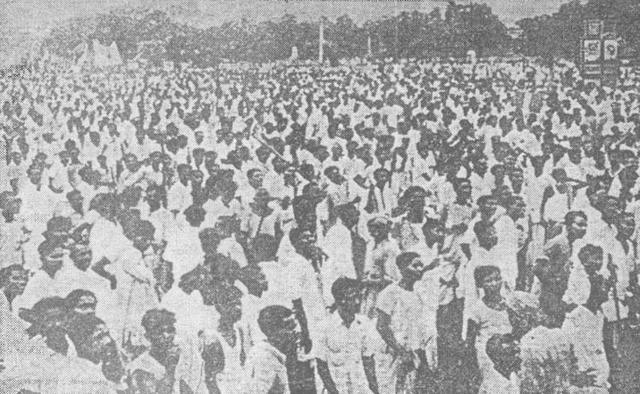
I mostly researched history books and historical images. Accounts from newspapers of the time were also very important, as were the speeches of leaders of that time, and letters. Radio programmes, particularly the patriotic songs of Tagore, were very important. I remembered stories my mother had told me (she lived in Calcutta during the time of the Direct Action Day riots).
The title exemplifies what you have attempted to do with the form and content of the novel wherein Independence as a concrete political and historical event is presented alongside independence as an abstract and personal entity that all three sisters strive to achieve. Please elaborate on the process of deciding on the book’s title.
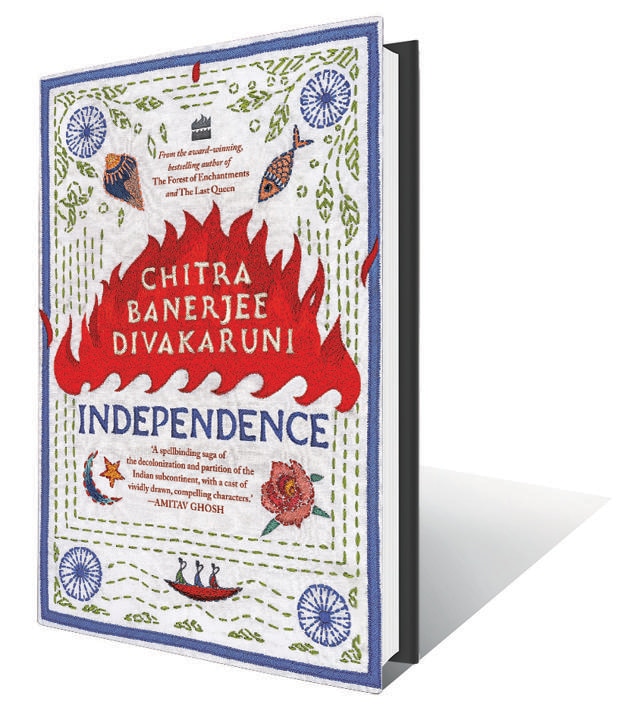
Just as you mentioned, this book is about the concept of Independence — what it means for a country, and what it means for its women. It is my deep belief that for a country to be truly independent, its women must be allowed independence. So the choice of the title came to me quite serendipitously. For many of my books, I don’t know the title until the end. But this one was clear from early on.
With The Palace of Illusions and The Forest of Enchantments you delved into the mythological realm and had it resonate with contemporary times. With Independence, your writing also brings together the historical past and the political present. Did you set out to do that or did it take shape organically?
It took shape pretty organically, once I had written The Last Queen. I knew I had to write about India’s triumph over the British.
The book mentions how the medical college admission process discriminated against women candidates in pre-Independence India by marking them unfairly. Did you draw on any particular records or personal narratives for this?
My grandfather was a doctor (much like Nabakumar, he had a free clinic in his home village). My mother told me that she had also wanted to be a doctor, but it was not possible for her because of the gender discrimination at the time. (She became a teacher instead, which was more acceptable). So, yes, personal/family narratives really inspired this book.
With The Last Queen you had highlighted a lesser-known historical figure and in Independence, women from the time of the freedom struggle, who don’t necessarily figure in the popular national imagination, such as Matangini Hazra, or those who made history in different ways, such as Anandibai Joshi, are mentioned. Was that also something you wished to highlight?
Yes. It is my hope and my desire to bring to light amazing Indian women whose lives we have somehow forgotten but who are truly inspirational.
Certain songs and anthems appear at crucial points in the narrative. Did any of them form an important part of how you encountered Partition tales when you were growing up?
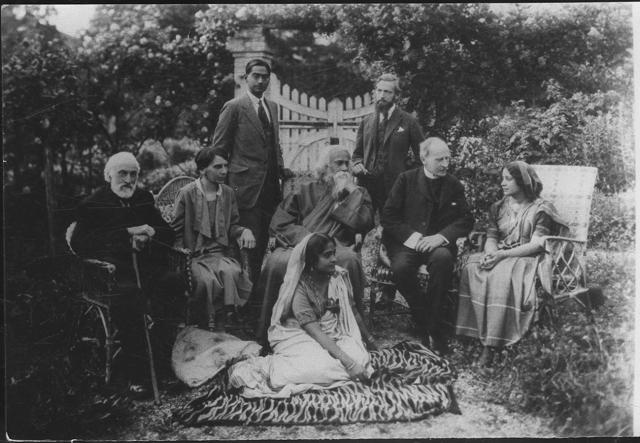
Again, there were so many stories from my mother about marching and singing Bande Mataram, and facing lathi charges. Or of people singing the national anthem on Independence Day. Songs were a big part of the resistance against the British. I love these songs. I grew up listening to them. Tagore’s songs were so inspirational to so many. They still have such power. I wanted to make it a big part of the book. I am so glad my publisher has put a QR code in the book so readers can listen to these songs for free.
Love and desire also appear as central thematic concerns across your works especially when they are pitted against the many societal expectations imposed upon women. Was Priya and Amit’s story also a way to articulate this tension?
You are absolutely right. It was! A major theme in the book, in addition, is that often when women choose a career, it sometimes negatively affects their personal lives. They have to sacrifice many things. They have to fight harder. That is the case with Priya. At a certain point, she has to make some difficult choices.
Your previous works of fiction have also dealt with the articulation of a Bengali heritage expressed through the English language, particularly when it came to the immigrant experience. Who are the writers from a similar background who served as an influence for your writing?
There are so many writers I admire. Amitav Ghosh tops the list for me!
What are you working on?
I am veering into non-fiction, a big first for me, telling the life story of two inspiring Indians. You’ll have to wait awhile to know who they are.
Simar Bhasin is an independent journalist.


