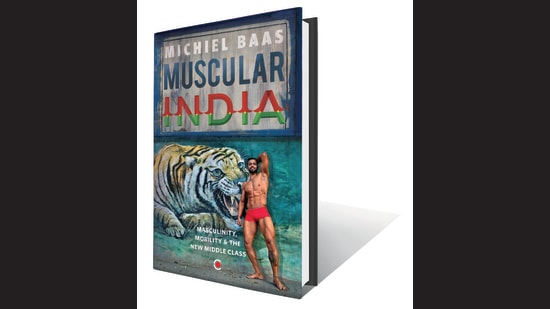
At the peak of the pandemic, in the pre-reels era when poorly-lit “Instagram Lives” were the order of the day (the ring light, also called the TikTok light in India, hadn’t yet been discovered), I received a request from a publishing house asking if I’d do an online chat with Michiel Baas. The anthropologist/author was just out with a book called Muscular India, and as the former editor of Men’s Health India, would I be keen to add my perspective?
I didn’t do the “Live” solely because I didn’t find the time to read the book!
A few months later, some friends texted me snapshots of the page where Baas had credited Men’s Health for the increased interest in six-pack abs and a muscular physique among Indian men. But it was only months later, when a former colleague praised the way the author had drawn parallels between the aspirations and frustrations of the Indian middle class, that I got down to reading it.
Muscular India is now amongst those books that will stay on my bookshelf for years to come. One: It understands the many levels of the middle class India that I grew up in and reflects correctly the constant need to belong. Two: It clarifies that muscular men are, in fact, not symbols of uncontrollable strength, but focused, disciplined, and waiting to be noticed. And three: It chronicles how the obsession for fitness has shown toxic masculinity the door.
{{/usCountry}}Muscular India is now amongst those books that will stay on my bookshelf for years to come. One: It understands the many levels of the middle class India that I grew up in and reflects correctly the constant need to belong. Two: It clarifies that muscular men are, in fact, not symbols of uncontrollable strength, but focused, disciplined, and waiting to be noticed. And three: It chronicles how the obsession for fitness has shown toxic masculinity the door.
{{/usCountry}}Baas’s book tells us how the love for bodybuilding doesn’t contribute to the problem of sexual violence; that it, in fact, takes the idea of masculinity away from it.
It is disappointing that it took a non-Indian author to give us such a great reflection of how “getting in shape” showcases the young Indian man’s ambition and frames his sense of discipline, while also bringing the acceptance that nobody would have expected from a steroids-fuelled obsession.
This is one book that I wish I had written myself.