Before debating whether there has been an end to privacy, individuals might need to ask themselves about what exactly constitutes privacy and also if they are at all concerned about it. The session Total Recall: The End of Privacy on the second day of the Jaipur Literature Festival discussed just this while examining the concerns that everyone has about the invasion of privacy.
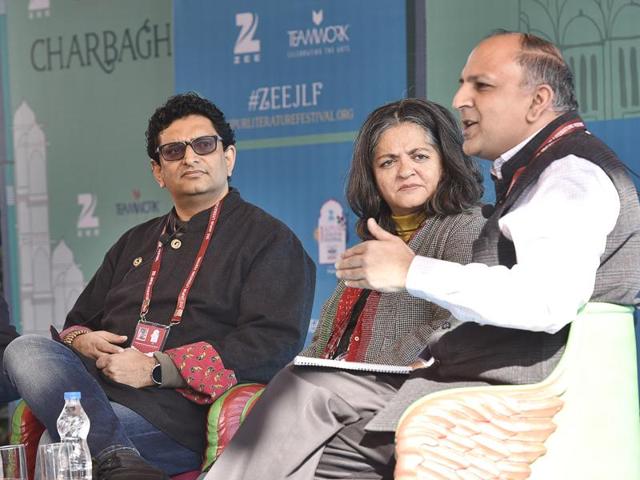
Homi K Bhabha, Director of the Humanities Center at Harvard, kicked off the debate quoting a New Yorker article by Jill Lepore.
Read: Use Facebook’s Android app with Tor
She had said that a paradox of our culture is that it is obsessed, at once, with being seen and with being hidden; a world in which the only thing more cherished than privacy is publicity. She had pointed out that Facebook is where ‘we chronicle our lives… while demanding the latest and best form of privacy protection’. A great deal of the discussion revolved around the invasion of privacy with technological advances and the ubiquity of Google and Facebook.
“On one hand we want all the most technical forms of protection but we ourselves are exchanging our privacy for publicity,” said Bhabha, who added that India now has all kinds of policing including food and moral policing. Thoughts that defined our private lives have suddenly become public issues, he said: “Are you eating beef? Are you in a hotel room as an adult with somebody of your choice? Is this right, is that wrong?’
According to the Pratap Bhanu Mehta, president of the Centre for Policy Research, we worry about privacy because it means ceding power to somebody else. That power comes in two forms, one of them being big corporations. “What are the algorithms like that Google uses to actually shape desires and preferences? These will need to be placed in greater structures of accountability,” says Mehta, who believes information is being made more public while intellectual property and technology is being more propriety and private. “Restoring a balance between the two is going to be important,” he said.
{{/usCountry}}According to the Pratap Bhanu Mehta, president of the Centre for Policy Research, we worry about privacy because it means ceding power to somebody else. That power comes in two forms, one of them being big corporations. “What are the algorithms like that Google uses to actually shape desires and preferences? These will need to be placed in greater structures of accountability,” says Mehta, who believes information is being made more public while intellectual property and technology is being more propriety and private. “Restoring a balance between the two is going to be important,” he said.
{{/usCountry}}Read: 12 authors to look out for at Jaipur fest
Columnist and technology consultant Niyam Bhushan warned the audience that their privacy was being plundered by big corporations and app-based services. “People in India do not understand privacy,” he said before doing a quick test on the audience by asking how many of those assembled had installed WhatsApp. Many hands shot up. “How do you think Mark Zuckerberg is going to recoup his $19 billion dollars, if not from this gold mine of the private, intimate, candid, truthful conversations that you have? Which Google’s Eric Schmidt calls ‘at the edge of creepiness,’ Bhushan asked.
So what is the first step to take to safeguard privacy? While Homi Bhabha suggested that the best way was to be vigilant, Bhushan called for a ‘quit databasing movement’, to stand up and speak out whenever personal information is sought. Mehta, however, feels that a structure needs to be in place for not just the state, but also corporate houses. This will perhaps make them accountable for the information they collect.
For more JLF 2016 stories click here.