Our lockdown began here in California in mid-March. It began like cascading dominoes — first there were a few companies that “encouraged” people to work from home, then more followed suit. My husband grumbled about missing basketball at lunch as he complied. My son who is in college called next — his classes were being transitioned online, and he’d been told he could go home if he wanted. But what began as a suggestion turned within days into an urgent directive that bordered on eviction from the residence halls. Soon, schools all around the state were closing as well. My daughter’s small high school in Sacramento was one of the first to send its students home. That was when it all began to feel real — seeing the fabric of our bustling, gregarious lives unravel in real-time before my eyes. Restaurants stopped seating customers. Gyms closed. The streets emptied, seemingly all at once. Social distancing, flattening the curve, and shelter-in-place became part of life, and of all our everyday conversations.
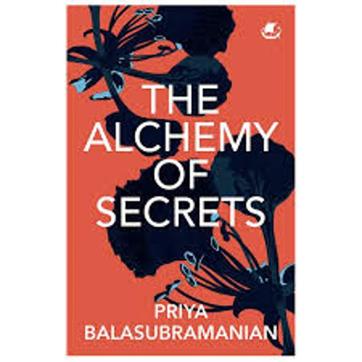
I write fiction, but in my real life, I’m a physician. Though there were instances during this time that recalled the beginnings of every apocalyptic book I’d read —empty grocery store shelves, a step-wise and near-complete disruption of all I’d considered normal life — I stamped down hard on the oh-my-god-what-if-it-is-really-bad? I wasn’t ready to let go of the dispassion that is the hallmark of my physician tribe. When I encounter a knot in fiction, I relax, disconnect, and will my mind to wander. The what-ifs and why-nots, each more fanciful than the next, are a delight to encounter. With real life problems, it’s the opposite. I obsess over details. I collect facts and numbers, calculate probabilities and pick the most pessimistic outcomes to plan for. And it seemed to me, initially, that this was what it was all about. Everyone was just planning for the worst-case scenario — it did not mean that it was the one most likely to happen. My optimism, if one can call it that, faltered with the news from Italy. The problem was with the numbers, after all. Even so, I sought solace in other numbers — their population is denser, and older. But I could feel a new anxiety begin that belonged squarely in the world of fact: what if it did get as bad as that?
Some of my closest friends are doctors. They are friends from my childhood in Bangalore or from when we were all medical students learning to be doctors and adults, in Vellore. People I met during training and stay in touch with or see every day at work. They’re scattered across the globe. No matter where they live, our conversations lately have all covered similar ground. Stay safe, we tell each other, as if the words are some ancient amulet that confers protection. We don’t talk about infection rates or mortality among health care workers, except for an Iranian-American friend, who laughingly told me that this was a time for making love with death. I suspected it was an allusion to a Persian poem translated on the fly, but our conversation moved on before I could ask. It’s not as if anyone is unaware of the risks. But I suspect that we have all, at some point in our careers before this, come up against our own mortality in one of the many deaths we’ve witnessed. We might even have a subconscious calculator that tells us what’s most likely to get us — predictable things like heart disease, or unpredictable ones like accidents, or cancer. And the Russian roulette version that this virus presents would slot neatly into the latter, even if it looms large, and gets closer by the day. Or maybe this is just too personal a fear to acknowledge, even with friends who’ve known us well and forever. What everyone does talk about is their fear of bringing the virus home, to parents or spouses or children with medical conditions that place them at risk. Not one, though, doubts their commitment to step up. It is muscle memory and moral obligation, what we’re hard-wired to do and what we’ve signed up for all at once.
{{/usCountry}}Some of my closest friends are doctors. They are friends from my childhood in Bangalore or from when we were all medical students learning to be doctors and adults, in Vellore. People I met during training and stay in touch with or see every day at work. They’re scattered across the globe. No matter where they live, our conversations lately have all covered similar ground. Stay safe, we tell each other, as if the words are some ancient amulet that confers protection. We don’t talk about infection rates or mortality among health care workers, except for an Iranian-American friend, who laughingly told me that this was a time for making love with death. I suspected it was an allusion to a Persian poem translated on the fly, but our conversation moved on before I could ask. It’s not as if anyone is unaware of the risks. But I suspect that we have all, at some point in our careers before this, come up against our own mortality in one of the many deaths we’ve witnessed. We might even have a subconscious calculator that tells us what’s most likely to get us — predictable things like heart disease, or unpredictable ones like accidents, or cancer. And the Russian roulette version that this virus presents would slot neatly into the latter, even if it looms large, and gets closer by the day. Or maybe this is just too personal a fear to acknowledge, even with friends who’ve known us well and forever. What everyone does talk about is their fear of bringing the virus home, to parents or spouses or children with medical conditions that place them at risk. Not one, though, doubts their commitment to step up. It is muscle memory and moral obligation, what we’re hard-wired to do and what we’ve signed up for all at once.
{{/usCountry}}As I write this, there’s a ticker on my television screen that lists cases and deaths from the virus in the US, and all around the world. There’s nothing I’ve encountered in fiction or fact that is more chilling than its rise. Because we have all encountered death, but we’ve never encountered it on the scale that it seems we’re about to see. And that has to be our collective and deepest fear, whether we are physicians or not. We are generations that have been lucky so far: born in peacetime, and long after the plagues and famines of our collective past. My everyday physician self would never acknowledge it, but the novelist might: it feels like we are on the ramparts of some medieval castle that a pillaging, vastly superior army has in sight. Even so, as I drive to work through thinned traffic and return on deserted streets, I hear of a glimmer of good news among all that is not. Cases in California are doubling slower than anticipated. We may be on the arc of a linear, not exponential, rise. Perhaps we’ve only delayed the surge, as we call it, when the number of cases exceeds the resources of our health care system. Or it may be real, and perhaps by the simple steps of staying home and washing hands, we’ve defeated the virus after all. What cannot be argued with, though, is that the social distancing, bought with so much economic pain, and often by the most vulnerable in our society, has saved lives.
Whatever the future holds, this evening, I will sit down to a home-cooked dinner with the people I love. The presence of a child who ought to be in college is an added gift, pandemic or not. We might walk on the trails outside and get as far as the American River, where birds will fly and call and swoop for fish. It will feel a day like any other, the most precious gift of all.