How did this collection of interlinked short stories come into being?
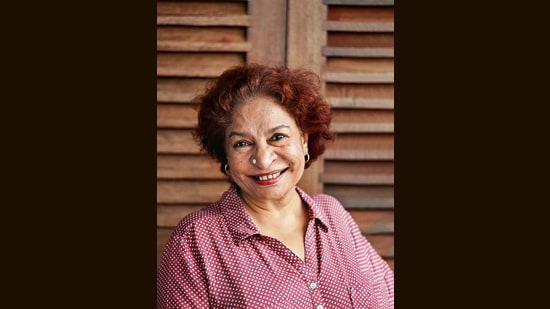
I’ve always thought of myself as a writer but despite some stories being published in Malaysian anthologies, and one, Charan, winning the top prize in a contest, I remained at heart, a tinkerer of stories. This changed somewhat when My Mother Pattu won the Commonwealth Short Story Prize for Asia in 2019. I realised I had to honour my craft seriously, treat it with respect, do justice to the numerous writing workshops and programmes I’d attended. So I began to consciously revise some older stories, and write more to get a decent collection to submit for publication.
The newer stories of their own accord, began to move beyond familial settings to confront comfortable conventions about race, identity, belonging, discrimination and communal relations.
Both, the larger social institutions that perpetuate discrimination and the smaller unit of the family, are shown to be sites of trauma. Was that something you wished to highlight?
The connection wasn’t deliberate. It happened because that’s the way life is. Trauma happens but what was more interesting was how the characters faced the trauma; how they dealt with the injustices; and importantly, how they acknowledged, if they ever did, that sometimes the lines are blurry. Both victim and perpetrator are guilty of racism, intolerance, smug assumptions of racial superiority.
What I consciously did was to strive for authenticity of voice, situation, emotion.
In Call It By Its Name, the narrator states how the very functioning of Malaysian society needs the figure of the “keling” (a derogatory term used for Indians). Did you wish to bring the focus on the nexus of political and religious institutions with vested interests in continuing this ongoing divide?
{{/usCountry}}In Call It By Its Name, the narrator states how the very functioning of Malaysian society needs the figure of the “keling” (a derogatory term used for Indians). Did you wish to bring the focus on the nexus of political and religious institutions with vested interests in continuing this ongoing divide?
{{/usCountry}}We can’t quite run away from politics and religion, even if they are sensitive topics. What I did was to let the characters tell the stories of what happened to them and to let the characters have their conversations. I kept authorial interference to a minimum, let alone authorial manipulation.
I couldn’t manipulate though I did try, because in all the stories, the characters took over, telling their stories (not mine), the only way they could. Whenever I tried to ‘arrange’ the story line, the characters laughed at me and turned into sticks.
In telling their stories, the characters confronted their own culpability. I didn’t want accusations of racism (or patriarchy) to be something that is targeted at other people. To some extent, those who scream injustice needed to confront their own personal prejudices, bigotry or intolerance in their own actions.
Educational institutions often come up in these stories as places wherein racial discrimination is not only be practised but normalised. Was that a central concern when you were composing these stories or did that come about organically?
I was a school teacher in public schools for many years so, yes, I wrote about what I knew, what students talked about, and teachers; what the media exposed. It would have required far more exhaustive research, interviews, conversation, if I had wanted to write about some other sector. Schools, I knew. Even then, I read and researched as much as I could.
Most of these works contain complicated women characters who are shown in one of the stories to be victims while in another they turn out to be the perpetrators. Was that something you had wished to bring out?
We’re all complicated in some way or other, flawed in many ways; we’re not victims all the time – victims can be perpetrators as well. People are complicated, with many facets. If this comes out in the stories, I’m delighted.
You ask if this is deliberate. Okay – the secret is, every time I try to be deliberate, to push the characters and the narrative towards something I think is right, the story falls flat spectacularly. The characters become stick figures, the story reads like a dull tale.
I’ve learned that the writer has to trust the characters to tell their own story and to respect the fact that we are the channel for the characters to reveal their stories. I, as the writer, am not a puppeteer (I fail spectacularly at that) but a conduit.
The English language comes across as both an important means of access while at the same time almost limiting in articulating the lives of your multiracial characters. How was the process of contending with these limitations yet using them to highlight the complexities of these varied cultural inheritances?
I don’t quite understand this question. English is the only language I can write in. I think in English; read in English; write in English; speak, argue, articulate in it. It’s not my mother tongue but it is my first language. It’s the only language in which I can communicate with any level of competency. And as such, it’s the only language I have to explore the worlds I write about.
How much of the subject matter was inspired by your own experiences? Having taught creative writing as well, are you a believer in the dictum that writers should write what they know?
I think each of my stories begin as a fragment of memory; of things that have happened to me or to people I know; things I have read in the newspapers or social media. They are all lived experiences – just not necessarily mine.
Having said that, should writers write what they know? Ever since I read Ursula Le Guin’s response, I’ve been dying to quote her.
She said: ‘As for “Write what you know,” I was regularly told this as a beginner. I think it’s a very good rule and have always obeyed it. I write about imaginary countries, alien societies on other planets, dragons, wizards, the Napa Valley in 22002. I know these things. I know them better than anybody else possibly could, so it’s my duty to testify about them.’
Isn’t that a wonderful response?
What drew you to the short story? Do you feel that the fragmented nature of the form compliments these stories centred on themes such as displacement and migration?
I am half sloth, with the attention span of a goldfish (no disrespect to both sloths and goldfish). So, short stories suit me fine. I tell stories. Short stories.
I am not clever enough or disciplined enough or focussed enough to write a novel, to keep track of the people, places, events, narratives, range of time periods, developments.
What are you working on currently?
People have said that I should work on a novel because short stories don’t sell. Neither readers nor publishers are interested. In which case, thank you Penguin Random House SEA for publishing me!
So I tried to start on a novel and discovered that I can’t. I just can’t write novels. Not only do I lose focus, the story line meanders all over the place and I soon begin to fervently hate my characters. There’s no other way. I’ll just have to stick to short stories. But as mentioned earlier, I’m half sloth so progress is slow on that front.
The blurb in my book describes quite well, the only kind of stories I can write:
of people, ordinary people in confronting the realities of their past and present circumstances, refuse to look away. I write as unsentimentally as I can to make sure the voice is authentic.
And I try, really try to let the characters speak their stories instead of interfering and telling them what they ought to do. It doesn’t work when I tell them. No one listens to me. Not even my characters.
Simar Bhasin is an independent journalist. She lives in New Delhi.