Your latest novel, A Hero’s Guide to Summer Vacation, is built around the relationship between a grandfather and a grandson who go on a road trip in the United States. It sounds like an exciting premise, full of adventures. What led to this idea?
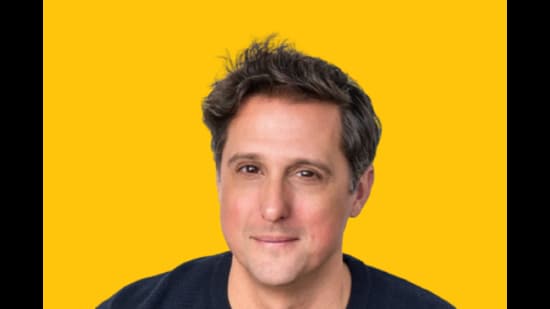
One day, while looking back at my work, I realised that I have grandmothers in all my books, who are all versions of my own abuela. That’s the Spanish word for grandmother. But I hadn’t done a grandfather book until then, and I wanted to change that. That’s how Alberto William Garcia, the grandfather in my book A Hero’s Guide to Summer Vacation, was born.
Alberto is an author, who writes fantasy for children, so I thought it would be fun to send him on a book tour with his 13-year-old grandson Gonzalo Alberto Sánchez Garcia, and explore their relationship. He comes across as grumpy at first. But once you get past that facade, you see that he is a gentle, sweet man. Their cross-country road trip starts in Mendocino, and ends in Miami.
I thought a lot about my own abuelo, my father’s father, and my Cuban heritage, while working on this book. It was not easy to write but each draft gave me clarity and confidence. Alberto and Gonzalo belong to two different generations but they have something important in common. While Alberto writes, Gonzalo is a visual artist. Both find creative outlets to process their grief.
{{/usCountry}}I thought a lot about my own abuelo, my father’s father, and my Cuban heritage, while working on this book. It was not easy to write but each draft gave me clarity and confidence. Alberto and Gonzalo belong to two different generations but they have something important in common. While Alberto writes, Gonzalo is a visual artist. Both find creative outlets to process their grief.
{{/usCountry}}Masculinity and grief seem to have a complicated relationship. Many boys are raised to think that it is unmanly to express vulnerability, cry, or take time to grieve. How did your childhood conditioning shape your ideas about masculinity?
I was raised by a father who was wonderful but very stoic. He was also my baseball and basketball coach at school. He did not suppress his emotions but he did not express them openly either. I often felt that I had to play very well just to make my father proud. Even my mother’s expectations of me were dictated mostly by what I achieved. This is fairly common among families of immigrants to the United States. Parents want their children to succeed.
My relationship with my abuela, my grandmother who took care of me, was totally different. When I would come home from school, there was love and gentleness waiting to receive me. She would make me a milkshake, and sit with me, waiting to hear about how my day went. I didn’t have to be tough and sporty when I was with her. I could just talk about how I was feeling.
From my father, I picked up the idea that one had to try to win the game. From my mother, I got the impression that I had to be the man of the house when my father was not around. But with my abuela, I could allow myself to show how I felt about things. I never felt I was being judged.
She made space for softness. I have held on to that to this day. When I became a father, and saw my son grow into an athlete, it made me happy to see him developing a similar bond with my mother, who is his abuela. He confides in her a lot. My wife and I tend to be a bit pushy. (laughs) Grandmothers challenge traditional ideas about masculinity with their warmth and empathy.
What sort of books did you read as a child and a teenager?
I am embarrassed to say this but I wasn’t really reading as a kid. I know that authors are supposed to have read a lot their whole life. But, you know, I was listening to my abuela’s stories. She was my first storyteller, and my childhood was so rich because of her stories.
That’s wonderful. We put the written word on a pedestal, don’t we?
Yes, we do! I was reading what I was supposed to for all my classes but I didn’t go home and cuddle up with books. I wanted to be outside, playing. I was highly competitive. Of course, I wanted to impress my dad. But I also liked sports and being with my friends. I did well, academically, but I wasn’t bookish. Reading was not a part of my identity while growing up.
Tell me more about your abuela, and the characters she inspired you to write.
She died when I was just eight years old, so she is in all my books. Writing her into them is my way of keeping her alive. Whether it is the restaurant owner in The Epic Fail of Arturo Zamura, the farmer in The Last Beekeeper, or the businesswoman in Curveball, there is a bit of her in all of them. When I visit schools, I encourage children to interview their grandparents. There is so much to learn from their memories and their struggles.
How do you see your role in the current political environment, where bans on children’s books and young adult literature are becoming increasingly common in the US?
This issue is close to me, and it really breaks my heart. I am very fortunate that I get to speak all over the country, and interact with young people, especially LGBTQ+ kids. They like to come and talk with me because I guess they feel safe. Some want me to sign a book but most of them just want to hang out and take pictures. And I say this not to pat my own back.
As a father, I feel very emotional when I meet kids who feel afraid to be themselves and then find one adult who feels somewhat safe. It hurts to witness that. But it is also a privilege to be that person. Looking at the current political climate in the US, I worry about LGBTQ+ kids but I cannot help being an optimist either. I don’t like bullies. And I believe in love more than hate.
There are days when I feel terrible about how things are. And then I allow myself to cry freely.
As a person of Cuban heritage, it must be annoying to encounter stereotypical ideas and misconceptions that people carry about what it means to be Cuban-American. How do you create a safe space for yourself, as someone who is proud to be Latino?
You find your own safety in the process of offering it. I have never gone and told a child, “Hey, come here. I am safe.” You should never do that. Just be who you are. Safety is a feeling. You cannot force it. People will gravitate towards you when you are authentic.
When they share with you in a way that is open and generous, it heals both of you. Even while having this conversation with you, I don’t mind getting teary eyed. This interview is not transactional. We hold space for each other; for you to be queer, for me to be Cuban-American.
While growing up, I saw my father as a Latino male who was physically strong and successful. As I got older, I began to see that my father always cooked, and he brought my mom flowers. He never shamed me for crying. But I spent so many years wondering, “Is my dad proud of me?”
I learnt from my mom that he has a display of all my book covers in his office. He also participates in book clubs with his octogenarian friends, and they discuss my books. Apparently, whenever there is an interview with me in the newspaper, he sends copies to all his friends on WhatsApp. When I came to India for the Neev Literature Festival, he texted me, “Are you kicking butt over there in India?” That’s his way of saying, “Are you doing a great job?”
I must admit that I was a bit nervous because I have never travelled so far from the US. My son came to the airport to see me off. When we were close to the departure gate, he asked me, “When are you coming back?” I knew that it was his way of saying, “How long will you be away? I am going to miss you.” In that little face of his, I could see a little sadness because I was going far away. It feels good to be loved. And I carry that love with me when I meet all the wonderful little humans who read my books, come to get them signed, and encourage me to write more.
Chintan Girish Modi is a journalist, educator and literary critic. He worked with the UNESCO Mahatma Gandhi Institute of Education for Peace and Sustainable Development and the Georg Eckert Institute for International Textbook Research to develop a guidebook on how to embed concepts of peace, sustainable development and global citizenship in school textbooks.