Despite years of disturbances, Sri Lanka holds its culture close and continues to prosper. The third edition of the HSBC Ceylon Literary and Arts Festival held from 13th to 15th February at the Cinnamon Lakeside in the capital of Colombo celebrated exactly this. The first day began with a traditional performance and with festival director Ajai Vir Singh speaking of what to expect during the event.
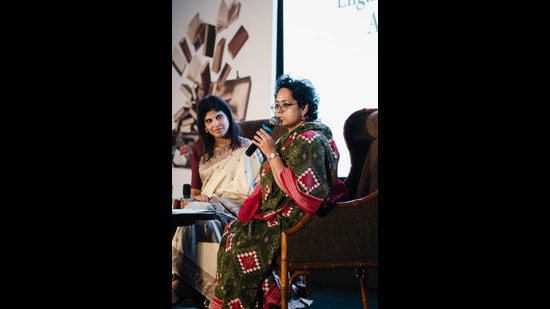
The inaugural session titled What Paradise Lost had author Shyam Selvadurai talking about his literary journey with Karissa Chen. “My writing changed with how I changed as a human being. I’m interested in families and that’s at the centre of my work,” he said. Chen said that, from her American point of view, his novel, Mansions of the Moon, seemed to be a quest for identity. “It was interesting for me to see a man leave his wife not for another woman but a philosophy. I understand the call for vocation hence I had more sympathy for him but I had to try a lot to understand what her suffering was,” Selvadurai said. Later, author of Elite Travel Guide to Sri Lanka, Eshan Goonesekara spoke about the importance of experiencing a country rather than just going from one spot to another. He urged people to abandon their smartphones and actually look at their surroundings. The theme of travel continued in his session with radio journalist Adrien Krause who spoke about tracing Swiss travel writer Nicolas Bouvier’s journey across the Balkans to Sri Lanka and beyond in the mid twentieth century. Krause believes it is difficult to categorise Bouvier’s The Scorpion Fish as it mixes fiction with real life travel. “He wrote the book to show travelling is not just about the good things but also the unpleasant experiences,” he said.
In the session titled Fragrance of Memory, author Aanchal Malhotra and poet Arundhathi Subramaniam underlined the importance of memory especially in the contemporary world. “When I’m writing, I want my reader to slip into a world that I want them to. That’s why it is important to be a good listener to be a good oral historian,” said Malhotra, who has chronicled oral histories around the Indian Partition. However, the burden of still festering memories can be a heavy one. “I have stopped writing about Partition as I wanted to distance myself. Memories don’t stop with a person and pass down in the form of anger and disdain,” she said.
{{/usCountry}}In the session titled Fragrance of Memory, author Aanchal Malhotra and poet Arundhathi Subramaniam underlined the importance of memory especially in the contemporary world. “When I’m writing, I want my reader to slip into a world that I want them to. That’s why it is important to be a good listener to be a good oral historian,” said Malhotra, who has chronicled oral histories around the Indian Partition. However, the burden of still festering memories can be a heavy one. “I have stopped writing about Partition as I wanted to distance myself. Memories don’t stop with a person and pass down in the form of anger and disdain,” she said.
{{/usCountry}}The innovative session titled Making of a Rugby Movement featuring actor Rahul Bose, one of India’s first international rugby players, in conversation with Shanaka Amarasinghe, focussed on aspiration. “I studied models of different sports in different games and how they took off and then tried to implement it. Now, half of those who play this sport come from tribal communities. We are done with the first phase of Indian rugby. It is now the second phase and it is going to be difficult to sustain,” he said.
On the following day, the session titled The Bridgerton Way, with bestselling author Julia Quinn in conversation with Ashok Ferrey, was jam packed. Quinn, whose Regence romance novels were adapted on Netflix, spoke about leaving her medical career for a literary one. “I’m not an overnight success and even today it doesn’t bother me that people recognize me because of the series rather than the books,” she says. She also spoke of being put down for writing historical romances.
The following session was on Building Sri Lanka for the World with entrepreneur Asanka de Mel and investment professional Murtaza Jafferjee in conversation with Aritha Wickramasinghe. The conversation touched on the ways in which Sri Lanka could improve as a society and how the lack of an economic education often leads to exploitation. “Reform is politically difficult. There are a few families who have captured the state,” said Jafferjee.
Another session had nutritionist Rujuta Diwekar talking about health and lifestyle with festival curator Mita Kapur. Diwekar believes internet trends to do with superfoods have been created by the market and encouraged listeners to adapt indigenous culinary knowledge into their lifestyles. “Value yourself as you are,” she said in a message to women of all ages.
The session Maps of the Heart had Taiwanese American author Karissa Chen discussing her book Homeseeking with Artika Aurora Bakshi. Chen described her novel as, “a homage to people looking for homes.” Speaking about the effect that researching the lives of people who left their homelands had on her she said, “I had to stop myself from researching as sometimes I was getting too involved.”
At the session titled Clickbait vs Craft, Mimi Alphonsus, editorial director of The Examiner, an independent newspaper in Sri Lanka, digital commentator Riz Razak, and journalist Shanaka Amarasinghe spoke about the divide between traditional media and social media. “Legacy and established media always had their motives, with the digital world it has been democratized. Though you have to strike a balance. I don’t have a problem if the title is sexy and if that gets someone to read a piece, that’s great!” said Alphonsus. “What we have to care about is the 8-second attention span and keep our integrity intact. News has become entertainment and the radical notion I have is we have to become the circus freak,” said Razak. Amarasinghe agreed that the news has indeed become like a reality show.
The concluding day had Aanchal Malhotra, Alice Albinia and Karissa Chen in conversation with Sukanya Wignaraja in a session titled The Lively Lives of Letters, Heirlooms, and Cities. “We are living the consequences of our ancestors. I was writing when the politics of India was changing and rewiring the understanding of identity,” said Albinia whose time in Delhi inspired her titles, Empires of the Indus and Leela’s Book. Chen too spoke about identity: “I had to imagine in my book how it could have been to leave Taiwan and then I thought of my grandfather who left Shanghai for America.” Malhotra spoke about how collecting stories of the Partition left her in a dense fog of memories. Academic Ruvani Ranasinha’s conversation with Deepa Bhasthi touched on the International Booker Prize winning translator’s connection with Kannada, her mother tongue, and her irritation at the obsession with “proper English” in translations.
The last session had actor Shabana Azmi talking to Ashok Ferrey about her life. “I am a firm believer of formal training; I would’ve been a different kind of actor if that didn’t happen to me. I grew up surrounded by theatre and poetry and through osmosis I believe I got to learn a lot,” she said. She believes the OTT medium hasn’t lived up to the promise. “Even they are depending on famous names, which is counterproductive. Better things should’ve come out from this medium,” she said.
The festival also had activities for children, an art festival around the theme, The Resilient Isle, which explored Sri Lanka’s grit and determination to overcome difficult times, a jazz concert by Quintetto Denner, a theatre workshop, and a film screening of Sulochana Peiris’s 93-minute documentary, Pettah, on Colombo’s most dynamic commercial area.
All in all, the Ceylon Literary and Arts Festival presented the many sides of intellectual life in Serendip.
Chittajit Mitra (he/him) is a queer writer, translator and editor from Allahabad. He is co-founder of RAQS, an organisation working on gender, sexuality and mental health.