“Sometimes I am asked if I know the response to Auschwitz. I answer that not only do I not know it, but that I don’t even know if a tragedy of this magnitude has a response.” Siddhartha Gigoo cites this quote from the Nobel laureate and Holocaust survivor Elie Wiesel in his memoir A Long Season of Ashes.
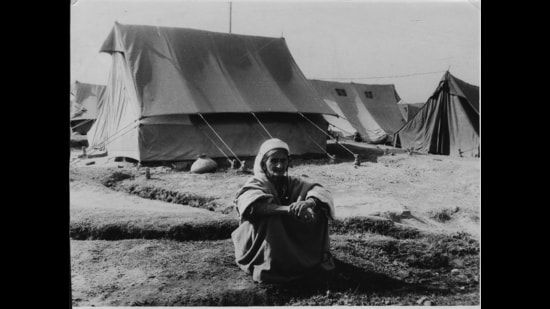
His book is also a response to a tragedy — the exodus of Pandits from the Kashmir Valley around 1990. Gigoo and his family were among the thousands who left their homeland to take refuge in camps in the face of a targeted campaign against Hindu minorities in the Muslim-majority region. He describes the threat of violence and dispossession in Kashmir, the hardships Pandits faced in camps, and the perennial longing for a homeland that remains elusive.
While the memoir spans his childhood in the 1980s to the present, the focus is on the years around the exodus, with occasional interludes of history and folklore. Its overarching preoccupation is memory — not just preserving the memory of a lost homeland and way of life, but also battling against the dementia that afflicted many in refugee camps. Gigoo, whose grandfather also succumbed to the disease, describes his struggle: “The tiny bridges running across the islands of his memory collapsed one by one until one island didn’t know the whereabouts of another”.
Gigoo harks back to the community’s loss and pain in different instances and contexts. His repetition of facts, feelings, and experiences comes across as an attempt to negate the erasure of memory and build a mental shield against the tremendous loss his family and community experienced. The maxim “What is remembered, lives” seems to be Gigoo’s lodestar throughout the book.
{{/usCountry}}Gigoo harks back to the community’s loss and pain in different instances and contexts. His repetition of facts, feelings, and experiences comes across as an attempt to negate the erasure of memory and build a mental shield against the tremendous loss his family and community experienced. The maxim “What is remembered, lives” seems to be Gigoo’s lodestar throughout the book.
{{/usCountry}}He dwells on the aggressions — from a Muslim invigilator failing him in English, the subject he loved the most, to verbal threats and attacks by militants. After his family relocated to a camp in Udhampur, he went to a school in Chandigarh, but soon dropped out. He then tried to get admission to Aligarh Muslim University, but had to leave suddenly because of sectarian violence that left many dead.
After a couple of years in the camp, his family rented a two-room house without running water. He mentions how the Pandits did not receive much better treatment at the hands of their religious compatriots, the Hindu Dogras of Jammu. The landlords kept demanding higher rents or shut off the water supply while accusing the Pandits of grabbing their land and jobs. Some did not even let them cry and mourn! Pandits could also not observe their traditions as Dogra landlords forbade them from cooking meat or fish.
Over the decades, even as Gigoo and his family have managed to rebuild a life for themselves, the pain has persisted. And for every few steps they moved forward, there were setbacks. The government seized the land they had purchased in New Delhi to build a highway, uprooting them yet again.
Along with the sorrows, Gigoo recounts happy memories of Kashmir — outings, picnics, skiing, festivals — and the bleak possibility of reliving them. He also dwells on what kept him going through the tough times: “Music is all I have now. My whole life depends on it.”
Gigoo visited Kashmir several times after the exodus, but the trips only reinforced the impossibility of returning. The place he had left behind had also changed immutably. Someone else had moved into his childhood home and many of the landmarks he had cherished had been destroyed.
The narrative follows a non-linear trajectory, frequently jumping between decades and locations. This blurs time and space, reflecting how the milestones and daily rhythms of life are suspended in exile. The memoir’s disjointed nature, intensified by the variety of formats Gigoo uses — diary entries, letters, text fragments, and conversation snippets — further underscores the punctuated nature of the lives that Kashmiri Pandits have been forced to live.
While the book diligently documents the community’s heritage and tribulations, it might not please those looking for something affirming or for a glimmer of hope amid the pervasive gloom. Rehabilitation efforts have repeatedly failed and many Pandits remain in limbo more than three decades later. Political parties keep bringing up their predicament to mobilise voters or rile up Islamophobia, but have done little for them. Gigoo’s memoir can only reflect this state of affairs.
However, it is also an invitation to keep alive memories and a culture severed from its homeland. It is also a powerful testament to the cruelty that humans are capable of. And though it eschews heroic narratives, it also shows the resilience and compassion people can find within themselves in the direst of circumstances.
In the past year or so, there has been a spurt in memoirs and fictional works that touch upon the community’s travails, perhaps because many who were children or teenagers at the time of the exodus now have the hindsight to reflect on their experiences. Apart from Gigoo, the authors that come to mind are Priyanka Mattoo, Manav Kaul, and Karan Mujoo. It is heartening to see this reckoning in literature, even as justice and reparations largely remain elusive for the community.
Syed Saad Ahmed is a writer and communications professional.