
 E-Paper



Review: Begampur Se Dariyaganj by Yashwant Vyas
With exhaustive inputs from writers and publishers of popular horror, romance and crime novels, this history of Hindi pulp fiction is almost as intriguing as the genre it studies

 Prefer HTon Google


The generations that grew up before the intrusion of smartphones are well acquainted with pulp fiction -- those novels with titillating titles and catchy storylines that were sold at railway stations and bus stops. Every Indian language possibly had its own pulp tradition with a loyal readership and a market that had its own peculiar quirks.
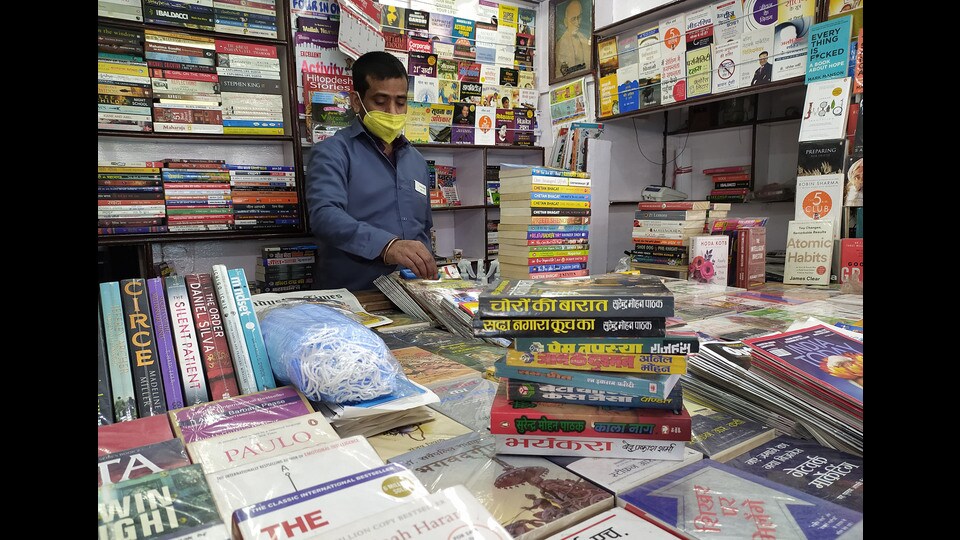

In Begampur Se Dariyaganj, journalist Yashwant Vyas attempts to document the history of Hindi pulp fiction. It’s an endeavour that’s as intriguing as the stories in the genre it studies. Through numerous interviews with writers and publishers he shows how pulp grew in popularity. While mainstream Hindi literature was dominated by socially committed writers and focused on work that reflected with seriousness on society, Hindi pulp carved out its own unique space by catering to those who preferred to read genre fiction including horror, romance, crime and soft porn novels.
The paperback revolution in the West, followed by the rise of pocket books that made reading more accessible and affordable, was replicated in the Hindi sphere. This played a major role in the emergence of desi pulp fiction. Indeed, the industry grew so rapidly that writers who became famous would find themselves dealing with more than 60 publishers in the course of their careers. The publishers were mostly centred in Meerut and Delhi. “In Meerut, there was even a locality where 11 publishers from the same family lived,” writes Vyas.
Those were the glory days of imprints like Amar Pocket Books, Neelam Pocket Books, Royal Pocket Books, and others. Many writers too ventured into publishing. Omprakash Sharma launched Janpriya in 1966, which turned out to be a success, while Vedprakash Kamboj’s Kathakar unfortunately failed.
Alongside big names like Ibne Safi, Surendra Mohan Pathak, and Ved Prakash Sharma, the world of Hindi and Urdu pulp fiction also had fascinating writers like Farooq Argali. Though he only had a primary education, Argali, who often described himself as “naqqalon ka naqqal” (the imitator of imitators), went on to become a formidable writer of ghost stories. Known for writing several novels under different pseudonyms, he was once jailed for writing Chudail, a novel published under Ibne Safi’s name. On another occasion, he was arrested during a raid on a press that was publishing the allegedly obscene Mastram series. He was released only after it was proven that the handwriting in the manuscript didn’t match his own.
Yogesh Mittal was another remarkable writer of ghost stories. Vyas presents an anecdote that shines a light on his craft: SC Bedi, author of the famous Rajan–Iqbal series submitted a manuscript whose last few pages were unfortunately washed away by rain. Mittal wrote a new ending. Later, when Bedi read the finished version, he reportedly exclaimed: “Such a climax! Even I couldn’t have written it myself.”
Vyas writes about the world of desi pulp with the same vigour and flair that defined the books themselves. He traces the history of English and Soviet pulp fiction and explores how the genre began to take root and grow in India. Inspired by characters created by international names like James Hadley Chase, Hindi authors too created exciting desi characters. All of this unfolded within an unregulated yet immensely energetic world of creativity and commerce.

While Ved Prakash Sharma introduced readers to Keshav Pandit and the detective duo Vijay-Vikas, Surender Mohan Pathak popularised characters like Sunil, Vivek Agashe, and the iconic Vimal. Maqbul Jallandhari created Major Balwant, the central figure in his investigative series, and Om Prakash Sharma gave readers beloved detectives such as Rajesh, Jagat, and Chakram.
These characters were so popular that publishers often stole them. Vyas recounts an interesting story about Ved Prakash Sharma’s Keshav Pandit. The character became so famous that it changed the fortunes of the newly established Gauri Pocket Books, which began publishing novels featuring the same Keshav Pandit but written by ghostwriters. Sharma even wrote a novel titled Shagufa under the name Sonu Pandit, the fictional wife of his own fictional creation, Keshav Pandit. As they say these days, it can’t get more meta than this!
The world of pulp had its own intrigues. When new novels by successful authors were announced, counterfeit versions would sometimes appear almost simultaneously. Authors would then issue clarifications asserting that they had written the original even as the imitators made the same claim. This chaotic ecosystem ensured enormous profits for publishers.
Though pulpy pocket books have largely faded away with the emergence of new avenues for entertainment, their essence lives on in films and web series inspired by the same themes. The 2021 film Haseen Dilruba featured a character named Dinesh Pandit; Screenwriter Kanika Dhillon described it as “a homage to Hindi pulp fiction”

Crime, romance, and horror, the very genres that pulp once thrived on, continue to dominate popular storytelling in cinema and other forms that the public turns to for entertainment. Filmmakers understand this well. In fact, the appeal of pulp fiction is still so strong that the government recently shut down several OTT platforms for allegedly streaming content based on pulp characters like Mastram and Savita Bhabhi.
Vyas’s writing is highly engaging but the book could have been structured better. The flow of a few chapters feels somewhat haphazard, and the frequent use of em dashes could have been avoided. Still, the book keeps the reader absolutely hooked. As the blurb says, “This is a work meant for readers who once hid pulp novels inside their schoolbooks, and also for those who wish to understand how stories printed on cheap paper became the very heartbeat of a time period.”


