The world hasn’t yet fully come to terms with the idea that, within the next decade, an impoverished former colony could become the third-largest economy in the world. It is further projected that, for the first time in 300 years, no European country will be among the three largest economies. Will an impoverished country that, in the middle of the 20th century, accounted for three percent of global gross domestic product, now be among the top three global economies?
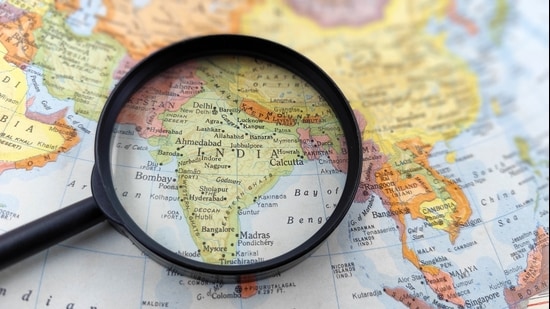
In his insightful examination of the shifting global order, Minhaz Merchant concludes that by 2030, India will reshape the world order. This would be a remarkable achievement for a country that hasn’t been viewed as an economic power since the rise of colonialism about three centuries ago.
Before the emergence of the West, India was referred to as ‘sone ki chidiya’, a metaphor to reflect its immense wealth, culture, and influence. The idea of the ‘golden bird’ lives on as a reminder of the region’s rich past -- and perhaps also as a vision for its future. The metaphor was ‘real’ not too long ago. According to economic historian Angus Maddison, in 1750, India accounted for 24 percent of global wealth. However, British rule – they were definitely here for profit with some proselityzation thrown in on the side -- ensured that the country was stripped of its natural resources and subjected to rapacious economic practices.
{{/usCountry}}Before the emergence of the West, India was referred to as ‘sone ki chidiya’, a metaphor to reflect its immense wealth, culture, and influence. The idea of the ‘golden bird’ lives on as a reminder of the region’s rich past -- and perhaps also as a vision for its future. The metaphor was ‘real’ not too long ago. According to economic historian Angus Maddison, in 1750, India accounted for 24 percent of global wealth. However, British rule – they were definitely here for profit with some proselityzation thrown in on the side -- ensured that the country was stripped of its natural resources and subjected to rapacious economic practices.
{{/usCountry}}Era of India opens a window to this political and economic history that influenced and shaped the modern nation. In three distinct and immensely readable sections, the book traces the rise and fall of civilizations from antiquity to the present. Sourcing material from across centuries and countries, it examines how the world order is now tilting towards India. It goes a step further to assess the shifts in power triggered by the decline of the West and the rise of the rest.
All very well but will the current leaders, the US, facilitate such a shift in global power? The America First policy might have created the illusion of a revival of US hegemony but, in reality, that country’s crumbling infastructure and ballooning debt may limit its geopolitical influence, suggests Merchant. Further, the emerging power triad represented by the US, China and India, will be complicated by a web of diverse geographical alliances. All of which means that, at this turning point in modern history, despite economic and military superiority, the three may not be without their own weaknesses and vulnerability.
Merchant’s basic contention is that India is on the economic ascent and is now way ahead of Britain, its former coloniser. As it surges forward, he believes, a majority of Fortune 500 companies will have their capability centres located in the country. Its technological infrastructure and expanding consumer market will provide a perfect ecosystem for these companies to grow. The drivers of economic growth will be spruced up to compete with the best, globally. In this narrative-defining book, all opportunities will be realised in favour of India.
Era of India is an optimistic volume that highlights all that favours the rise of India. Among these is the country’s democratic character. While the US and India have many similar democratic characteristics, China is vastly different from both. Therefore, it is critical to also understand China, which has been the biggest driver of global economic growth in the last 25 years. No country has lifted more people out of poverty faster than China, and it is the only economic power that has moved closer to the size of the US economy. In such a situation, speculations about the new global growth order will, of course, have to include China.
India’s economic rise is presented as a distinct, non-acquisitive model, one that does not enforce colonialism of any kind. The US and China are quite in contrast. While the US exerts its global military supremacy with concurrent trade restrictions, China, on the other hand, adopts a tactical cold-blooded geopolitical doctrine, which is confined to nibbling at territories. Whatever the modern manifestations, it is true that, throughout history, in the quest for economic supremacy, powerful nations have waged wars and inflicted atrocities on other people. Will India leverage its growing soft power any differently? As the cliché goes, only time will tell.
Minhaz Merchant combines history, geopolitics, economics, and demographic sociology to present the civilisational evolution of the concept of the nation-state especially in the Indian context. Era of India is an ambitious undertaking that attempts to capture the finer nuances of change. It is immensely readable but is it really possible to predict the future on the basis of the past? We shall have to wait and watch.
Sudhirendar Sharma is an independent writer, researcher and academic.