...
...
Next Story

Review: Field Notes from a Waterborne Land by Parimal Bhattacharya

A blend of travelogue, memoir, and novel, this book tells stories of the district towns and remote villages of Bengal and Orissa, and of the people who live there

Updated on: May 30, 2022, 17:58:44 IST
By
Prefer HTon Google
Advertisement

The scenes are familiar, brought alive in vividly sensuous prose: “The acrid smell of burning cow dung hung in the air. Through a door left ajar, I glimpsed a mud-plastered courtyard, and a stack of ploughs and wooden cartwheels in a corner. Inside a thatched courtyard, two veiled women were pedalling a wooden mortar. It produced a sound like muffled heartbeats.” Parimal Bhattacharya writes of a locality called Mahashaypara in a village called Sthirpara near Plassey, the historic battlefield where
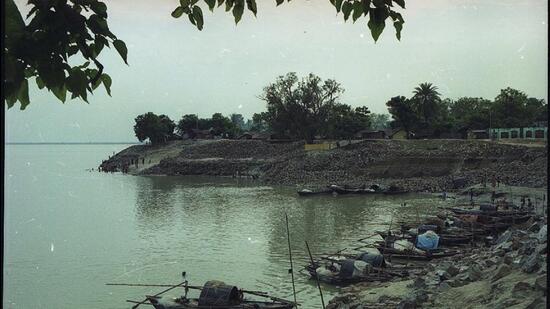
PREMIUMBoats on the Hooghly in West Bengal. (Subhendu Ghosh/HT Photo)
Boats on the Hooghly in West Bengal. (Subhendu Ghosh/HT Photo)
298pp, 499; HarperCollins

Satyacharan Ghoshal, the schoolteacher, is a student of a man who used to teach at a high school in Gopalnagar, 40 kilometres away. His name was Bibhutibushan Bandopadhyay, and he was the author of Pather Panchali and Aparajito, novels set in rural Bengal that were adapted for cinema by Satyajit Ray. References to the classic film trilogy Ray created – Pather Panchali (The Song of the Road), Aparajito (The Unvanquished) and Apu’r Sansar (The World of Apu) – recur like a motif through Bhattacharya’s book as he journeys across the riverine plains of Bengal down to the Sundarbans delta.

A still from Satyajit Ray's Aparajito. (Janus Films)

His journeys follow no clear path or logic. They are the sum of wanderings over many years, with several of the journeys made, as he explains in the introduction, for a research project for the University Grants Commission to figure out what became of school drop-outs. They take him away from Kolkata into “in-between” places, district towns and remote villages where the city’s bhadralok elite rarely venture. Bhattacharya started his project in 2006; he goes back to several of the same places, years later, and finds them changed, often for the worse.

The stories he tells are of these in-between and out-of-the way places and the people who live lives there. They are people like Savitri Munda, a widow from a tribal community, who lost her husband and two children to a mysterious disease – possibly cerebral malaria. “A salishi sabha, village council, had sat in judgment and decided that Savitri had a hand in the plague. They declared her a witch and asked her to pay a hefty fine of two lakh rupees and arrange a feast for the entire village. Her husband owned two acres of land that were now legally hers. But, perhaps, Savitri had also committed another crime. When the census people came to her village, they had enlisted her as literate,” writes Bhattacharya.

The realities of those lives he describes, of men and women mostly from the lower rungs of the class and – in many cases – caste hierarchy are hard and brutal. The stories are told sympathetically, but without drama. The tales of the characters intertwine in the storytelling with flashes from the author’s own life, and reflections from Ray’s Apu trilogy. The book is thus a mix of travelogue and memoir. Yet, it is not strictly nonfiction, because the author says in his introductory note, “In some cases, I have fashioned a character out of more than one real person, bending the factual to be truthful”. Several of the characters, he says, exist only in the pages of the book – and this also applies to several of the places.

A still from Satyajit Ray’s Pather Panchali, which is set in exactly the sort of landscape that features in this book. (Laurie Sparham/Sony Pictures Classics)

The skill of the writer makes it impossible to distinguish the made-up places and characters from the entirely factual ones. The book becomes, for the reader, a curious blend of travelogue, memoir and novel.

The cover blurb describes Field Notes from a Waterborne Land as being about “Bengal beyond the bhadralok”. Bhattacharya however goes beyond Bengal as well, into Orissa. We find him, for example, in a village in the Simlipal forest of Orissa trying to have a conversation with children studying in nearby schools. “Do the children in your village go to school?” the Bengali writer asks in Hindi. A photographer translates the question into Odia. Then a local project assistant translates the question from Odia into Ho, the language of the local Kolho tribe. Their responses reach the author via translations through two languages.

Many of the realities of our country – for example, its ancient and still-present heritage of linguistic diversity - come through in his stories, quietly.

It is in trying to fit these realities into straitjackets of categories and definitions that some confusions arise for the reader – and perhaps, the writer too. For example, the book spills beyond non fiction, with elements of fiction. Its scattered attempts at direct mentions of politics occasionally miss the mark. In the introductory note, the author appears to mix up the National Register of Citizens with the Citizenship Amendment Act.

Author Parimal Bhattacharya (Courtesy HarperCollins)

The book’s claim about being on Bengal beyond the bhadralok is satisfied to the extent that there are non-bhadralok characters, but we also find plenty of bhadraloks in the text, starting with the author himself, who sounds a tad apologetic about the accident of birth that landed him in a bhadralok family. The bhadralok, which literally means “gentlefolks”, an equivalent of the English “ladies and gentlemen”, also proves a hard category to define. The quietly suffering residents of Mahashaypara near Sthirpara, the village near Plassey, described at the start of this review, would be considered bhadraloks... yet their place in the class hierarchy is one that has been in steady decline since Partition. Money and power have slipped away from them in a world where these determine social status.

The beauty of the book is in its vivid descriptions of place and character. The truths it conveys are complex human truths, deeper than facts and statistics and the simple binary certitudes of contemporary politics.

Samrat Choudhury is an author and journalist. His most recent book is The Braided River: A Journey Along the Brahmaputra

The scenes are familiar, brought alive in vividly sensuous prose: “The acrid smell of burning cow dung hung in the air. Through a door left ajar, I glimpsed a mud-plastered courtyard, and a stack of ploughs and wooden cartwheels in a corner. Inside a thatched courtyard, two veiled women were pedalling a wooden mortar. It produced a sound like muffled heartbeats.” Parimal Bhattacharya writes of a locality called Mahashaypara in a village called Sthirpara near Plassey, the historic battlefield where Robert Clive defeated the Nawab of Bengal to lay the foundations of the British rule of India. It is a place whose days of prosperity, according to a retired schoolteacher from the area he interviews, began with the Permanent Settlement of Bengal (a revenue agreement signed between the East India Company and local zamindars in 1793) – and ended with Partition in 1947. An air of tragic decline now hangs over the rural idyll he describes.

PREMIUMBoats on the Hooghly in West Bengal. (Subhendu Ghosh/HT Photo)
Boats on the Hooghly in West Bengal. (Subhendu Ghosh/HT Photo)
298pp, 499; HarperCollins

Satyacharan Ghoshal, the schoolteacher, is a student of a man who used to teach at a high school in Gopalnagar, 40 kilometres away. His name was Bibhutibushan Bandopadhyay, and he was the author of Pather Panchali and Aparajito, novels set in rural Bengal that were adapted for cinema by Satyajit Ray. References to the classic film trilogy Ray created – Pather Panchali (The Song of the Road), Aparajito (The Unvanquished) and Apu’r Sansar (The World of Apu) – recur like a motif through Bhattacharya’s book as he journeys across the riverine plains of Bengal down to the Sundarbans delta.

A still from Satyajit Ray's Aparajito. (Janus Films)

His journeys follow no clear path or logic. They are the sum of wanderings over many years, with several of the journeys made, as he explains in the introduction, for a research project for the University Grants Commission to figure out what became of school drop-outs. They take him away from Kolkata into “in-between” places, district towns and remote villages where the city’s bhadralok elite rarely venture. Bhattacharya started his project in 2006; he goes back to several of the same places, years later, and finds them changed, often for the worse.

The stories he tells are of these in-between and out-of-the way places and the people who live lives there. They are people like Savitri Munda, a widow from a tribal community, who lost her husband and two children to a mysterious disease – possibly cerebral malaria. “A salishi sabha, village council, had sat in judgment and decided that Savitri had a hand in the plague. They declared her a witch and asked her to pay a hefty fine of two lakh rupees and arrange a feast for the entire village. Her husband owned two acres of land that were now legally hers. But, perhaps, Savitri had also committed another crime. When the census people came to her village, they had enlisted her as literate,” writes Bhattacharya.

The realities of those lives he describes, of men and women mostly from the lower rungs of the class and – in many cases – caste hierarchy are hard and brutal. The stories are told sympathetically, but without drama. The tales of the characters intertwine in the storytelling with flashes from the author’s own life, and reflections from Ray’s Apu trilogy. The book is thus a mix of travelogue and memoir. Yet, it is not strictly nonfiction, because the author says in his introductory note, “In some cases, I have fashioned a character out of more than one real person, bending the factual to be truthful”. Several of the characters, he says, exist only in the pages of the book – and this also applies to several of the places.

A still from Satyajit Ray’s Pather Panchali, which is set in exactly the sort of landscape that features in this book. (Laurie Sparham/Sony Pictures Classics)

The skill of the writer makes it impossible to distinguish the made-up places and characters from the entirely factual ones. The book becomes, for the reader, a curious blend of travelogue, memoir and novel.

The cover blurb describes Field Notes from a Waterborne Land as being about “Bengal beyond the bhadralok”. Bhattacharya however goes beyond Bengal as well, into Orissa. We find him, for example, in a village in the Simlipal forest of Orissa trying to have a conversation with children studying in nearby schools. “Do the children in your village go to school?” the Bengali writer asks in Hindi. A photographer translates the question into Odia. Then a local project assistant translates the question from Odia into Ho, the language of the local Kolho tribe. Their responses reach the author via translations through two languages.

Many of the realities of our country – for example, its ancient and still-present heritage of linguistic diversity - come through in his stories, quietly.

It is in trying to fit these realities into straitjackets of categories and definitions that some confusions arise for the reader – and perhaps, the writer too. For example, the book spills beyond non fiction, with elements of fiction. Its scattered attempts at direct mentions of politics occasionally miss the mark. In the introductory note, the author appears to mix up the National Register of Citizens with the Citizenship Amendment Act.

Author Parimal Bhattacharya (Courtesy HarperCollins)

The book’s claim about being on Bengal beyond the bhadralok is satisfied to the extent that there are non-bhadralok characters, but we also find plenty of bhadraloks in the text, starting with the author himself, who sounds a tad apologetic about the accident of birth that landed him in a bhadralok family. The bhadralok, which literally means “gentlefolks”, an equivalent of the English “ladies and gentlemen”, also proves a hard category to define. The quietly suffering residents of Mahashaypara near Sthirpara, the village near Plassey, described at the start of this review, would be considered bhadraloks... yet their place in the class hierarchy is one that has been in steady decline since Partition. Money and power have slipped away from them in a world where these determine social status.

The beauty of the book is in its vivid descriptions of place and character. The truths it conveys are complex human truths, deeper than facts and statistics and the simple binary certitudes of contemporary politics.

Samrat Choudhury is an author and journalist. His most recent book is The Braided River: A Journey Along the Brahmaputra

All Access.
One Subscription.

Get 360° coverage—from daily headlines
to 100 year archives.

E-Paper
Full
Archives
Full Access to
HT App & Website
Games
 
Explore the latest Books News, author interviews, book reviews, literary events and new releases. Discover recommendations, reading lists and updates from the world of literature on Hindustan Times.
SHARE THIS ARTICLE ON
Hindustantimes wants to start sending you push notifications. Click allow to subscribe