Back in 1888, the Glass Thermometer Company was set up in Watertown, which owes both its birth and its name to the Black River. Its proximity to the cities of New York and Washington and the emerging Canadian market just across Lake Ontario meant Watertown was the perfect location for the factory. The easy availability of water to run operations and the convenience of discharging mercury waste into the river offered a win-win situation. Following the tightening of environmental regulations in the US, however, the company relocated its operations to Kodaikanal in 1983. By 1988, it had became part of Unilever.
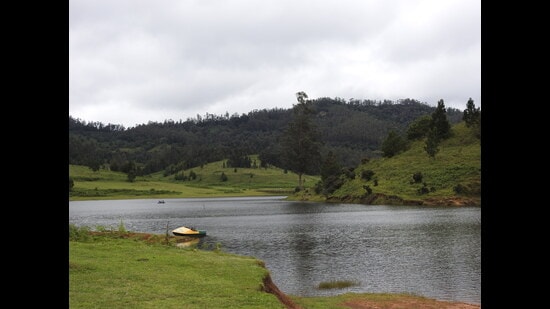
Pollution control laws were in their infancy during the 1980s in India, which helped Hindustan Lever register itself as a “glass manufacturing unit” rather than one dealing in a hazardous metal like mercury. Two decades later, the procedural omissions proved fatal for workers and costly for the company. An independent public hearing conducted a year after the closure of the factory in 2002 documented at least two dozen cases of acute illness and deaths among ex workers of the factory. Corporate crime was indeed committed, resulting in an out-of-court settlement of an undisclosed amount to some 600 ex workers.
Heavy Metal is an in-depth account of how a multinational disregarded human and natural welfare in the pursuit of profit, which led to worker fatalities and the irreversible poisoning of a pristine ecosystem. The Minamata Bay episode of mercury poisoning of the 1950s in Japan had indeed repeated itself. No lessons seemed to have been learnt as the horrible dangers of mercury remained systematically underestimated and ignored in the developing world. At the top, the company claimed the “highest standards of corporate behaviour towards employees, consumers and the societies”. Corporate claims are often beyond public scrutiny as the regulatory regime often gives them the convenience of a safe passage. In the name of progress and growth, eco-disasters are sometimes portrayed as a one-off aberration in the larger scheme of things. With public memory being short-lived and court proceedings dragging on for years, corporate crimes end up being a tiny soon-forgotten entry in the annals of environmental history.
{{/usCountry}}Heavy Metal is an in-depth account of how a multinational disregarded human and natural welfare in the pursuit of profit, which led to worker fatalities and the irreversible poisoning of a pristine ecosystem. The Minamata Bay episode of mercury poisoning of the 1950s in Japan had indeed repeated itself. No lessons seemed to have been learnt as the horrible dangers of mercury remained systematically underestimated and ignored in the developing world. At the top, the company claimed the “highest standards of corporate behaviour towards employees, consumers and the societies”. Corporate claims are often beyond public scrutiny as the regulatory regime often gives them the convenience of a safe passage. In the name of progress and growth, eco-disasters are sometimes portrayed as a one-off aberration in the larger scheme of things. With public memory being short-lived and court proceedings dragging on for years, corporate crimes end up being a tiny soon-forgotten entry in the annals of environmental history.
{{/usCountry}}The Kodaikanal tragedy could have been avoided had due diligence been followed at all stages – from choosing the site of the factory and the administering of worker safety to adhering to waste-disposal guidelines and environmental norms. Instead, the company violated all acceptable guidelines for the disposal of toxic waste causing grievous harm to all life forms. Ameer Shahul, a journalist-turned-public policy crusader, has woven a tragic tale of greed and deceit for which local communities and nature have paid a heavy price. Had there not been environment watchdogs, both alert individuals and committed organizations, the disaster would have gone unreported. Heavy Metal is an absorbing narrative on how collective endeavour by civil society actors forced a corporate giant to close down its polluting operations in 2001.
But this is about more than making a company shut shop for violating all acceptable norms. Never before had a developing country sent a consignment of waste material back to a developed country. This case of “reverse dumping” was not easy to execute. Greenpeace, a global environment watchdog, had facilitated the shipping of 1416 drums filled with 290 tons of hazardous mercury waste from the Kodaikanal thermometer factory to its final destination in Pennsylvania in 2003. As a Greenpeace campaigner, Shahul was in the thick of it all.
Heavy Metal reads like a biography of mercury, the only liquid metal that exists at room temperature. Though it is extensively used in electronic and medical applications, mercury waste is hazardous. As a result, in recent times, the US and many European countries have phased it out. However, as alternatives are expensive, devices using mercury continue to be produced and marketed in many Asian countries. The liquid metal’s exposure and impact on flora and fauna has not be extensively studied and in the absence of scientific evidence, the full impact of the Kodaikanal disaster on the entire ecological system may remain speculative.
Written with passion and clarity, this book raises many compelling questions: has the disaster made environmental regulatory process more potent and effective? Has corporate negligence been made accountable under law? Have enough measures been adopted to help avoid such future disasters? Are protocols for research to gather scientific evidence any better today? Have remediation measures been developed to detoxify contaminated sites? Each of these and related questions beg for credible answers.
Heavy Metal, which recounts the struggle for environmental justice in India, also shows how elusive it is despite decades of social activism. With activism having been throttled in recent times, corporate negligence of environmental regulations may remain lax. By telling the story of this disaster in a compelling way, Shahul clearly hopes to make readers vigilant about capturing future corporate manipulations of the system when it comes to environmental obligations.
This terrifying cautionary tale of corporate negligence is essential reading.
Sudhirendar Sharma is an independent writer, researcher and academic.