Crime reporter Mohamed Thaver’s debut novel, In Plain Sight, presents readers with many insights into the relationship between the police force and journalists who cover the crime beat. His protagonist in this police procedural is Rohan Singh, who joins the National Post fresh out of college and is put on the crime desk.
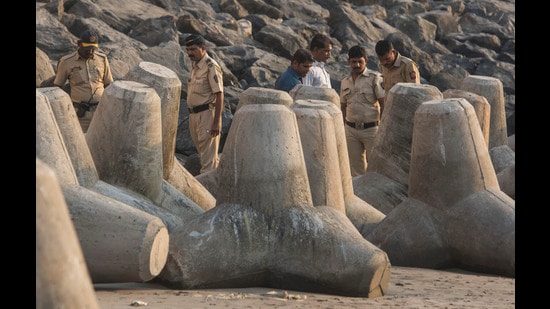
Caught between the standard non-committal responses of the police and the dismissive attitude of his boss, Rohan must figure out whether being a reporter is his life’s calling. As he quickly picks up the ropes of the police-reporter relationship, he must realize that the road to truth is a treacherous one. He can only trust in himself and his ability to ask the right questions.
While he has barely begun to find his feet a series of rapes and murders shocks Mumbai. The bodies of three minor girls are found within a short span of time and the pressure is on Police Inspector Waghmare to bring the killer swiftly to justice. Rohan is now the reporter on the biggest case of his fledgling career and the biggest news story of recent times. All eyes of the bureau are now trained on Waghmare and him. Both are treated as outsiders to the case -- Waghmare by the original investigative team that resents his involvement and Rohan by the old journalistic hands wary of new competition. To get a leg up with the cops, Rohan begins to learn Marathi and cultivate his own sources. His edge over the competition is that he asks questions they don’t.
Rohan learns of the hierarchy that information and scoops follow and must work his way up the food chain before he can get any good leads. He is often betrayed by his colleague Junaid, who Whatsapps links of stories by Rohan that are critical of the police force to the cops. Junaid wants to block the younger reporter’s access and gain leverage. The police has its share of internal politics with senior officers attempting to bring down the current commissioner by circulating stories about police inefficiency. Thaver’s experience as a reporter comes through especially in his portrayal of the sorry living conditions of constables and the corruption of the contractor and Public Works Department assigned to renovate police quarters.
{{/usCountry}}Rohan learns of the hierarchy that information and scoops follow and must work his way up the food chain before he can get any good leads. He is often betrayed by his colleague Junaid, who Whatsapps links of stories by Rohan that are critical of the police force to the cops. Junaid wants to block the younger reporter’s access and gain leverage. The police has its share of internal politics with senior officers attempting to bring down the current commissioner by circulating stories about police inefficiency. Thaver’s experience as a reporter comes through especially in his portrayal of the sorry living conditions of constables and the corruption of the contractor and Public Works Department assigned to renovate police quarters.
{{/usCountry}}The author uses visual comedy expertly: as the cops follow their sniffer dog, the gathered crowd follows the cops, and the media follows the crowd; all going around in circles. Scenes like these help relieve the tension in gritty chapters. A cop, who is obsessed with experimenting with tea, occasionally provides some relief too. Thaver pays tribute to Mumbai’s iconic food joints through Singh, a foodie, who makes regular pit stops at popular Irani cafes and street food joints. Stories set in Mumbai fail unless the city’s pace and never-quit attitude filter through. The book does a good job of presenting Mumbai right from its dark underbelly to its cramped railway stations.
In Plain Sight’s high point is Waghmare’s emotional journey as he tries to solve this case. He is the ideal poster boy for the Mumbai police force and his psychological breakdown and subsequent resurgence is gripping. His neuroses and self-doubt make him a memorable character. Fictional detectives are often fueled by their ego to solve crimes but Waghmare’s motivations are more complex and his dream of eventually escaping to become a farmer is endearing. All of it makes the reader root for him for reasons other than bringing the killer to justice.
While most crime fiction stops at the point where the whodunit is solved Thaver goes on. He shows how an iron-clad case is built making this a good addition to the procedural genre. Waghmare is methodical and patient as he slowly casts his net. However, tighter editing could have helped improve the pace.
Still, In Plain Sight shows a writer very conversant with both, the world of police stations and modern newsrooms, making this a good read.
Percy Bharucha is a freelance writer and illustrator with two biweekly comics, The Adult Manual and Cats Over Coffee. Instagram: @percybharucha