
 E-Paper



Review: Mikhail Bakhtin; A Critical Introduction by EV Ramakrishnan
An insightful monograph that provides readers with a thorough guide to the Russian theorist’s writing locating literature at the intersection of various disciplines

 Prefer HTon Google


In a post-print and post-truth era, the ever-expanding world of fiction shapes the human longing for creative fulfilment and emotional connection. The popularity of fiction, especially novels, owes much to its subversion of cultural and social hierarchies and the depiction of the reversal of the political system. The novel, an exemplary act of communication, picks holes in all that we hold dear.
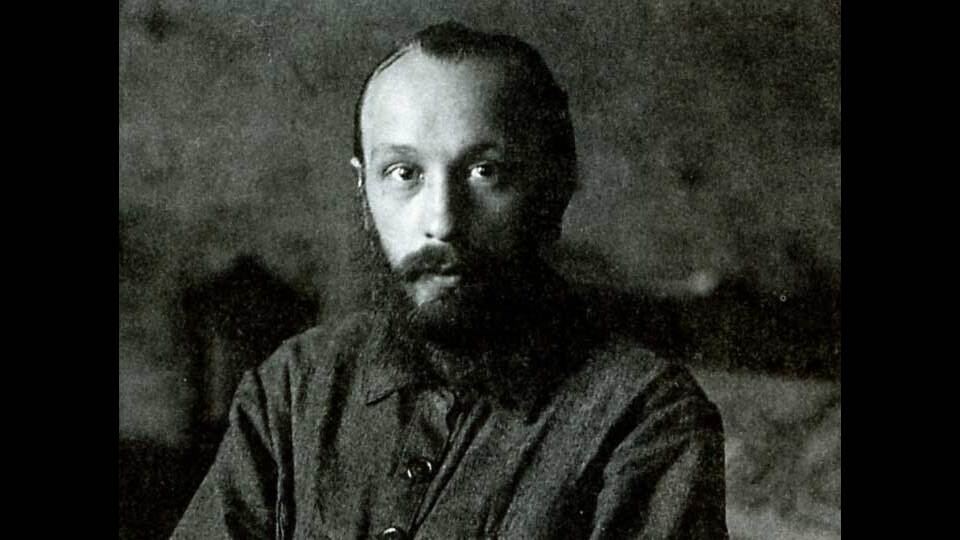
Fiction is more than the nuanced elucidation of mundane reality; it captures the grotesque, the humorous, and human preoccupations too in all their richness and bawdiness. The novel’s pertinent and lesser-known aspects were impeccably articulated by literary theorist, philosopher, social thinker and semiotician Mikhail Bakhtin (1895-1975). He zeroed in on the novel and shaped the discourse on narratology. In literary studies, Bakhtin frequently surfaces; his seminal works, especially his trailblazing but somewhat enshrouded concepts of fiction such as intertextuality, polyphony, carnival, dialogic imagination, heteroglossia, chronotope and popular culture, need eloquent elucidation. Readers need a thorough guide to Bakhtin’s thoughts; one that is less convoluted than Tzvetan Todorov’s Mikhail Bakhtin: The Dialogical Imagination. This is what noted bilingual critic and poet EV Ramakrishnan’s insightful and succinct monograph, Mikhail Bakhtin: A Critical Introduction provides. Incidentally, his book, Malayala Novelinte Desakaalangal (Mathrabhumi Books), won the Sahitya Academy Award for Malayalam in 2023.

Mikhail Bakhtin: A Critical Introduction is divided into seven evenly matched chapters that explain why the theorist emphasizes historical, cultural and social specificity in texts and practices. Texts should not be read through the prism of philosophy, linguistics, anthropology, political science and identity formation discourse. Spelling out Bakhtin’s critical and aesthetic paradigms, EV Ramakrishnan refers to the alternative and interdisciplinary approach to studying literature and language. He aptly points out that the Russian theorist’s writings provide a new and acute ethical perspective that locates literature at the intersection of various disciplines.
Bakhtin brilliantly explained intertextuality. He believed all utterances articulated in a novel are heteroglot and polyphonic as they betray “many voices” and savour different languages. The novel is a public space but quite distinct from everyday life. Unlike poetry, the novel’s narrator does not vent his sentimental assumptions and trials and tribulations but goes with the flow of all discordant voices at any given moment. The novel explores cultural aspirations, linguistic and cultural diversity, and the ethical dimensions of all human endeavours.
Bakhtin makes “carnival” and “carnivalesque” the central tropes to explore the human desire to find a blessed pandemonium that puts all that is considered immortalized and completed in disarray. In a separate chapter titled Carnival and its Ethos: Implications for Literature and Culture, Ramakrishnan describes it as a central form of celebration that renounces the uniformity of high culture. The carnival is an event equally shaped by spectator and performer. It transcends physical boundaries and becomes a site where all sorts of queerness and eccentricity get legitimacy. For Bakhtin, carnival-induced laughter is the laughter of all people: “This laughter is ambivalent. It asserts and denies; it buries and revels. Through carnivalistic misalliances and all its bawdiness, people explore new connections between elements usually kept apart. It creates space for sacrilege where blasphemy, profanity and parody of the sacred are performed through sensory acts.”

EV Ramakrishnan refers to Georg Lukacs,Friedrich Schlegel and George Hegel while explaining Bakhtin’s theory of the novel. He remarks that twentieth-century Western criticism and New Criticism, in particular, made its attributes nebulous, if not elusive. For Bakhtin, creative words, especially stories, are a a site of interaction between the speaker, the utterance, and the context that produces meaning. The story is told by multiple characters, not from a single author’s standpoint. Instead of a unitary reality, there is a plurality of consciousnesses that each character represents. Bakhtin further asserts that in novels, “each word tastes of context and context in which it has lived its socially charged life; intentions populate all words and forms.”
The monograph offers penetrating insights into Bakhtin’s philosophical ideas on the artistic process and its impact on humanities and literature. An entire chapter is devoted to his study on Dostoevsky’s polyphonic novels. In sum, this text offers a refreshing and quick understanding of Mikhail Bakhtin, one of the most profound theorists of literature, culture and human sensibilities.
Shafey Kidwai, a bilingual critic, teaches Mass communication at Aligarh Muslim University.


