
 E-Paper



Review: The Carpet Weaver by Nemat Sadat
A tale of forbidden desire set against the backdrop of politics, religion, and war in Afghanistan

 Prefer HTon Google


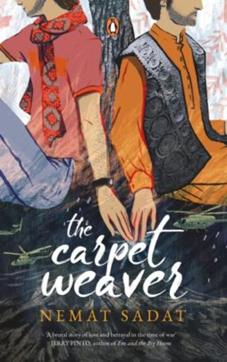
“The one thing I know is that Allah never forgets sodomy,” the opening lines of Kanishka Nurzada’s story, pronounced sanctimoniously by his godfather Zaki jaan at the former’s sixteenth birthday celebration, organized with much fanfare by his parents, set the tone for his narrative recounted in first-person. In a society where ideals of machismo and fervent religiosity rule with an iron hand, there is no place for same sex love. A kuni, the derogatory term for gay men, risks anything from life imprisonment to extreme ridicule and even barbaric acts of cruelty. A hormonally-charged Kanishka is drawn to men and he eventually falls in love with his best friend, the golden boy Maihan Melatyar, who tentatively and furtively reciprocates. Convention dictates they must woo girls “to preserve the integrity of Afghaniyat”. The thought repulses the protagonist who is on the threshold of manhood.
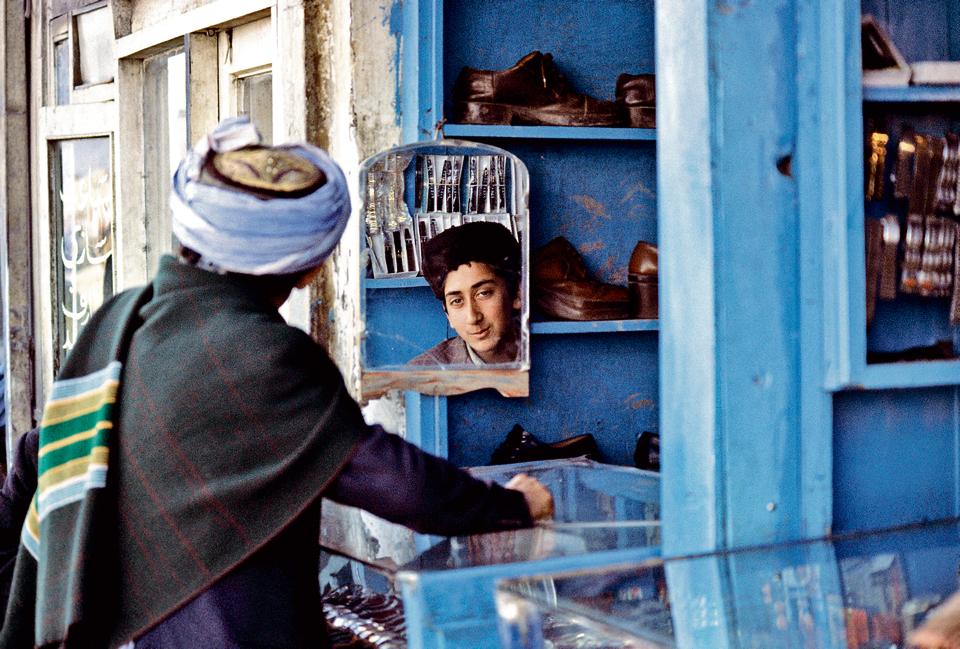
The year is 1977, and Kabul is still some months away from the historic coup d’état, the Saur Revolution, that preceded the Soviet chapter in the history of the strife-torn nation. The halcyon days are a poetic mix of attending the once genteel, now shabby, Lycée Esteqlal, and spending time in the buzzing marketplace that houses the exciting Marco Polo Rugs owned by Kanishka’s Baba. Life is full of boyish pranks and capers bordering on the burlesque: the episode of wild cross-dressing by the three friends, Kanishka, Maihan and Faiz, which ends in a sorry way, and carefree moments in chaikhanas and parks. There are succulent descriptions of festive days and of Kanishka’s mother’s warmth-filled concoctions and conviviality:
“Maadar occupied herself with setting up the sofreh on a low table, festooning a section of our mehman khana until it was more colourful than the charmeuse scarf around her neck. Each of the seven items that she displayed started with the letter S, and each had a meaning: a round tray of sabzih for rebirth; samanak for affluence; seyb for beauty and health; senjid for love; sir for medicine; sumac for sunrise; and serkah for age and patience. Maadar also set out a glass bowl with a glinting goldfish, a flat mirror, two X-shaped foldable book rests that held the Quran and the Rig Veda, and a bowl of haft-mewa loaded with lotus tree fruits and served in their own juices and rosewater.”
Steam-filled hamams are privy to political collusions -- his Baba’s impassioned involvement and covert experiments with Maoism is a significant subplot -- and carry a very palpable homoerotic vibe, especially for the young Kanishka. As the political momentum gathers with uprisings and revolts, lives are ripped asunder. “As spring turned to merciless summer, my family became more insular and reclusive. We drew our curtains and cloistered ourselves in a self-imposed house arrest.” The republic became a socialistic state, and the PDPA (People’s Democratic Party of Afghanistan) seized power. The CIA was covertly at work, while factions in the PDPA -- the dominant Khalq versus the moderate Parcham -- wrestled for power. The political climate worsened during a harsh Leftist regime where people vanished. In due course, the Red Army took over the streets of Kabul, “staring at everyone with their hard-white faces.” Overnight, there was tragedy and displacement.

A large part of The Carpet Weaver deals with loss. The path to freedom is littered with gigantic craters. Unlike the magic realism in Mohsin Hamid’s Exit West(2017), where multiple doors allow the central characters to escape into the beyond and migrate to safer, easier pastures, Sadat’s refugees’ passage to an alleged haven is recounted in excruciating detail. Here, Kanishka’s tale achieves a feverish pitch, and a twisted set of circumstances contribute to a starkly schizophrenic existence with his most ardent desire of being a carpet weaver being fulfilled while living in dire conditions.
The book is divided into three broad segments: life in Kabul, the lurching escape to Pakistan, and the flight to physical and metaphorical freedom in California.
Does the Promised Land lives up to its name? Does freedom guarantee the fulfilling of dreams and reaffirmation of true identity? And finally, how true is that love, because, above all, this is a story about love. A well-sketched bildungsroman, Kanishka Nurzada’s constant pining for his love and his aching need to be accepted the way he is, forms the crux of this story. Alongside, Sadat tackles the theme of loss: of childhood and innocence, of beauty, of home, land and self-respect.
Read more: Review: Half Gods by Akil Kumarasamy
Nemat Sadat’s prose is lucid and his turns of phrase hold the reader. The book is also flavoured with words from the writer’s native tongue, some of which have similar Hindi/Urdu versions – potato pakawras, zarda palaw, for instance.
This is a brave and beautiful debut. Sadat, who now lives in the US, is a fierce champion of LGBTQIA rights. The first Afghan Muslim to come out of the closet, he faced severe backlash from the Afghan and pan-Islamic worlds when he went public with his homosexuality in 2013 and was also ostracized by his family.
A largely homophobic world abhors, pillories and stigmatizes same sex love. Kanishka’s anguish is perhaps Sadat’s. That is why The Carpet Weaver works so well.


