It may now be difficult to understand, but the English considered themselves unfortunate to have settled in India much later than other European powers. Strangely, the Portuguese, the French and the Dutch too had similar qualms and of course, all of them squabbled with each other. The Mughal rulers, whom all of them were trying to woo, meanwhile, presided over an expansive, efficient, and fabulously wealthy realm.
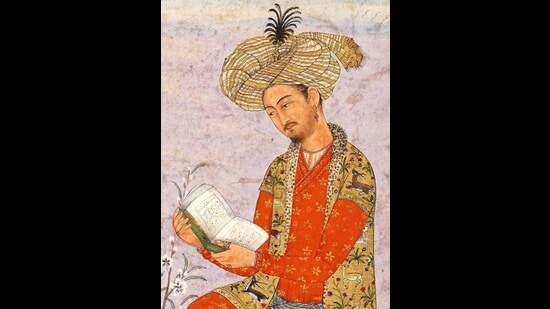
Babur, the founder of the Mughal empire in 1525, was as wealthy as the Ming emperor of China. But unlike those who came to plunder India of its incredible riches, his descendents sought to make it their home. Consequently, the governance of this immense and expanding kingdom was characterized by a central bureaucracy with the emperor as a central authority. After the initial turbulent phase, the empire lasted until 1707. The Alamgir, also known as Aurangzeb, was the last of the Mughal emperors.
Unlike the Europeans who mastered the sea, the Mughals held sway on land, and as long as they ruled, the former waited at the sea route. Indeed, the English had to wait for the eclipse of the Mughal empire in 1757 before they could advance into India after winning the Battle of Plassey. Internal strife led to the undoing of the empire. In the process, the treasury dropped from a high of 90 million rupees to just about 10 million. The symbolic loss of material possession was a grim indication of how far the Mughals had fallen.
{{/usCountry}}Unlike the Europeans who mastered the sea, the Mughals held sway on land, and as long as they ruled, the former waited at the sea route. Indeed, the English had to wait for the eclipse of the Mughal empire in 1757 before they could advance into India after winning the Battle of Plassey. Internal strife led to the undoing of the empire. In the process, the treasury dropped from a high of 90 million rupees to just about 10 million. The symbolic loss of material possession was a grim indication of how far the Mughals had fallen.
{{/usCountry}}India used to be a place of sweet fragrances and flavours of spices, an earthly paradise of gems and diamonds. Some of the most lucrative commodities were traded from here. Its share of the world’s GDP was 22.6 percent whereas that of England was a paltry 1.8 percent. During Mughal rule that lasted 200 years, India became one of the largest and most prosperous centralised states in pre-modern history. Nothing which the English traded evoked interest among the Mughals, who saw little gain in trading with a small, cold island on the other side of the world.
Frustrated that they were making no headway, the English attacked the Mughal entourage to Mecca in 1695. Pilgrims were looted, raped and killed. Most of the attackers were captured and beheaded. Al-Azami argues that while the English approach was built on loot and murder, in the grand scheme of things, it was the Mughals who mattered. Their influence was so great that the English monarch sent ambassador after ambassador to woo the Mughal emperor, who couldn’t be bothered with sending a counterpart.
Mughal history hasn’t been interpreted and written quite like this before. Al-Azami does an appreciable job of revisiting the dynasty through a playful but serious lens. She is particularly mesmerized by the Mughal description of 17th-century England as a underdeveloped island nation.
Travellers in the Golden Realm seeks to retrieve forgotten perspectives and to unveil the early picture of England vis-à-vis Mughal India. In the end, what this work does very well is make the reader realise that history is complex and full of nuance.
Sudhirendar Sharma is an independent writer, researcher and academic.