Over the years, the reputation of Arvind Krishna Mehrotra has grown, both as a poet and translator, though mainly as a poet. But his translations, mainly from Hindi, are also significant. After a gap of 25 years comes this new, quite extraordinary collection which are mainly variations set in the times of an aging Ghalib and a revisitation of the Baharlu Turkish poet Abd al-Rahim Khan-i-Khanan (1556-1627) who was a special presence during the reign of Akbar and Jehangir. Besides this, are poems on the recovery of old letters and odd ends and objects from his family home in Lahore.
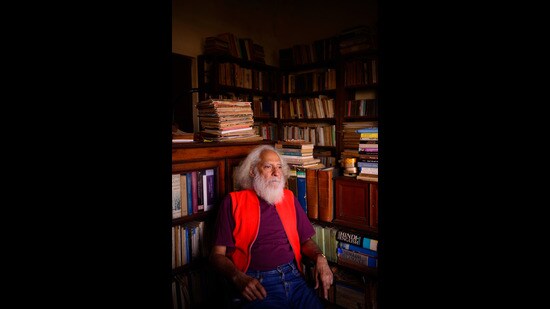
The collection begins with Book of Rahim on the poet, translator and Mughal military general. In a long sequence of poems, several stand out.
An example:
If the rosary’s broken,
you thread the beads again,
and you thread them a hundred times.
You do the same, Rahim says,
{{/usCountry}}You do the same, Rahim says,
{{/usCountry}}with someone you love.
This section is followed by Ghalib, A Diary, which he wrote between 1857 and 1858, when he was under pressure from British rule. But, as Mehrotra says, “Ultimately, origins, ours, a poem’s, are labours of love. And, like love, they are mysterious, unfathomable”. And indeed they are.
The third section, Book of Lahore, begins with the evocative verse:
Unterrestrial. ungoogleable. unreachable.
landlocked city that erupts from the sea
and disappears in the sky;
whose birds sing in the dawn to come;
the walled city without walls, Lahore.
This is followed by an autobiographical prose section in which the poet returns in his quest to find his origins in Lahore where his mother once played rummy and the harmonium and led the bhajan singing. This section culminates with four short poems, including one called Whatever became:
Whatever became
of Raj Kanwar Mehta
of Government College?
He left behind a book
that did better than him.
He inscribed his name
on the flyleaf
Which is where he survives.
Remembered by someone
who never knew
Raj Kanwar Mehta.
The final section, Laugh Club of Gandhi Park, contains some very fine poems, including General Post Office and the last one called Cage on a rat and a rat trap.
In poetry in English in India, Mehrotra is an original and distinctive voice, working quietly but tirelessly from his home in Dehradun. Over the years, he has written and edited a substantial body of work, deftly, and without seeking any kind of publicity. He is the opposite of most other Indian writers and poets craving for attention and undeserving of publicity.
Manohar Shetty has published several books of poems including Full Disclosure: New and Collected Poems (1981-2017). He lives in Goa.