Fariduddin Mohammad Attar Nishapuri lived between the twelfth and thirteenth centuries in Nishapur, a major city in the Khorasan province of present-day northeastern Iran. He stands among the greatest voices of classical Persian poetry. His Mantiq ut-Tair (The Conference of the Birds) remains one of the most sustained allegorical works in the Sufi tradition. It shaped the imaginative world of Jalaluddin Rumi, who recognised Attar as a precursor.
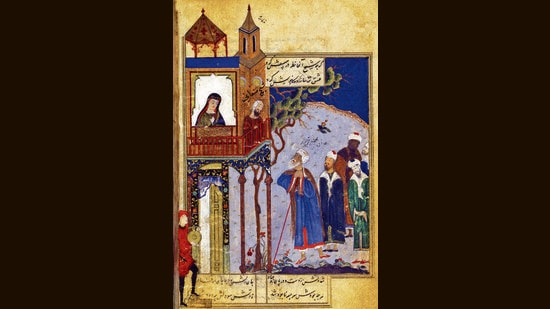
To return to Attar now is to encounter not a distant figure but a voice that still speaks with clarity. Sholeh Wolpé’s The Invisible Sun brings that voice into contemporary English with careful reflection and discipline. Her work reflects a long engagement with both Persian and English literary worlds.
Wolpé is an Iranian-born poet, playwright, and librettist with a wide body of work. Her earlier translations include The Conference of the Birds and Sin: Selected Poems of Forugh Farrokhzad. Born in Tehran and educated in England and the United States, she now divides her time between California and Barcelona. Her writing carries the mark of that passage across languages and histories.
Her work on Forough Farrokhzad offers a revealing parallel. Farrokhzad wrote with an intensity that belonged to a brief period of cultural openness in Iran. One of her most striking poems, Juft, captures the starkness of loveless intimacy:
{{/usCountry}}Her work on Forough Farrokhzad offers a revealing parallel. Farrokhzad wrote with an intensity that belonged to a brief period of cultural openness in Iran. One of her most striking poems, Juft, captures the starkness of loveless intimacy:
{{/usCountry}}shab mi aayadva pas is shab taareekiva pas az taareekichashm-hadast-hava nafas-ha, va nafas-ha, va nafas-ha ...va sada-e aabke faru mi raizadqatra qatra qatra az sheerba’d do nuqta-e surkh
az do seegaar-e roshanteek taak sa’atva do qalbva do tanhaai
Wolpé translates it with restraint and clarity:
Night comesthen darknesspast night’s darknesseyes handsthen rhythmic in-out in-outand the drip dropdrip drop
drip drop of waterslipping from the tapthen two cigarettestwo spots of glowing redthe tick tick of a clockand two heartssteeped in loneliness
Wolpe belongs to a generation shaped by the Shah’s modernisation project. She moved with ease in a cosmopolitan world, and was known to recite and discuss Forough Farrokhzad’s poetry among friends. The Revolution of 1979 marked a decisive rupture. She withdrew from public view in its aftermath and, when she re-emerged decades later, she had passed through a markedly different phase, turning towards a more doctrinal engagement with faith and reassessing her earlier life. This trajectory reflects a wider Iranian experience. Yet it is also evident that a younger generation, especially women, continues to resist the constraints imposed on expression and conduct. Wolpé’s own description of herself as a bilingual and bicultural writer suggests a position shaped by these crossings rather than confined by them.
Iran now stands at a moment of strain again. The present unrest, sharpened by internal dissent and external conflict, points to a deeper shift in that society. The country has already passed through several decisive turns. It moved from inherited forms into a state-driven modernity under the Shah. It then entered the rupture of the Revolution and the long dominance of the Ayatollahs, whose clerical rule did not merely reorganise the state but sought to regulate thought, conduct, and expression in both public and private life. Over time, this produced a visible tension between authority and lived experience, especially among the young and among women, where resistance has taken its most articulate form. Each phase reshaped habits of thought as much as institutions. The present moment may well mark another transition. It carries the signs of a chrysalis. A different order will emerge when the present violence subsides, though its contours remain unclear.
In such a time, Attar’s poetry acquires an immediate force. It does not speak in political terms, yet it addresses the inner life with a seriousness that unsettles all outward certainty. The title of Wolpé’s volume comes from one such poem:
There is an invisible sunhiding inside us all.One day, the veil falls awayand the revealed sun shines.and in its radiant lightall virtues and corruption vanish.
These lines point to a conception of being that dissolves the oppositions on which public conflict rests. They turn attention inward, where any lasting transformation must begin.
A full assessment of Wolpé’s translations would require close comparison with the Persian originals. Her English versions are clear and composed. They convey something of the stillness and concentration that define Attar’s verse. The absence of the Persian text, however, denies the reader the chance to engage with the original and to assess the translation against it.
Fidelity to the source language remains central to any serious act of translation. In the case of poetry, this becomes even more crucial. A translation that excludes the original text denies the reader the opportunity to engage with the work in its primary form, to hear its cadence, and to measure the translation against it.
It is often argued that translations exist for those unfamiliar with the source language, especially its script. This is an oversimplification. Readers occupy a wide spectrum of competence. Many may not read the script with ease, yet retain a familiarity with the language sufficient to appreciate its sound and structure. More importantly, in the absence of the original, there is no reliable way to assess the translator’s degree of fidelity and competence.
A practical solution presents itself. Alongside the original text, publishers should provide a Roman transliteration. This allows readers unfamiliar with the script to access the poem’s phonetic life, while those with some knowledge of the language can engage more meaningfully with its form. Even readers with no knowledge of the language gain something of its rhythm.
Translations of poetry, particularly from languages such as Urdu, Hindi, and Persian, should therefore include both the original and a Roman transliteration. This would set a minimum standard and curb the increasing frequency of loose or overreaching translations that stray too far from the source. At times, even accomplished translators have produced versions that bear little resemblance to the original. One recalls, for instance, Aijaz Ahmad’s ‘versions’ of Ghalib in Ghazals of Ghalib: Versions from the Urdu (Columbia University Press, 1971), where the distance between text and translation raises fundamental questions about method.
Still, in bringing these poems into English, Wolpé restores a tradition grounded in love, humility, and inward attention. At a time when Iran stands at another threshold, such writing carries renewed weight.
Sadaf Fatima is Assistant Editor, Urdu Adab, and heads the Academic Publication programme at Anjuman Taraqqi Urdu Hind. She knows Persian, Arabic and Urdu, and is an expert on the cultural history of Delhi in the 18th and 19th Centuries.