Satirical columnist and best selling author of Oh! Those Parsis!, Berjis Desai is back with his first novel Towers of Silence, which chronicles roughly a hundred years of Parsi clans in British and independent India, takes several cues from the Latin American tradition of magical realism. The sleepy town of Navsari, home to the Bhamgaras, is much like Marquez’s Macondo. The novel follows the Bhamgaras as they deal with pastoral chores, dwindling finances, lecherous cousins, insipid husbands, dullard progeny, family curses, black magic, the mundane claustrophobia of the town’s streets, and the need to preserve the Parsi way of life.
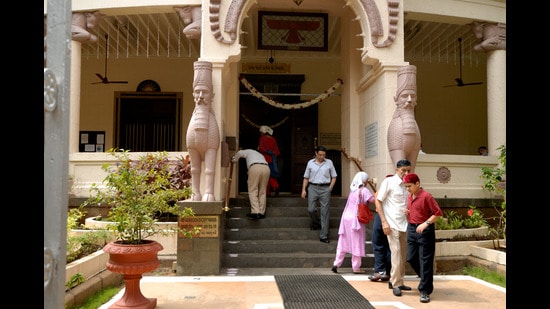
The novel begins with the death of Burjor’s father Rusi. As his body is heaved to the Towers of Silence, the mourners follow panting throughout the uphill journey. Time ceases to be linear and becomes more of an argument and a rebuttal. As the motives and agendas of the characters become clear, Desai uses the past and the present to show the many human and cosmic forces that are at play. As his characters question free will, the author proves to them and to the reader, that they have little of it. His analysis of prayers and ceremonies is nuanced, well researched, and often accompanied by hilarious musings.
Rusi’s distinguished career as an editor of a national daily, poet, freedom fighter, and friend to Morarji Desai, is presented rather sarcastically but without malice. At the funeral, the author narrates with biting humour that the dog brought out to verify death as per tradition is quickly dragged back by a pallbearer lest it raise a hind leg. Here, death is more than a common occurrence; it is a primal force that is poetically delivered. There is justice almost of the Biblical kind with sons avenging the deaths of their fathers and fathers avenging the death of their babies. Death here is a means of exacting revenge, an equalising force among families, but above all, a marker of stature for certain characters. In the world of the novel, Jehangirji’s use of a cursed piece of jewellery against his enemies is a move worthy of a patriarch.
{{/usCountry}}Rusi’s distinguished career as an editor of a national daily, poet, freedom fighter, and friend to Morarji Desai, is presented rather sarcastically but without malice. At the funeral, the author narrates with biting humour that the dog brought out to verify death as per tradition is quickly dragged back by a pallbearer lest it raise a hind leg. Here, death is more than a common occurrence; it is a primal force that is poetically delivered. There is justice almost of the Biblical kind with sons avenging the deaths of their fathers and fathers avenging the death of their babies. Death here is a means of exacting revenge, an equalising force among families, but above all, a marker of stature for certain characters. In the world of the novel, Jehangirji’s use of a cursed piece of jewellery against his enemies is a move worthy of a patriarch.
{{/usCountry}}Those looking to get a primer on the Parsi faith will find accurate insights in this novel. Sethna’s unabashed celebration of the community’s eccentricities is honest and extremely relatable; Rusi’s critique of the Parsi method of disposing the dead stops as soon as it draws national attention. “We do not exist to be sport for other communities,” he tells his son. His complex ethics are another typically Parsi focal point. A budding poet, he liberally borrows from the Romantics while also writing nationalist pamphlets and staunchly opposing British rule. For all his bravery, it literally takes a baba to help him escape the hold of his mother. Also true to form, many of the characters blame their misfortunes on the departure of the British. The angst of the community’s elderly can be summed up in Bomanji’s dying lament about being unable to believe that it’s been a whole 11 years since the British left. A funnier introduction to being Parsi would be hard to find. That a novel about Parsis takes roughly 24 pages to get to its first cuss word also shows remarkable restraint on the part of the author.
Rusi’s son Burjor is a fictional character that the community can truly rally behind. That he is quite the antithesis of the prevailing image of a Parsi is brought to light in a hilarious interview with the British Council career advisor. When asked if either of his parents had studied in England, he responds that neither is a matriculate. Likewise, questions about his school reveal that he studied at New High School, where Gujarati and Marathi were the mediums of instruction. Unlike, his ancestors, though, Burjor is morally flexible, almost Machiavellian, in his approach, and an anathema to his family’s enemies. His absolute decimation of the many cosmic and human forces set against the Bhamgara clan makes for an extremely engrossing read.
Ambitious and mammoth in its scope, the novel traverses Indian historical milestones in intimate ways, and the tale of a Parsi clan slowly permeating through all facets of a young nation is a truly engrossing read. It is no mean feat to maintain the pace over 400 pages but Desai manages it by layering conflict at several levels. He begins with family dynamics, throws in a spiritual battle between good and evil, and adds to it the survival of an ancient faith, and the reincarnations and karma of all those involved. In his adept hands, religion, faith, and God-like forces drive characters together, only to tear them apart, as happens with Burjor’s marriage. Mostly though, what keeps the novel going is Desai’s humour, which is deadpan, perfectly timed, and particularly infectious towards the end.
Desai succeeds in imbuing a very Indian flavour to the novel’s magical realism. While it does feature the expected magical pathways and disappearing walls, it also has celibate boys with the power to cure scorpion bites, babas who read Akashic records and engage in astral travel, tantriks, cosmic energy lines, past lives, auto writing, seances, and much more. The Indian occult arts, the black arts, and the cosmic fight between good and evil all play a major role.
Towers of Silence is a remarkable novel that fuses several literary aspects. At its heart, it has magical realism, elements of an occult thriller, and even sections that read like a courtroom drama. But of what there is no doubt is that Burjor is one of the shrewdest fixers the fictional world of Bombay has ever seen. Desai’s crowning achievement is the creation of a dagger as sharp and silent as Burjor Bhamgara. One hopes to read more and soon.
Percy Bharucha is a freelance writer and illustrator with two biweekly comics, The Adult Manual and Cats Over Coffee. Instagram: @percybharucha