
 E-Paper



Interview: Avinab Datta-Areng and Divya Nadkarni, editors, nether Quarterly
On promoting young poets, encouraging plurality, and balancing personal and professional lives with working on the literary magazine

 Prefer HTon Google


The Indian literary journal nether, which appeared in print, made a splash by promoting the work of young writers. It suspended publication for a number of years before recently reappearing as an online magazine that’s published every quarter. The editors talk about what’s in store.
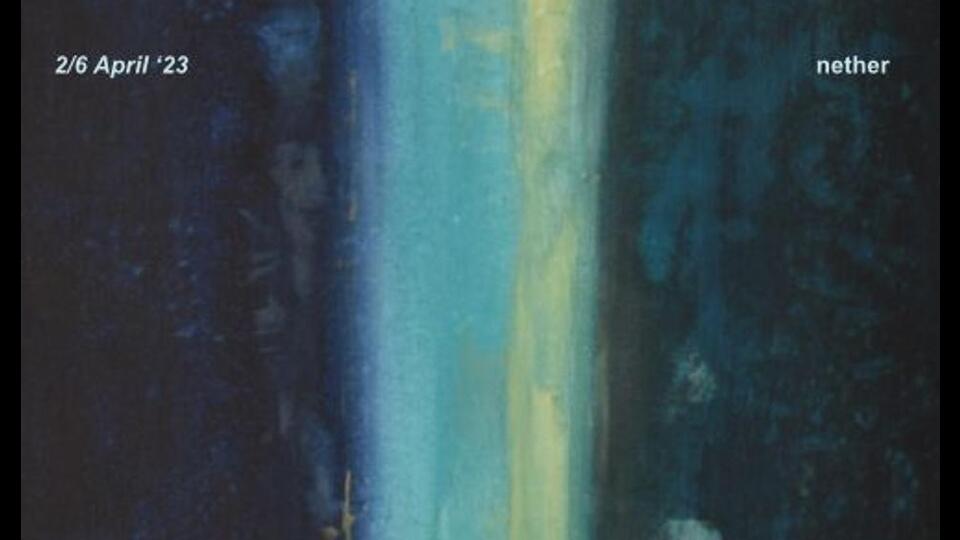
In its previous form, nether was a rarity in India – an English language literary magazine in print. At the time, there were few lit mags around so nether was creating a space for new, experimental voices. Flash forward to today: there are some more journals in India, and a few foreign ones have become more open to Indian contributions. Are these considerations relevant for you?
Yes, they are relevant. In the sense that, at least here at home, specifically, there’s been a great deal of progress made by the literary community, outside of institutional support, which is still sadly lacking. There’s been a shift in the scene. One can safely assume that it only gets better and better from here. We sensed this almost seven years ago when we decided to stop publishing nether. We didn’t know whether we’d revive it in the future, but we knew and were seeing that things had been set in motion. More and more young writers, readers, and people from the community were resilient, confident enough to start, sustain, and participate in the making of a literary journal.
What prompted the return of nether as an e-journal?
We really can’t think of a specific reason but we generally missed everything that went into producing a journal. We knew we couldn’t sustain it at all if we relaunched again as a print issue. It’s almost like a death wish to try and run a print literary journal here. We don’t know how or why we did that for those years, despite the odds, the sheer constant impossibility, though we never regretted it once. So we decided to be realistic – we wanted to revive nether; an e-journal was our best bet.
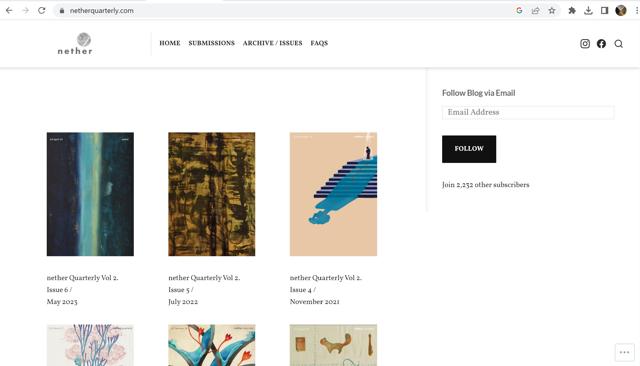
nether welcomes poems and fiction that make political statements. What are the values that lead you and your guest editors to envision nether as political?
Having guest editors on board is a way for us to experiment with the idea of what a literary journal can do and, apart from its core values, perhaps how it can adapt and never be a single journal of sorts. We believe that, in such polarizing and difficult times, it’s crucial to encompass as many possibilities, voices, and narratives as we can. We also believe that having emerging voices asking writers to respond to a particular theme keeps the questioning spirit alive; there’s a sense of learning and confrontation. Each guest editor brings in a level of astounding complexity to the issue – for themselves, us, the writers, and readers – and we’ve noticed that our calls and themes are only getting more complex with each subsequent issue. I guess having a guest editor also helps us keep our own subconscious biases in check.
As far as the question of the political is concerned, we wanted to make nether a more collaborative project. We want to make it more inclusive, to actively engage with work that is often overlooked, and encourage voices from the margins to play a more staple part in our collective imaginations. We are well aware of the climate of which nether is part. Almost everywhere, the fabric of life-in-community, our ways of being with and understanding one another, are steadily being pulled apart. Bad or repressive politics stifles creativity. We wanted nether to be committed to a democratic plurality, to facilitate a political community, and to create a space for dialogue and dissent.
Compared to lit mags which publish web pages, nether’s issues are offered as downloadable PDFs. Such files are easy to share and archive. How did this innovation come about? Is it easier or harder to implement than web pages?
We wanted to have nether as a downloadable book: something that can be easily archived on a personal computer, printed etc. We even tried our hand at making epubs, but well, limited tech skills… We don’t know if it’s easier or harder in general, but it is easier for us, certainly. We do most of the work with the manuscript ourselves, as we’ve always done: formatting, typesetting, proofing etc. And our skills are limited to typesetting books.
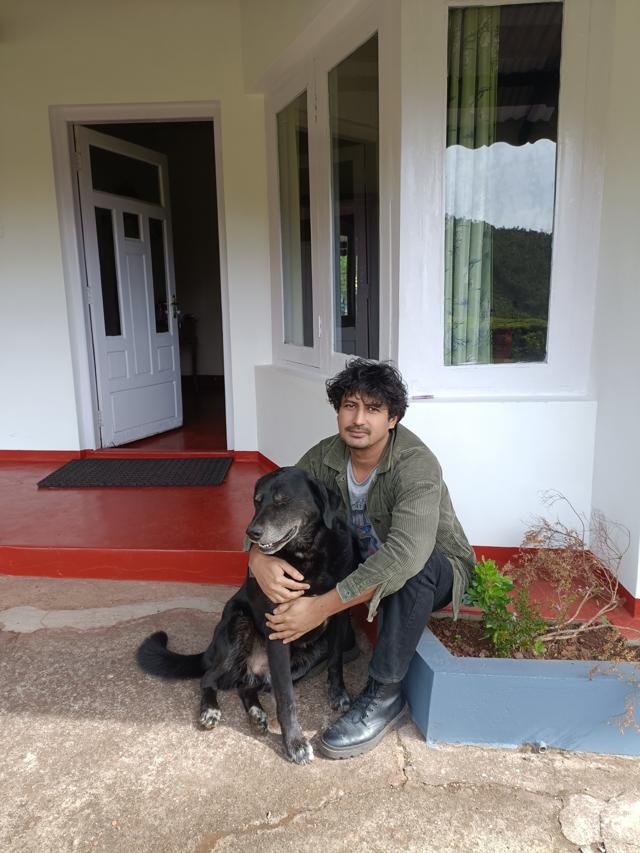
nether Quarterly is changing its periodicity. Will it become a half-yearly or an annual publication or will it be published whenever an issue is satisfactory?
Like we said, our issues – its themes, what the guest editor wants and how the writers see it – are becoming, rightfully, very demanding and complex. There’s a feeling that one needs more time to do justice to this and be fair to the writers and editor involved. Then we have our own personal and professional lives, which have, lately, been difficult to navigate. So though we’d like to publish four issues a year, and usually have enough material for them, we might need to bring it down to three or two, unless we’re able to build a stronger team.
Many editors of literary magazines have mentioned how difficult it is to juggle their personal and professional lives with work on their magazines. This difficulty was why, in the past three years, at least two well-known lit mags have taken an indefinite hiatus. A barren patch appeared in the ecosystem for Indian poetry in English, as a result. Could the drain of talent from literary journals be stemmed through institutional support?
We’re kind of ambivalent about that. Frankly, we’re not sure what this support would look like. We have a national academy of letters, but we’re not certain of how they help/have helped writers or publications sustain themselves. Arts foundations are few and far between and it rarely does anyone offer financial support in the form of grants or fellowships to a writer, especially a younger writer. It’s near-impossible in this country to support oneself financially as a writer. Unless you’re a specific kind of writer, you have to have another source of money. So, yes, any form of support would go a long way. We don’t see the situation changing for writers anytime soon; unless you have some philanthropist, patron of the arts kind-of-figure who singlehandely, directly or indirectly, steps in and offers support.
Writing is lonely work but a lit mag becomes a hub of interaction between writerly folks. Has nether brought you and others into the embrace of a community of writers and readers?
I think a majority of our conversations with other writers happens through the writing that comes our way. We’ve also been collaborating with other organizations in the form of podcasts chiefly, and going forward, we hope to engage more with our community and readers through this.
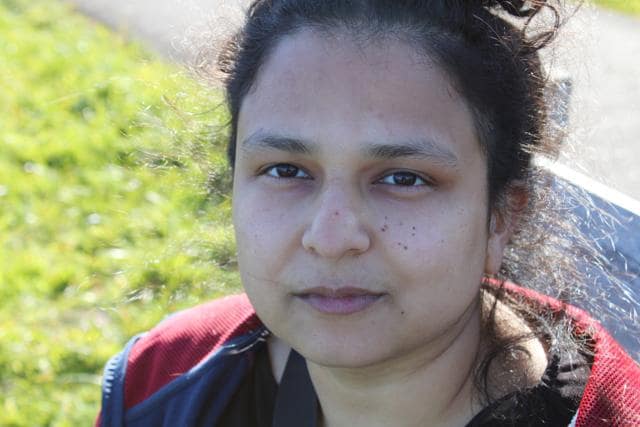
Your podcast, Ideas Behind Bars, deals with censored, stifled or imprisoned thinkers, artists, activists and writers. How did you arrive at this theme?
(Divya Nadkarni): Well, I’ve been working with a small solidarity group for academic freedom (InSAF India) for a few years now. We first got together to build international support for the BK16 (the 16 people arrested in the Bhima Koregaon case) in early 2020. Alongside our activism, we also felt the need to engage more deeply with the thought and work of these writers/thinkers/activists incarcerated by the State, and also to build some sort of public conversation and understanding about what they are actually writing about/saying. That’s how the podcast came about.
Has nether helped your creativity, and if so, how?
We suppose it has, in some way. Meaning, it may not necessarily help us write more but it definitely keeps us grounded, in touch, and aware. Sometimes, it acts like a collective pool from which we draw a sense of security and encouragement. It reminds us to keep going and to stay in this process of writing, its movements, struggles and joys.
Is nether driven by volunteers? What keeps you motivated?
We do have two volunteers currently: Yashka Chavan and Vaishnavi Sharma. Yashka helps us with our social media and Vashnavi is our web wizard. We’re always on the look out for readers to volunteer for us. As a matter of fact, we’re also in the process of making some structural changes to how nether operates and intend to get on board a full-time co-editor. Perhaps what keeps us motivated is the wonderful writing we receive, which never ceased even during all those years when print-nether had “folded”.
Will the full-time co-editorship be a paid post? What other structural changes are planned?
No, it will be a voluntary post, just like ours is. We’re not in a position to pay ourselves or anyone willing to work with nether, though we hope to change that soon. We’d like to run the journal in a more formal and organized manner. That could mean bringing in competent volunteers whose skill sets are specific and not editorial; people who may be good with the social expansion of nether and those who could help make it financially sustainable.
Suhit Bombaywala’s imaginative and factual writing appears in India and abroad. He tweets @suhitbombaywala.


