
 E-Paper



T Keditsu: “In rural India, the idea of ‘children’s books’ becomes superfluous”
The author and teacher from Nagaland, who won the ₹6 lakh Neev Literature Festival fellowship for Children’s Book Creators, on venturing into writing because she couldn’t find any books featuring Naga characters that she could read to her own kids

 Prefer HTon Google


Your book Wrestling Day released recently. What was it like to create a book with Naga characters and set in Kohima, which is rare for Indian children’s publishing in English?
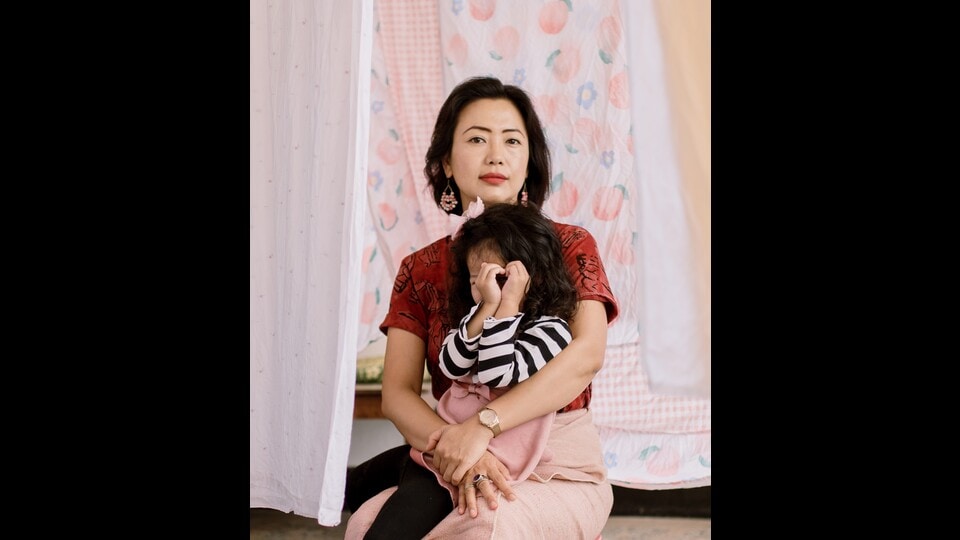
It was a dream come true. I ventured into writing children’s books because I couldn’t find any children’s picture books that featured Naga characters or places to read to my own children. One can ask or try to persuade other writers only so many times to fill that gap. So, I wrote my first picture book titled Ukepenuopfü, a retelling of an Angami origin myth, with my own ‘masala’. Locally, it was a great success because it allowed many parents and children to see themselves and their lifeworld in a book for the first time. When Sayoni Basu asked if I could write a book set in Nagaland, I jumped at the chance of giving, through Wrestling Day, not only Naga kids, but kids in India and elsewhere a glimpse of my beautiful home town and her culture.

Your treatment of a subject that is often considered hyper-masculine and aggressive is so tender. Aneingu, the boy who is going to make his debut as a wrestler, is upset because he forgets to carry his mother’s shawl with him. His cousin Ashiü says, “It is believed that if you wear your mother’s shawl when you wrestle, it brings strength and protection.” What got you excited to write this story?
It is very gratifying to hear your assessment. Thank you! Traditionally, Naga wrestling was most definitely an exclusively male sport but it did not mean that women did or do not participate in other ways – whether it is mothers, sisters and wives supporting wrestlers, or the many ways women contribute to the staging of matches. Wrestling is very much a community event – one that thrives on the synergy of men and women working together. I wanted to capture that through my story by having two little girls ‘rescue’ their cousin, whom they clearly idolise. I was deeply moved that one of Naga wrestling’s all-time greats, Kezhalelie Keretsü, picked up on this theme when he read my book Wrestling Day. At the Kohima launch, he delivered a touching speech about the role women in his life had played to make him the great wrestler he was.
The book uses a lot of non-English words, trusting readers to get the meaning from the context instead of giving them a glossary. This is quite rare in children’s books. What was the thought process behind this?
It was a decolonial thought process. If we imagine stories in their original form and intent – as oral – language is the most visceral way for the listener to get a feel of a people or culture. As children, we were taught to address elders using vernacular terms. I teach my children the same. It’s the most intimate way of connecting with someone. As a poet, I’m always thinking about what my words ‘sound’ like, what kind of effect they create. When I write my stories, I also imagine them being spoken – if this story was being read out, it would sound so unnatural for a little girl in Kohima village to call her paternal uncle, ‘Uncle’, the terms Aphfüzhao, Apfüzao etc, indicate kinship with an intricacy that English cannot match. And objects like Mesü – a water vessel made from dried gourd shells — don’t exist elsewhere, so it felt right to offer a new word to the lexical melee that is the English language.
You use social media to promote indigenous textiles. How was the experience of working with illustrator Rishita Loitongbam on the clothes that your characters wear?
Sayoni Basu, my editor at Duckbill Books, proposed a quirky method of putting Wrestling Day together. She matched with an illustrator, but we would communicate through her and not directly. I am passionate about textiles, and a lot of my research went into the illustrations of my previous book Ukepenuopfü as well. I brought that same attention to detail in the images and information that I shared with Rishita. I love the fact that Rishita understood the cultural and political importance of representing the attire of the characters accurately. Apart from that, her illustrations of places in and around Kohima, were thoughtfully nuanced and I commend her for that. Praise for her illustrations features in most of the feedback that I get from local readers, especially about how they were moved to see our town life in our book.

Tell us about The Only Child, your book proposal that got the Neev Literature Festival (NLF) Fellowship for Children’s Book Creators.
This book is proving to be my undoing but is also my chrysalis. The saying ‘Those who can’t do, teach’ keeps salting my creative wounds. I am grateful that I have been given the fellowship. It has allowed me to think more deeply about what a children’s book is, and to appreciate the difficulty of translating my ideas as an academic to a story that people will read.
The book is about Kevi, a boy of mixed tribal parentage. His father is Angami and his mother is Yimkhiung. He has been an only child for almost 10 years when his parents conceive again. The father, who is an administrative officer, gets posted in the Shamator district where his mother is from. So, after living in Kohima, he has to move with his family and new sister to an interior and remote place. The book is about his first year there, his adventures and discoveries.
I really hope that this book will open up a new part of Nagaland to Naga readers and readers from elsewhere. As part of this fellowship, I went for a field trip to Shamator district where the book is set and found a place rich with stories. I want to try to bring some of that into the book.
At the authors’ retreat a day before the Neev Literature Festival in Bengaluru, you said “Reading is supposed to prepare children for life. Why are we sanitizing children’s books? The construct of childhood that we are holding on to is colonial. Indigenous traditions of storytelling do not infantilize children in this manner.” Whom do you hold responsible for this sanitizing, colonizing, and infantilizing?
Maybe not so much ‘whom’ but what -- events and forces such as colonialism, neo-colonialism and capitalism that have engendered ways of thinking about childhood that were transposed from one class or culture to another. Whether imposed, cultivated as ‘taste’ in the sense that Pierre Bourdieu expounds and connected to that, simply made aspirational.
Also, the ways in which these constructs of childhood are organised in silos to better facilitate transactions that keep a certain network of profit and exploitation in place. When we consider that literacy for many children is a byproduct of coming to school for that one square meal, this discussion of whether they are reading ‘age appropriate’ books and how we classify books as such, is almost ridiculous, verging on unethical.
A young man I know read the Bible front to back many times over as a child growing up in interior, rural Nagaland – it was the only book he had to read. A similar experience captured so poignantly by Betty Smith, in one of my all-time favourite books I read as a child (I was 10), A Tree Grows in Brooklyn, where Francie Nolan’s mother has only The Complete Works of Shakespeare and the Holy Bible for her children to read.
I loved to read but ‘children’s books’ were hard to come by so apart from my cousin’s sumptuously illustrated Beatrix Potter or picture books that my aunt brought back for me from her twice yearly trips to Darjeeling to drop her children, or the books my parents brought back for me from their travels, I had to make do with the books in the house.
I am lucky also to have grown up in a house with books. Both my parents love to read. But when I was done reading my quota of ‘children’s books’, I read my parents’ copy of Gone with the Wind when I was eight without asking permission, I was chided not congratulated. Retrospectively, I consider myself lucky to have circumvented Enid Blyton. I didn’t know Harrold Robbins was not ‘age-appropriate’ until I got to those pages, and by then, it was too late to stop midway – that did not go well, books were rearranged on the shelf, I think one was even burnt. Since my father is a gynaecologist, there was a rather graphic labour manual, and yes, the exhilarating speed of Sidney Sheldon. I often wonder if I would have become the voracious reader that I am, had my parents surveilled or curated my reading as much as I find myself doing to my children.
It is obvious that, especially in rural or small-town India, and from the neck level down in our social hierarchy, the idea of ‘children’s books’ becomes rather superfluous. I like to think that ‘down here’ engagement with books, if at all, is more anarchic and visceral. I imagine children famished for words, among other essential things, grabbing whatever they can read and in that process, putting up a strong resistance to the world literary market and its disciplining forces.
Chintan Girish Modi is a journalist, educator, poet, fiction writer, literary critic and peacebuilder. His work has appeared in various anthologies, including Borderlines: Volume 1 (2015), Clear Hold Build (2019), Fearless Love (2019), and Bent Book (2020).


