As the world celebrates 400 years of the magnificent English poet, playwright and towering literary figure this year, his legacy has been the focus of a plethora of articles.
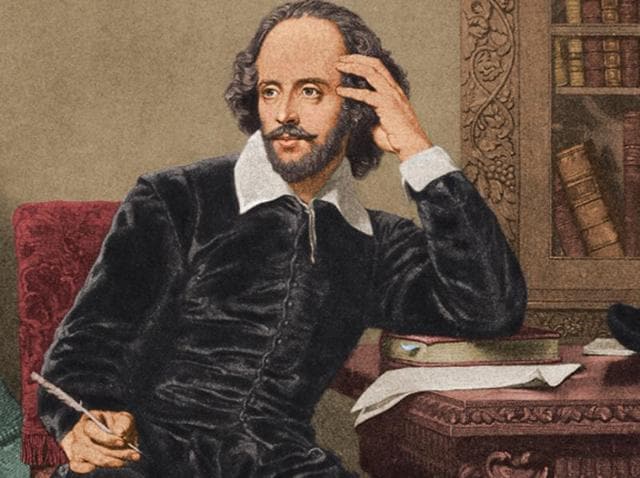
More than the plays and poems, William Shakespeare’s impact on the English language stands as a testament to his genius.
English as we know it would not exist without him: Linguistic studies show that the Bard invented 1,700 words that are still in use.
Critics around the globe often gawp in amazement when they consider his generous gifts to the language; a monumental legacy that saw Shakespeare contribute countless words which ranged from the majestic, to the sanctimonious, to the obscene.
That sentence would literally have been impossible to write without the man from Stratford-upon-Avon. (The words we derive from his works have all been italicised.)
And it’s not just his words, but his wonderful phrases that have become an indelible part of our vocabulary, conveying complex ideas succinctly. Brevity is the soul of wit, after all, as someone said.
That someone was Shakespeare.
{{/usCountry}}That someone was Shakespeare.
{{/usCountry}}Ever described jealousy as the “green-eyed monster?” What about remarking on a pair of “strange bedfellows?” Met someone with a “heart of gold”? Then you’re quoting Shakespeare: Othello, The Tempest and Henry V respectively.
Even our contemporary argot continues to be influenced by the man. Got swag mate? Then you’ve also got a reference to Othello Act VII line 12 along with your sweet trainers: “I will wear my heart upon my sleeve for daws to peck at; for thy beauty swags the heavens for I am not what I am.”
If the mark of a truly great writer is that they are still being read, then arguably the greatest hallmark of a genius is that their words are still being spoken centuries after their passing.