
 E-Paper



Review: Migrants by Sam Miller
Ranging widely across time and around the world, this book is a vast exploration of stories of human migrations that have shaped the modern world

 Prefer HTon Google


The story begins arrestingly, with the tale of a migrant, a well-connected man in his thirties, who finds himself on the losing side of a long-running war in an Asian country. His wife is killed in the fighting and he becomes a refugee, taking a boat out from the Turkish coast to Greece. His eventual destination is Rome, but after a harrowing journey, their boat is turned back from Sicily and lands in Tunisia. Eventually, after many adventures, the man does get to Rome.
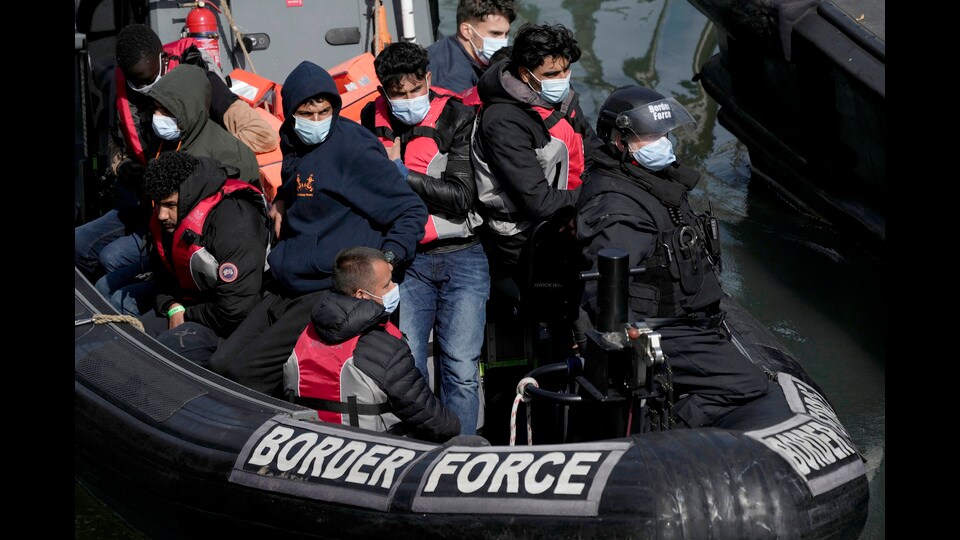
This could be a story of a Syrian refugee today. It is, however, actually a tale of a figure from history.
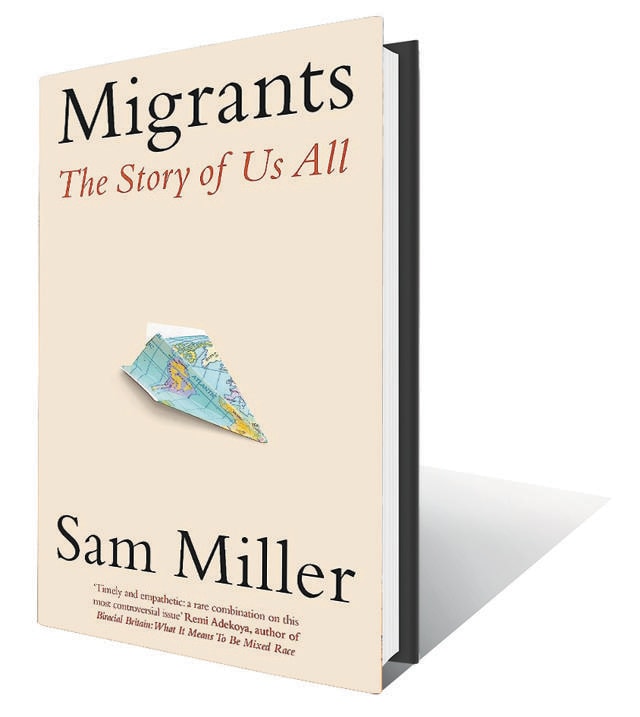
The point that author and journalist Sam Miller makes with this opening is that migration has always been, and remains, central to the human story. He sets out to question what he calls “the myth of sedentarism”, the popular modern notion that humans are naturally sedentary. It is a questioning that he starts as far back as possible – from a time millions of years before there were human beings on this planet. Creatures he calls “lobsterpedes” that emerged from the oceans about 530 million years ago to become the first dwellers on land were for him, symbolically, the first migrants.
From there on is a story of many migrations, by the earliest human species, including Neanderthals. Miller takes up cudgels on their behalf to remind us that the Neanderthals “didn’t drag their knuckles. They stood upright, and had fire and language and art – and larger brains than modern humans”. The prehistoric human journey, of both Neanderthals and Homo Sapiens, was an extraordinary intercontinental one from Africa, out to Asia, Europe, and the Americas, he points out.
All human beings until about 12,000 years ago and the start of what we call civilization were migrants in the sense that no one seems to have had a permanent home, says Miller. It was only with the invention and spread of agriculture that sedentarism became a thing. The arrival of sedentarism changed the world. It introduced property, the concept of wealth beyond what a body could carry. It changed the relationship with land. A divide arose between those who owned land and those who did not.
Nonetheless, human beings did not exactly stop migrating, from then to now. Not only are there still nomads, and refugees, and migrant workers, and expats – what is often forgotten in current debates over migration is that the ancestors of people in country after country who today consider themselves the indigenous sons and daughters of the soil were often relatively recent migrants themselves.
Miller goes through stories of migrations from the Bible and Koran, and histories of empires such as the Roman Empire in whose founding migrants played a key part. He also writes of the wanderings of the “barbarian tribes” that eventually sacked Rome. Those tribes were the Goths and Vandals, who along with another tribe, the Anglii, lived in the place the Roman historian Tacitus called Germania. They were, by today’s terms, Germans, although the Anglii migrated to England and came to be known as English. In his continuing endeavours to stand up for the posthumous reputations of the historically maligned, Miller battles on behalf of the Vandals, who, he informs readers, were jolly good fellows who did no vandalism.
Ranging widely across time and around the world, this book is a vast exploration of stories of human migrations that have shaped the modern world. Many of those stories are mostly forgotten, or half-remembered, or at best, remembered locally. Miller’s book brings it all together in one occasionally eccentric but always interesting volume. He writes of the clashing theories of Aryan migration into or out of India, touches upon Chinese migration to other parts of Asia and beyond, digs out the beginnings of colonialism and the first colonies, and looks at the massive movements of slaves and indentured labour from Africa and Asia to America.
Miller’s definition of a migrant is very broad, encompassing all kinds of human movement between places and cultures, both voluntary and forced. His claim, philosophically speaking, that “motion, not stillness, is the universal norm”, is quite ably supported by the numerous examples from history and prehistory that he provides. Along the way, he pauses for personal intermissions, bits of memoir about himself and his family, and their own migrations. His tales sometimes branch out into enjoyable digressions in the form of long footnotes where factoids too good to leave out have been accommodated.
The histories of racism and nationalism and the recent origins of passports for travel – they only became mandatory after the First World War – are among other interesting threads in this book.

The text is admirable for its scope and vision. The subject it tackles, migration, is undoubtedly of vital importance. The whole effort is a massive one but suffers from a couple of minor defects. Firstly, Miller tends to ramble. A tighter edit would have done the book good; it would be tidier. Secondly, there are just too many sentences that start seemingly mid-thought, with “and”, “but”, “for” and “because”. A good copy editor would have knocked out a few hundred “ands” from the text and made it a smoother reading experience.
On the whole, this is a timely and important book. Many conflicts in the world now are over issues of migration that pit an imagined insider, an indigenous community with a birthright to belong, against an outsider who is known or believed to have arrived recently from elsewhere. The notion that drives every such conflict is nationalism – the idea that a group of people united by a shared culture and history constitute a nation, and are therefore the legitimate and even exclusive owners of a whole territory. Miller’s book makes clear that everyone, pretty much, is a descendant of migrants, and that human beings have moved around so much for so long that associating any notion of “purity” with a community, unless it is one of the uncontacted tribes of the Amazon or the little-contacted Bushmen of the Kalahari, is purely imaginary.
That is a perspective that people from Manipur to Macedonia could use right now.
Samrat Choudhury is an author and journalist. His latest book is Northeast India: A Political History.


