Arctic Summer, Damon Galgut’s superb novel based on EM Forster’s struggle to write A Passage to India takes the reader right into Forster’s head
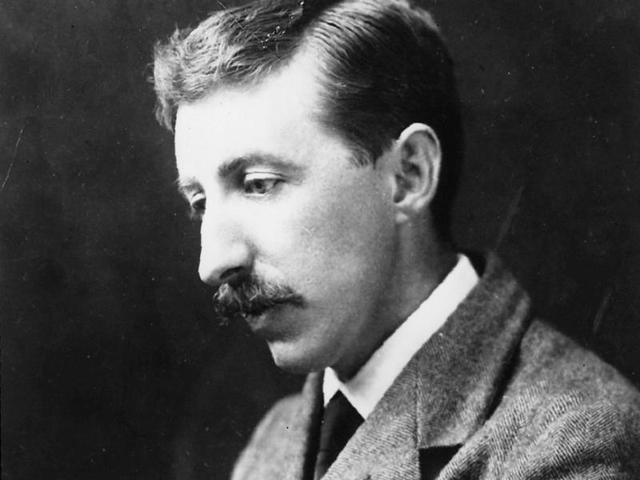
Of all the English writers whose most creative period coincided with the Raj, Rudyard Kipling and EM Forster are the ones who continue to interest Indian readers. No two writers could be more different: one was a cheerleader for Empire who, strangely enough, often comes across as more native than the natives in his writing, and the other despised the idea of racial superiority integral to the colonial project. But despite the seductive magic of Kipling’s language and stories, there’s no doubt that his thinking belongs to a benighted past. In contrast, Forster’s struggles with his sexuality, his search for love and his views on race are thoroughly contemporary, and his ability to nurture friendships across class and race make him particularly attractive in a more democratic age. While Maurice, Howard’s End and A Room with a View, are remarkable, Passage to India, which examines the interplay of sex and race in a deeply unequal setting, is his masterpiece. South African novelist Damon Galgut’s Arctic Summer takes Forster’s decade-long struggle to write Passage to India as its subject. Forster’s relationship with his mother, his close friendships, especially with Syed Ross Masood (to whom Passage to India is dedicated), grandson of the founder of the Aligarh Muslim University, his quest for love and the difficult social situations that confront the closeted homosexual in a largely heterosexual world that would have shuddered at the idea of a Gay Parade, all form the action of this book. Galgut weaves together fact and fiction in a novel about a novel that somehow avoids meta fog to miraculously steer the reader to a greater understanding of Forster and his work. Is this biographical fiction; is it fictionalised biography? It’s a hybrid of fiction and biography, Galgut explains in an email interview.
Why did you choose Forster?I feel, actually, that Forster might have chosen me. I didn’t ever hold any big candle for his writings, although I’ve loved A Passage To India since I first read it 20 years ago. I’ve spent a lot of time in India since my first visit in 1999 and that took me back to Forster, which took me in turn to his life story. Reading about him and the laborious process involved in writing Passage, I realised that his struggle to get that book completed was a novel in itself. I’ve been wanting to write about what’s involved in composing a novel — all the turmoil and “life-stuff” that goes into it — and this was an especially epic example. More than that, I suppose, there are lots of similarities between Forster’s life and mine (up to a point, of course). All of this was very attractive to me.
How long did it take you to write the book? I imagine you retraced Forster’s steps in India. Tell us a bit about that.It took about four years in total, of which the first year was spent simply in research. I didn’t retrace all of Forster’s steps in India, as he travelled very widely there. But I did go to Dewas, where he worked as Private Secretary to the Maharajah. The town has changed utterly since Forster’s time, though of course the hill of Devi is still there, as are the lake and even the Maharajah’s palace (now the home of a government minister, and they wouldn’t let me in). Perhaps more importantly, I also went to the Barabar Caves (which became the Marabar in Forster’s telling), close to Patna in Bihar. Like Forster, I found the caves themselves somewhat underwhelming, though the surrounding landscape was tremendous. And also like Forster, I found them developing in my memory into something more than they were in life. The caves were at the heart of Forster’s novel and they’re at the heart of mine too.
{{/usCountry}}How long did it take you to write the book? I imagine you retraced Forster’s steps in India. Tell us a bit about that.It took about four years in total, of which the first year was spent simply in research. I didn’t retrace all of Forster’s steps in India, as he travelled very widely there. But I did go to Dewas, where he worked as Private Secretary to the Maharajah. The town has changed utterly since Forster’s time, though of course the hill of Devi is still there, as are the lake and even the Maharajah’s palace (now the home of a government minister, and they wouldn’t let me in). Perhaps more importantly, I also went to the Barabar Caves (which became the Marabar in Forster’s telling), close to Patna in Bihar. Like Forster, I found the caves themselves somewhat underwhelming, though the surrounding landscape was tremendous. And also like Forster, I found them developing in my memory into something more than they were in life. The caves were at the heart of Forster’s novel and they’re at the heart of mine too.
{{/usCountry}}I felt like you really got into Foster’s head. How did you pull that off? It seems like so much research went into Arctic Summer, yet it isn’t leaden and reads like fiction, which it both is and isn’t. Is this biographical fiction or fictionalised biography? I think of it as a hybrid of fiction and biography and part of the pleasure of writing it was in grafting fact and invention together in ways that concealed the joins. I have always tried to interpret what Forster thought and did in the light of what I understood his nature to be. To that end, of course, I have read a lot of Forster’s writings, including his letters and journals. His voice crept into mine, effectively. While normally during the writing process I would avoid reading any other writer with a strong style, for fear that it would take over mine, in this case I encouraged that process.
What were the most difficult bits to write; and the easiest?The most challenging section of the book was chapter 3, which is an account of Forster’s first Indian visit. The difficulty was technical: how do you hold the attention of readers when your main character is moving around all the time and the supporting cast changes constantly? I rewrote that part of the book many times over, though I’m still not sure I resolved all of the problems. I don’t know what the easiest part was — no writing is really easy — but I did feel I sank into the war years in Egypt to a comfortable degree.
Are you working on anything right now?No. Alas. I trust something new will strike me soon.