Over the last four years, Italian photographer Majlend Bramo (30) has been a fixture at many Parsi events. In his attempt to research various aspects of the community, he attended weddings, Navjotes (a ceremony similar to a baptism), Jashans (a thanksgiving ritual performed by priests) as well as birthday parties, anniversaries and Jiyo Parsi events (events organised to increase the Parsi population). He even visited their pilgrimage spots, such as Udvada and Sanjan in Gujarat, to learn more about the community’s roots.
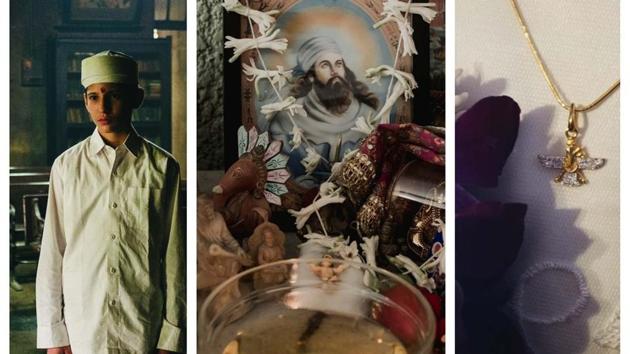
The Parsi community traces their ancestry to a group of Zoroastrians who escaped from Persia during the 9th century CE and found refuge in Gujarat. Estimates say there are 60,000 Parsis in India at present.
“Their story represents an incredible adventure: escaping from their homeland and finding refuge in a place much different from their own, with a different language, culture and traditions. They gave up their garments and language, adopted local ones, and managed to find their place in Indian society without being totally absorbed. What is also interesting about the Parsis is their contribution to Mumbai and India which is incredible,” says Bramo.
For his research, Bramo visited India every winter from 2014 to 2017, and shot almost 30,000 pictures. Around 130 of those images, along with his research on the community, feature in his soon-to-release coffee table book, Like Sugar in Milk. The title is a reference to the legend of how the Parsis convinced the local king, Jadi Rana, who was refusing them entry into Gujarat, by illustrating how they would mix with the local population like sugar in milk.
{{/usCountry}}For his research, Bramo visited India every winter from 2014 to 2017, and shot almost 30,000 pictures. Around 130 of those images, along with his research on the community, feature in his soon-to-release coffee table book, Like Sugar in Milk. The title is a reference to the legend of how the Parsis convinced the local king, Jadi Rana, who was refusing them entry into Gujarat, by illustrating how they would mix with the local population like sugar in milk.
{{/usCountry}}Bramo, who has a decade’s experience working for the Italian newspaper, Corriere della Sera, and as a documentary photographer, worked on this project as an alternative to the rush jobs of mainstream media. “Like Sugar in Milk represents the culmination of this process of slowing down that allowed me to catch details that I would otherwise have missed,” he says.
Community matters
Bramo was inspired to start this journey thanks to a book — One More Ride on the Merry-Go-Round by Italian Florentine author Tiziano Terzani. “He wrote about his travels across Asia and a prophet named Zarathushtra who was preaching a religion that had fire at its core, a fire that purifies. That name, Zarathushtra, wasn´t new to me, yet I didn’t know the fascinating story of the Parsis. When I discovered that the community is in grave danger of disappearing (the Parsi population of India has been declining by 12% every census decade), I understood that it was a story worth being told,” says Bramo.
To work on this project, Bramo had to face several challenges. He recalls how he struggled for visuals of a fire temple (entry is forbidden for non-Parsis). “I wanted to see this fascinating ritual they have using fire as a link to Ahura Mazda (the Wise Lord). I was just about to enter a fire temple when the guardian stopped me vigorously indicating the sign. I had to find a way around this problem, and eventually managed through the documentation of similar scenes like Jashans and Navjotes.”
A Parsi in a previous lifetime?
Bramo generated a lot of interest in the community thanks to his unusual quest. “They were wondering how on Earth an Italian photographer from Florence got interested in their little community. One gentleman once told me that I must have been a Parsi in my previous life,” laughs Bramo.
After almost four years of trailing the community, he feels he knows them pretty well: “They are very funny and a little bit crazy… they enjoy life in a good way and are trying not to harm others. They are very respected among other communities. Being a Parsi means to bear a tradition of great philanthropy. I might also say they like to argue; now and then, there is some controversy emerging from the community itself.”
Seeking refuge
With this book, Bramo hopes to introduce readers across the world to the community: “In Europe, it is not a known story at all. People don’t even know that the three wise men in the Bible were Zoroastrians. And very few know that Freddie Mercury was a Parsi.”
Born in Albania, Bramo moved to Italy when he was 2. He says the topic might have unconsciously resonated with him as he could relate to the displacement of the Parsis. “This book can be an opportunity for Europeans to think again about the great migrations that are affecting our continent. The Parsis were refugees exactly like the Syrians and Africans that are coming to Europe to find shelter. Our response to this migration should be more open and focused on the future and not only the difficult present.”
Like Sugar in Milk releases on March 20. You can pre-order the book on majlendbramo.com