Most people who flag the unmitigated risks posed by artificial intelligence are no cranks. Jaan Tallinn, the 53-year-old Estonian co-developer of Skype, thinks his chances of dying from a fatal disease are the same as from rogue machines now. Geoffrey Hinton, the British-Canadian Nobel-winning computer scientist known as the ‘godfather of AI’, warns that advanced intelligence could “mean the end of people”.
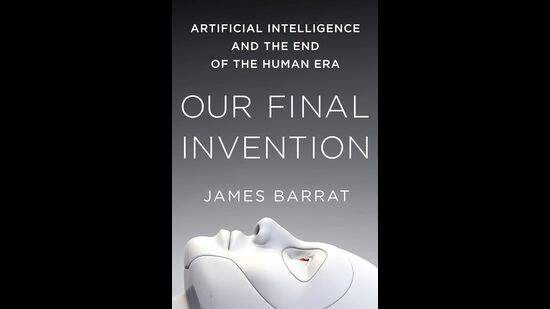
None of this is far-fetched, says author James Barrat in an updated edition of Our Final Invention: Artificial Intelligence and the End of the Human Era.
The danger isn’t that AI is going to be a million times smarter than people. A lot of stuff already is. In his telling, the problem isn’t just smartness but that “machines are immoral, and it’s dangerous to assume otherwise”. AI’s capacity to act autonomously is at the heart of the existential threat posed by it.
It’s now clear that AI is on the path of acquiring self-awareness. That’s hair-raising because consciousness has been a distinctly biological thing. Scientists do believe that Als will have their own drives and desires. “What if its drives are not compatible with human survival?”
So, two things make AI an extremely unhinged technological leap right now. First, we are creating machines that can take weighty decisions but will likely never will have the morality compass that guides human actions. AI doesn’t have to hate humans to act against them. To stop cancer, medical AI might just exterminate people with the bad genes.
{{/usCountry}}So, two things make AI an extremely unhinged technological leap right now. First, we are creating machines that can take weighty decisions but will likely never will have the morality compass that guides human actions. AI doesn’t have to hate humans to act against them. To stop cancer, medical AI might just exterminate people with the bad genes.
{{/usCountry}}Second, AI systems that are uncountable times more intelligent than humans will also be simultaneously building even smarter machines that will be uncountable times more intelligent than the previous ones, often called superintelligence. That is when “AI could drive mankind into extinction”.
How do humans build guardrails into something they haven’t themselves built? Barrat deals convincingly and probabilistically about these threats in the chapter The Intelligence Explosion.
So how do we ensure that things don’t come to such a pass? Humans have acted collectively to stop bad things in the past. We’ve sealed the ozone hole with a global treaty and put strong ethical, social, and legal fetters on cloning technologies that created Dolly, the sheep. That’s the way forward.