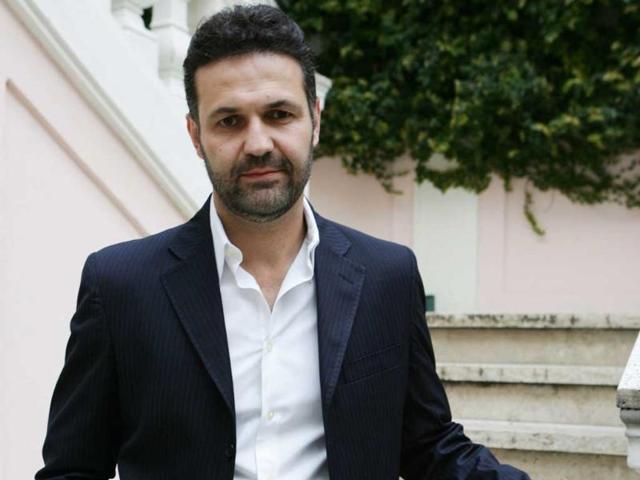
Khaled Hosseini is perhaps the most well-known Afghan in the world. The Kite Runner was a heartbreaking story of an Afghan living in California who returns to Kabul to redeem himself of the guilt of shunning a childhood friend. In 2007, Hosseini released his second work, A Thousand Splendid Suns, a profound tale of two women and how their lives change through Afghanistan’s tumultuous decades. Both books, at heart, are a narrative of Afghan life – of human experience during war and how it brings out the best and worst in people. They’ve sold 38 million copies across 70 countries. Hosseini wasn’t always a writer. He was a doctor in Los Angeles, although he enjoyed writing stories, even as a child. And it is ironic that when he wrote his first book, he hadn’t been to Afghanistan since 1976 when he was merely 11 years old. Hosseini was born in Kabul in 1965, the most peaceful time in the history of modern Afghanistan. Luckily for them, the Hosseinis moved to Paris (where his father was a diplomat at the Afghan embassy) just two years before the communist coup in 1978. As things got worse in Afghanistan – the Soviets invaded in 1979 – the family knew they couldn’t go back. "From our apartment in Paris, we received regular news of family members, friends, or acquaintances who had been imprisoned, tortured, killed, or had gone missing," the author recalls. In 1980, when he was 15, the family gained asylum in America. It’s where Hosseini learnt English, became a doctor, married and had two children. All far from the turmoil of his homeland. And The Mountains Echoed is your first book that doesn't deal with the Taliban. Is it a conscious effort to move past the Taliban in your writing? As a writer, well, I had written about it already in both my previous books. And I didn't want to dwell on the same thing again. I also felt no responsibility because I was born in Afghanistan to write about something that's going on in Afghanistan right now. You know, I'm a novelist. I see my role as someone who is guided by ideas that compel him. And for me, it wasn't a conscious effort not to write about the Taliban. It's just that it doesn't appeal to me at this point anymore. I really didn't want to retrace my steps. But also, organically, the way these characters were formed in my mind. They were characters that grappled with things that didn't play out in a large political war, dealing with things far more personal, intimate - loss of home, loss of parents or a child, trying to reconnect with your family, wanting to belong somewhere. These are the kind of things that these characters are struggling with. What inspired you to write it?The novel was not something that sprang fully formed from my mind, nor something that I sat down to plan. I may have thought of it as early as 2007, when I travelled to Afghanistan with the UN Refugee Agency to visit with returning Afghan refugees. One of the most striking parts of that trip for me was learning from village elders the devastation that Afghanistan's notoriously brutal winters visited upon impoverished villagers, routinely taking the lives of the young, the elderly, the sick and disabled. I listened with a mix of horror and admiration to the tales of survival, the choices villagers made, the lengths to which they went to protect their families through the cold season. When I came home, I tried to picture what I would do under those same circumstances. Slowly, a family began to take shape in my mind-not unlike the many I had visited-one living in a remote village, forced to make a painful choice that most of us would find unbearable. At the heart of this family, I pictured a young brother and sister, who become the unwitting victims of their family's despair. The novel begins, then, with this single act of desperation, of sacrifice, an act that ruptures the family and ultimately becomes the tree trunk from which the novel's many branches spread out. The bulk of writing this novel, and really the joy of it, was in pursuing the far reaching ripples of this one act, discovering the lives it had touched and transformed and all the unexpected ways in which it still echoed through the decades. How long did it take to write the book?This book didn't actually take six years to write although it has been six years since the publication of my last novel. I spent a year forming ideas, just to find a proper voice to follow. I spent one year taking care of my father who became very ill and eventually died. This novel was actually started a month before my father died, in November 2009. So I spent about two-and-a-half years actually writing this book. Is any of the new book autobiographical?It's not autobiographical per se. There are occasional sections of the book where I've written about something I've personally experienced. One example is that I was in Kabul in March of 2003 like the characters of Idris and Timur are. I have some similar experiences as them, experiences of the post 9/11 Kabul. I was overwhelmed by a sense of having not gone for so long, trying to reconnect. In fact when I went to Afghanistan in 2003, a young girl had suffered the exact some injury in precisely the same way I've mentioned in the novel [And The Mountains Echoed]. I've changed the names. But I've met her only one time. And I never got to know her personally. I went to the hospital and I saw this young girl who had been attacked by a family member and suffered injuries on her head. And parts of her brain oozed out. It was shocking. I've thought about her a lot over the years. I've thought about how one responds to a tragedy like that, how one approaches something like that in a respectful human way. And it made for an interesting story about kindness about finding in yourself a way to help other people and what it takes to do that. So a part of that is my experience. But most of the novel is not at all. Idris, one of the main characters in your new book, a doctor like you were, often feels guilty about living a comfortable life in America. Do you?
You know, I have been extremely fortunate. I've had a very good career, a very good life. And my living circumstances are not that different from those of Idris. So I share some of the sentiments about Afghans living in exile and some of the conflicts he faces when he goes home. When I go back to Afghanistan, I realise it was just pure genetic lottery that I ended up where I am right now. Nothing more than chance separates me from a family of refugees living in a camp in Pakistan. When you take stock of everything, the life you're living, and compare it to the obstacles other people are facing, it's human to feel a sense of guilt. That's partly the reason I started the foundation [The Khaled Hosseini Foundation provides humanitarian assistance in Afghanistan] - to try to turn that into something positive, something that can make a difference in people's lives.When you were a child, your own family ended up living in Paris, unable to return home to Afghanistan due to the 1978 coup. What was this time of life like for you? What memories do you have of being an exile in Paris? The first two years in Paris, from fall of 1976 to April of 1978, were quite wonderful. I had never been anywhere outside of Afghanistan and Iran, where I had lived as a child for two years. Paris flattened me the first time I saw it; it was a feast for the ears, the eyes, and in some ways for me, like having fast-forwarded 100 years. I felt like I had stepped onto the set of a science-fiction film. Prior to Paris, I had never seen a skyscraper, been in an elevator, ridden a subway, or watched cars speeding on a freeway. Those were happy years, with all of us in the family learning French, trying new foods, watching French TV, visiting famous sights, and generally adapting to a new culture-though with the understanding that this was temporary and that soon enough we would be reunited with our friends and family back in Kabul once my father's four-year post ended. Our last two years in Paris, after the communist coup in 1978, were a time of transformation for us. Our world, as we had known it, was coming unraveled, and there was a sense for us that the ground beneath our feet was shifting in a very fundamental way. From our apartment in Paris, we received regular news of family members, friends, or acquaintances who had been imprisoned, tortured, killed, or had gone missing. We received phone calls from family members who had managed to escape and were trying to seek asylum in the West. It was a time of great instability and anxiety, culminating with my father's decision to seek asylum in the US, where we would have to adapt to a new culture, a new language, and a new way of life. What's your life like in the US now? I have two children, I live in a suburban area in northern California in San Jose. I send my kids off to school in the morning and then I try to write from around 9am to 2pm. Then they come home and I kind of become a dad to them. I travel with them in the summer...So, you're absolutely American now.No! I'm not absolutely American and I'm not absolutely Afghan. In fact, I spend little time thinking about these issues unless somebody asks me in an interview [laughs]. I've learnt organically to live this hyphenated life, you know, with my Afghan side and my American side. I've lived here for 30 years, that's an awfully long time. Inevitably American western sensibilities have seeped into my identity and my personality. But, I was born in Kabul and I lived my formative years there and there is a very, very small connection to Afghanistan. Every time I approach Afghanistan and the plane is about to land in Kabul, I feel a surge of emotions. This is where I was born, where I was loved for the first time. This is where I learnt to speak, to walk. All my childhood hopes and dreams are there. A very strong bond will always be there. Obviously, the bond is far less with my children, They've never been to Afghanistan, I hope to take them one day when it's more peaceful and as a parent I'm less paranoid about them being hurt. I want to show them they city, the house I grew up in. That's a dream at the time being.
But, what has most upset you on your return trips to Afghanistan?The spread of violence to previously safe areas in Afghanistan is quite distressing. In 2007, I was able to travel by car from Kabul to the northern Afghan cities of Kunduz and Mazar-i-Sharif. The roads connecting Kabul to those cities have now become unsafe and the city of Kunduz, particularly, has seen a dramatic rise in suicide bombings and other forms of public attacks. The unavailability of basic social services (water, schools, jobs, shelter, etc) to large sections of the population is also a great disappointment, and is a major "push factor" in the decisions many Afghans make to cross the border illegally into neighboring countries to find a cheap labor market. Part of this is understandable, as Afghanistan was one of the world's poorest nations even prior to the Soviet invasion, and the task of rebuilding it is a Herculean one. But part of the responsibility also falls on the inability of the central government to meet the needs of its people. The absence of effective governance is all too palpable in many regions that I have visited, and the government's shortcomings-coupled with a public perception of pervasive institutional graft-are a source of enduring disappointment to the average Afghan citizen. Obama has committed to withdraw US troops from Afghanistan in 2014. What do you think the future portends for the country?I think the next few years will be a time of uncertainty and anxiety in Afghanistan, probably marked by continued political instability and spikes of violence, even as the country moves slowly and gradually toward some form of peace negotiations with the insurgents. The path to peace promises to be a treacherous one, as there is no clear leadership structure on the Taliban side, and the conditions each party will bring to the table are likely to create, at least for some time, a series of impasses. This is not to mention that foreign neighboring powers will have their own stakes and agendas in the process and are likely to exert their influence to ensure an outcome favorable to their own interests. All this said, I am still cautiously optimistic that peace is a possibility in Afghanistan. Though I do fear-with the withdrawal of the West-a return to the chaos and ethnic civil wars of the 1990s, I am also hopeful that important lessons have been learned from that catastrophe and that the various factions have come to see the dividends of peace. Of course, outside parties have to observe and respect Afghanistan's sovereignty and allow Afghans to attain their own peace. My main hope is that when the peace negotiations do unfold, they are inclusive, and legitimate representatives of Afghan society are allowed to participate. This includes women. Women must be part of the reconciliation process and their interests must be protected at all costs. The agreement should not compromise human rights or relinquish the freedoms that Afghans, particularly urban women, have painstakingly secured over the last decade. The agreement must be just and reflect the genuine aspirations and will of the Afghan people. Your books are very emotional and sentimental -- unlike writing coming from the West. Why do you think your writing appeals to a western reader?I don't think people respond to emotions no differently than they do in Asia. I have received very passionate, emotional letters from my readers. I don't find people any less emotional than they are there. Yes, my books are more or less in Afghansitan but at the heart they're family stories. They're about parents and their children, they're about love, they're about grief and about loss and about trying to find a home, wanting to belong to something. Those are very human experiences. They transcend any kind of culture, religion, race, language, no matter where you're from you can identify with that. The bewildering success of my books continues to surprise me. I just have to believe that people find something of themselves in my stories. I think, modern, contemporary fiction shies away from the emotional because they fear they might seem sentimental, which appears to be the great crime of writing contemporary fiction. And there's a respect for writing that is comical or analytical. And a kind of frowning on fiction that is strong on emotions. They call it 'pulling the heartstrings'. But none of that is of much concern to me. I write my stories the way that I feel them in my heart. This is your first book set all around the world. What inspired such a wide range of settings, from Paris to Greece to California?It is true that this is a less Afghan-centric book than the previous two. There was an attempt on my part in this book to expand the social, cultural, and geographic milieu of my characters and to add a more global flavor to the story. The book begins in Afghanistan and hops around the world, from Kabul to Paris to Greece to northern California and elsewhere. Partly, having traveled extensively the last few years, I wanted to expand the landscape for my characters as well, and partly I wanted to surround myself with a few characters who are nothing like me or the people that I know. There are wonderful writers-Alice Munro comes to mind-who can find an endless supply of deeply felt stories set, more or less, in the same settings. For me, I needed some fresh air, so to speak. I needed to, at least now and then, leave a story world that began with Kabul and ended with Kandahar. Social boundaries are quite rigid in South Asia. But in your books, people from different backgrounds form intimate relationships. Did those lines blur in Afghanistan at the time? Or does it just make for a good story?I think it makes for a good story. Although, in Afghanistan, those social boundaries were certainly prevalent but not quite as formal and rigid as they are in India. For me, what's interesting about this is that while growing up in an impoverished country, even in an upper-crust middle-class family, semi-Westernized like my family was, you live right next door to poverty. All you do is just walk down the street and you see abject poverty and you can't escape the two things living side by side. It's a fact of life. So for me, this opulent lifestyle right next door to poverty is fascinating. Economic chasm between people is something that is of interest to me. And something that I used to write about even as a child. It's something I've revisited a few times in my writings. You write from the point of view of children, women, mothers, brothers and sisters. Is it as effortless as you make it seem?You're very kind to say that, first of all, thank you. But nothing about writing is easy, ever, ever! Not a single moment in the entire writing process is easy. Everything comes with pain, effort, and is unpleasant. Your only hope is that after the suffering there is something that can be salvaged, something that can make you happy… Every single word that is on the pages of this book is a struggle. From HT Brunch, May 26Follow us on twitter.com/HTBrunchConnect with us on facebook.com/hindustantimesbrunch
{{/usCountry}}But, what has most upset you on your return trips to Afghanistan?The spread of violence to previously safe areas in Afghanistan is quite distressing. In 2007, I was able to travel by car from Kabul to the northern Afghan cities of Kunduz and Mazar-i-Sharif. The roads connecting Kabul to those cities have now become unsafe and the city of Kunduz, particularly, has seen a dramatic rise in suicide bombings and other forms of public attacks. The unavailability of basic social services (water, schools, jobs, shelter, etc) to large sections of the population is also a great disappointment, and is a major "push factor" in the decisions many Afghans make to cross the border illegally into neighboring countries to find a cheap labor market. Part of this is understandable, as Afghanistan was one of the world's poorest nations even prior to the Soviet invasion, and the task of rebuilding it is a Herculean one. But part of the responsibility also falls on the inability of the central government to meet the needs of its people. The absence of effective governance is all too palpable in many regions that I have visited, and the government's shortcomings-coupled with a public perception of pervasive institutional graft-are a source of enduring disappointment to the average Afghan citizen. Obama has committed to withdraw US troops from Afghanistan in 2014. What do you think the future portends for the country?I think the next few years will be a time of uncertainty and anxiety in Afghanistan, probably marked by continued political instability and spikes of violence, even as the country moves slowly and gradually toward some form of peace negotiations with the insurgents. The path to peace promises to be a treacherous one, as there is no clear leadership structure on the Taliban side, and the conditions each party will bring to the table are likely to create, at least for some time, a series of impasses. This is not to mention that foreign neighboring powers will have their own stakes and agendas in the process and are likely to exert their influence to ensure an outcome favorable to their own interests. All this said, I am still cautiously optimistic that peace is a possibility in Afghanistan. Though I do fear-with the withdrawal of the West-a return to the chaos and ethnic civil wars of the 1990s, I am also hopeful that important lessons have been learned from that catastrophe and that the various factions have come to see the dividends of peace. Of course, outside parties have to observe and respect Afghanistan's sovereignty and allow Afghans to attain their own peace. My main hope is that when the peace negotiations do unfold, they are inclusive, and legitimate representatives of Afghan society are allowed to participate. This includes women. Women must be part of the reconciliation process and their interests must be protected at all costs. The agreement should not compromise human rights or relinquish the freedoms that Afghans, particularly urban women, have painstakingly secured over the last decade. The agreement must be just and reflect the genuine aspirations and will of the Afghan people. Your books are very emotional and sentimental -- unlike writing coming from the West. Why do you think your writing appeals to a western reader?I don't think people respond to emotions no differently than they do in Asia. I have received very passionate, emotional letters from my readers. I don't find people any less emotional than they are there. Yes, my books are more or less in Afghansitan but at the heart they're family stories. They're about parents and their children, they're about love, they're about grief and about loss and about trying to find a home, wanting to belong to something. Those are very human experiences. They transcend any kind of culture, religion, race, language, no matter where you're from you can identify with that. The bewildering success of my books continues to surprise me. I just have to believe that people find something of themselves in my stories. I think, modern, contemporary fiction shies away from the emotional because they fear they might seem sentimental, which appears to be the great crime of writing contemporary fiction. And there's a respect for writing that is comical or analytical. And a kind of frowning on fiction that is strong on emotions. They call it 'pulling the heartstrings'. But none of that is of much concern to me. I write my stories the way that I feel them in my heart. This is your first book set all around the world. What inspired such a wide range of settings, from Paris to Greece to California?It is true that this is a less Afghan-centric book than the previous two. There was an attempt on my part in this book to expand the social, cultural, and geographic milieu of my characters and to add a more global flavor to the story. The book begins in Afghanistan and hops around the world, from Kabul to Paris to Greece to northern California and elsewhere. Partly, having traveled extensively the last few years, I wanted to expand the landscape for my characters as well, and partly I wanted to surround myself with a few characters who are nothing like me or the people that I know. There are wonderful writers-Alice Munro comes to mind-who can find an endless supply of deeply felt stories set, more or less, in the same settings. For me, I needed some fresh air, so to speak. I needed to, at least now and then, leave a story world that began with Kabul and ended with Kandahar. Social boundaries are quite rigid in South Asia. But in your books, people from different backgrounds form intimate relationships. Did those lines blur in Afghanistan at the time? Or does it just make for a good story?I think it makes for a good story. Although, in Afghanistan, those social boundaries were certainly prevalent but not quite as formal and rigid as they are in India. For me, what's interesting about this is that while growing up in an impoverished country, even in an upper-crust middle-class family, semi-Westernized like my family was, you live right next door to poverty. All you do is just walk down the street and you see abject poverty and you can't escape the two things living side by side. It's a fact of life. So for me, this opulent lifestyle right next door to poverty is fascinating. Economic chasm between people is something that is of interest to me. And something that I used to write about even as a child. It's something I've revisited a few times in my writings. You write from the point of view of children, women, mothers, brothers and sisters. Is it as effortless as you make it seem?You're very kind to say that, first of all, thank you. But nothing about writing is easy, ever, ever! Not a single moment in the entire writing process is easy. Everything comes with pain, effort, and is unpleasant. Your only hope is that after the suffering there is something that can be salvaged, something that can make you happy… Every single word that is on the pages of this book is a struggle. From HT Brunch, May 26Follow us on twitter.com/HTBrunchConnect with us on facebook.com/hindustantimesbrunch
{{/usCountry}}