‘Plus size and proud’, ‘fashion for all’ is great to tap on when you see social media ablaze with talks and posts of body positivity. But is fashion as fun for someone who is size 16 as it is for a size 6? This is one of the prime questions that the clothing industry is grappling with globally. While we have witnessed a few attempts on the ramp by designers like Wendell Rodricks presenting a plus-size collection at Lakme Fashion Week last year and Nida Mahmood inviting plus-size Yoga trainer, Dolly Singh, to walk the runway for her. Or the fact that 30-year-old American model Ashley Graham is above size 12, has featured on the covers of publications like Vogue, Elle and Cosmopolitan and is one of the highest paid models in the world — it does say something about an industry that has long worshipped unrealistically skinny women.
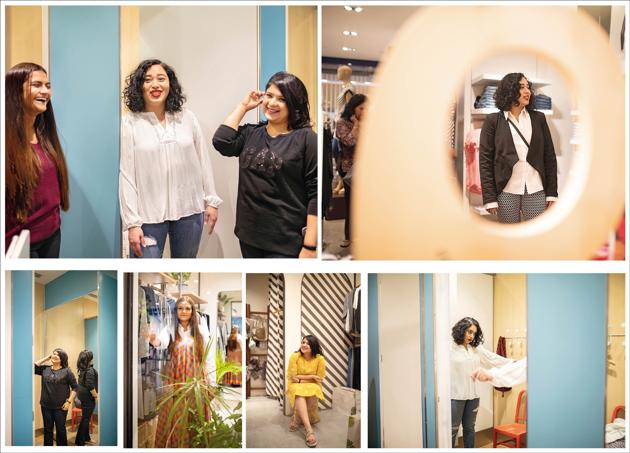
However, have these tokenistic attempts on the runway reflected in traditional retail at all? Can a simple trip to the mall be a stylish affair for everyone, regardless their size? I decided to visit the mall with three women, who’re above size 12 and love dressing up, to find out.
Lumps and bumps
{{/usCountry}}Lumps and bumps
{{/usCountry}}As we enter Select Citywalk, Saket — a haven for some of the most popular fashion brands in the city — 24-year-old Jahnvi Bansal, a stylist by profession, says, “Let’s not go to Promod. I can never find my size there. I’ve tried many times.” 21-year-old Radhika Aggarwal, a student at Amity University, has faced a similar problem every time she plans to go shopping. “I’ve always been a curvy girl and it affected my self-esteem a lot. I am currently studying fashion and it does make me aware of the different styles and trends. I want that to be reflected in the clothes I wear, but it’s extremely difficult. I used to be so mad at my body for not fitting into the clothes I wanted to buy. Now I’m mad at the clothes for not fitting my body,” exclaims Radhika.
For 32-year-old Nicole Juneja, publicist and brand strategist, it’s not just about buying what fits. She has a tough time finding size-inclusive brands that reflect her aesthetics — minimal and functional. However, she believes that many homegrown Indian brands are now focusing on making their collections as diverse as possible. “Typically, my main stops when I visit malls are H&M and Zara. That said, I love the pieces made by brands like Anomaly, Lila, Two Fold Clothing and Olio. They have a great offering, both in terms of style and sizing, and they have a way of making every purchase feel special,” she smiles.
The size of it
Although we’ve entered a time where fat-shaming has been replaced by body-positivity, inclusivity is still a far cry for most fashion campaigns or window displays for that matter. As we enter Gap, the seminal American fashion label that revolutionised basics more than three decades ago, a slew of thin mannequins welcome us into the store. The girls start looking for the styles they like, carefully looking at size charts that often end at L or XL. Jahnvi picks up a figure-hugging cut-sleeve midi dress and sighs, “I can’t even dare to try this dress. Even though it’s available in my size, I wish it was available in a different fabric. In fact, sizing is a professional hazard for me. Most press sample sizes are meant for sizes 6 or 8. So, if ever I have to style a bigger person, be it a man or a woman, it’s a task for me to find stylish clothes.”
Radhika, who prefers straight silhouettes with hints of streetwear, likes a top but says she can’t find her size in it. “Shopping can be a little demoralising as it becomes extremely difficult to find the perfect size or fit. A lot of brands don’t keep in mind how the piece will look on a curvy girl, they keep following designs that would look good on someone skinny. For occasion wear, it’s hard to find something off the rack that’s good, I end up getting something customised, be it traditional or western,” she reveals. Nicole too feels the store has too many sturdy basics that are great for men but does not suit the kind of fluid fabrics and styles she likes wearing.
Flattering the curves
We exit Gap. And, our next stop is Nicobar. Everyone seems to be enthused by the bright colours and elegant silhouettes that the store has to offer. Nicole tries a white kaftan with a V-neck that has slits on the side. It accentuates her neck and legs. Radhika chooses a maxi-dress, which is layered over a full sleeve shirt. “It feels very unlike my personality as I don’t usually wear so many colours. But, this seemed like a fun dress to try on.” Jahnvi picks a mustard-coloured shift dress. Nicole and Radhika feel the colour looks great on her. “There’s definitely more room to mix and match here,” says Nicole after trying on an array of white dresses. They seem happy!
As we plan to wrap up, the disconnect between the size of the average shopper and what most stores have to offer is evident. Most designers and brands still project ‘thinness’ as aspirational. But, Nicole feels the industry is witnessing a slow but steady shift now. “The old guards of style are widening their horizon. So many brands are making silhouettes that look good on all body types. And, this definitely gives us hope for a brighter future. However, regardless of the clothes, feeling body-positive is just something we have to inculcate within us and the society at large,” she concludes.
From HT Brunch, October 28, 2018
Follow us on twitter.com/HTBrunch
Connect with us on facebook.com/hindustantimesbrunch