Samsonite International SA, the world’s largest branded-luggage maker, tumbled the most since 2012 after short-seller Blue Orca Capital questioned the company’s accounting and corporate governance.
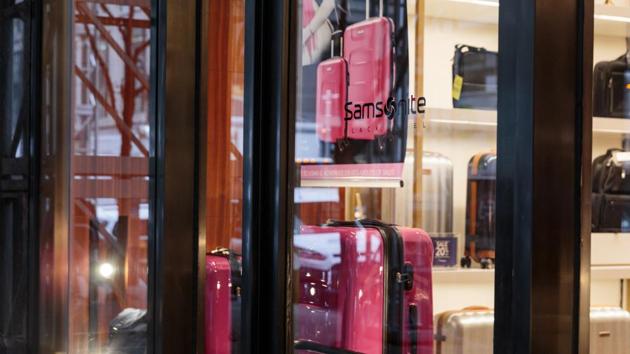
Samsonite concealed slowing growth with debt-funded acquisitions and inflated profit margins with dubious accounting linked to its takeovers, Blue Orca, founded by former Glaucus Research Group research director Soren Aandahl, alleged in a report on Thursday. A spokeswoman for Samsonite, which is based in Mansfield, Massachusetts, and traces its roots back to the early 1900s, said she couldn’t immediately comment on the report.
The company’s Hong Kong-listed shares slumped 9.8% to HK$30.70 before trading was halted at 11.18 am local time, wiping out the equivalent of $607 million in market value. Euro-denominated bonds issued by a Samsonite unit also tumbled.
The short-seller’s allegations center on a Samsonite growth strategy that has mostly been applauded by investors and sell-side analysts in recent years. The luggage maker’s acquisitions, which include rival Tumi Holdings Inc. and online retailer eBags Inc., helped boost Samsonite’s net sales to a record in 2017 and lifted the stock to a 16% gain in the 12 months before Thursday’s slump. The average share-price target compiled by Bloomberg on Thursday implied a 26% advance over the next year.
Blue Orca’s price target on the stock suggests a 43% drop from current levels, a call that’s much more pessimistic than even the most bearish sell-side estimate. Among other allegations Blue Orca cited for its outlook: questionable related-party transactions between Samsonite and Indian entities controlled by chief executive officer Ramesh Tainwala and his family, and a revolving door of auditors at the luggage maker’s South Asia unit.
Catherine Lim, a Bloomberg Intelligence analyst in Singapore, said Samsonite’s revenue from India and the Association of Southeast Asian Nations accounted for less than 10% of the company’s global sales and profit last year. She also noted that corporate disclosures are generally less transparent in Asian emerging markets and that related-party transactions aren’t uncommon.
{{/usCountry}}Catherine Lim, a Bloomberg Intelligence analyst in Singapore, said Samsonite’s revenue from India and the Association of Southeast Asian Nations accounted for less than 10% of the company’s global sales and profit last year. She also noted that corporate disclosures are generally less transparent in Asian emerging markets and that related-party transactions aren’t uncommon.
{{/usCountry}}“Samsonite has to date delivered on its articulated strategy since its public listing in 2011 of fueling growth via acquisitions in my view,” Lim said.
The Samsonite report ends a lengthy period of quiet from activist short sellers in Hong Kong, where a broad market rally has caused many bearish wagers to backfire. Fullshare Holdings Ltd., Aandahl’s last Hong Kong-listed target, has advanced 29% since he said (via a Glaucus report) in April 2017 that the stock was “poised to crash.” Shortly thereafter, Fullshare denied Aandahl’s allegations and won a show of support from state-owned China Citic Bank Corp. in the form of a $1.45 billion credit line.
Still, Aandahl has notched several big wins at Glaucus in recent years. His successful targets in Asia include Hong Kong-listed Tech Pro Technology Development Ltd., which tumbled 86% in a single day after a Glaucus report in July 2016, and Blue Sky Alternative Investments Ltd., an Australian asset manager that has dropped 77% since Glaucus targeted the company in March.
Aandahl announced the founding of Blue Orca this month after parting ways with Glaucus co-founder Matt Wiechert.