Indian oil refiners are reportedly looking into other options apart from Russia to seek crude supply after US President Donald Trump’s threat of imposing more penalties against Russian oil buyers.
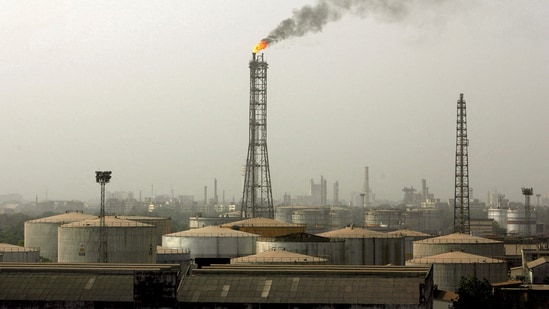
As a result, the state-owned Bharat Petroleum Corp. and Hindustan Petroleum Corp. are looking for extra supplies from the Middle East, North Sea and Mediterranean, according to a Bloomberg report.
HT.com cannot independently verify the authenticity of the information contained in the report.
Also Read: Ashley St Clair blasts Elon Musk’s $2.5 million claim: ‘Grow up, you petulant man-child’
This is for the month of May with the trading cycle for barrels delivered next month usually concluded in early March.
This development comes as Trump on Sunday raised the prospect of imposing secondary tariffs on buyers of Russian oil if President Vladimir Putin refused a ceasefire with Ukraine.
This led to benchmark futures surging, with West Texas Intermediate going up 3.1 per cent on Monday, its biggest gain in almost 11 weeks, according to the report.
{{/usCountry}}This led to benchmark futures surging, with West Texas Intermediate going up 3.1 per cent on Monday, its biggest gain in almost 11 weeks, according to the report.
{{/usCountry}}Also Read: Gold hits record high of over $3,100 as Trump tariffs boost safe-haven asset demand
Due to this, the Indian refiners are looking for non-Russian supplies from the spot market to reduce their reliance on the OPEC member.
This is also because India has been highly reliant on cheaper Russian oil since the war in Ukraine after Moscow started slashing offer prices to entice buyers due to the rollout of western sanctions.
Last month, both state and private refiners from India were confident in their ability to get all the Russian crude they wanted, after a brief hiatus caused by harsher sanctions from the US.
Also Read: Apple gets fined €150 million in France over iOS data tracking consent
Russia-to-India flows made up almost 40 per cent of imports by India in 2024, according to the report. Urals from western ports formed the bulk of purchases.