E-Paper



Spike in imports raises trade diversion concerns
India is investigating a surge in imports from several countries, suspecting trade diversion due to US tariffs, focusing on 14 products, mostly from China.

 Prefer HTon Google


NEW DELHI: India has initiated investigations into an unusual spike in a month in imports of over a dozen products from countries including China, Malaysia, Indonesia, Bangladesh and Nepal, even as the world witnesses large-scale trade diversion because of the US tariff barriers, government officials said.
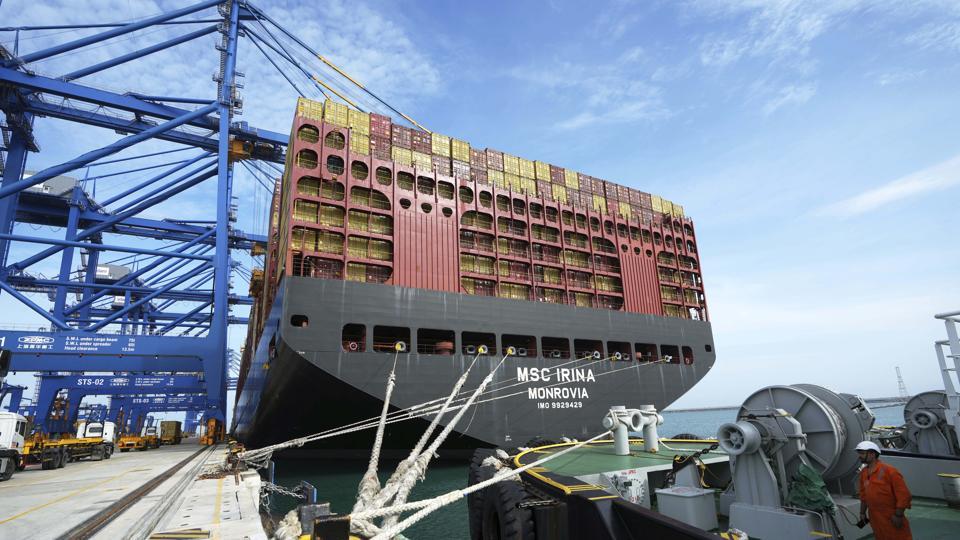
At least 14 products are under the scanner, including different chemicals, steel tubes, various types of glasses, jute items and paperboards, said a commerce ministry official who asked not to be named.
“Industry bodies, sectoral ministries and government agencies are on high alert to report any unusual import surge due to trade diversion. Based on their inputs, the government will conduct an investigation and take remedial action immediately to protect domestic units,” he added.
There has been a sharp 35% decline in Chinese exports to its biggest market, the US in May after the Trump administration announced “ Liberation Day” tariffs from April 5. Despite that China’s total exports saw a positive growth, raising suspicion that some of its America-bound merchandise is now being diverted to other markets, a second official said.
Prime facie, most of these merchandise originate from China and are shipped via those countries that have favourable trade relationship with India, this person added, requesting anonymity. “For example, there is an import surge of textured tempered coated and uncoated glass from Malaysia and virgin multi-layered paperboard from Indonesia. It is suspected that some of them originated in China and entered India through Asean FTA.”
The Asean-India Trade in Goods Agreement (AITIGA), signed by the then commerce minister Anand Sharma on August 13, 2009, has become a sore point between India and the 10-member block Association of Southeast Asian Nations (Asean). After finding that India-Asean trade deficit surged post AITIGA from from a mere $5 billion in 2010-11 to $43.57 billion in 2022-23, the Modi government has insisted on review of its terms, such as rules of origin (ROO).
Negotiations are still on between the two parties despite nine rounds of meetings.
“Talks are progressing in a positive direction and we expect to resolve all issues by the end of this year,” a third official with direct knowledge of the matter said. The 10th round of India-Asean review talks is expected to be held in New Delhi in mid-August. The matter could be resolved by October when a final round (the 11th) of talks will take place in Malaysia, he added.
While plugging loopholes in old trade agreements such as the FTA with Asean is a medium-term objective, India is also taking anti-dumping measures against any large-scale trade diversions to India, the second official said. “The commerce ministry is providing data and information on a regular basis to line ministries to ascertain any surge in imports.”
The ministry of commerce and industry plans to launch a monthly ‘Global Trade Watch’ soon, focusing on product-specific and country-specific trade strategy, the first official said. The monthly report will be circulated within the ministry from next month so that they will factor-in global opportunities and threats and monitor any unusual import surge in their respective domains, he said. Meanwhile, the Directorate General of Trade Remedies (DGTR), the erstwhile Directorate General of Anti-dumping and Allied Duties, has already initiated anti-dumping investigation on imports of thermoplastic polyurethane-based paint protection files, Broms OTBN, and para-tertiary butyl phenol coming from China.