E-Paper



Strait of Hormuz holds global economy hostage amid Iran attacks by US, Israel
This explainer covers what Strait of Hormuz is, why it matters, and what the Iran attacks by Israel and the US means for the global economy—especially India.

 Prefer HTon Google


Amid coordinated attacks on Iran by the US and Israel, and Tehran retaliation across the Gulf, all eyes are on the Strait of Hormuz—just 33 km at its narrowest, no other waterway commands such outsized influence over the global economy.
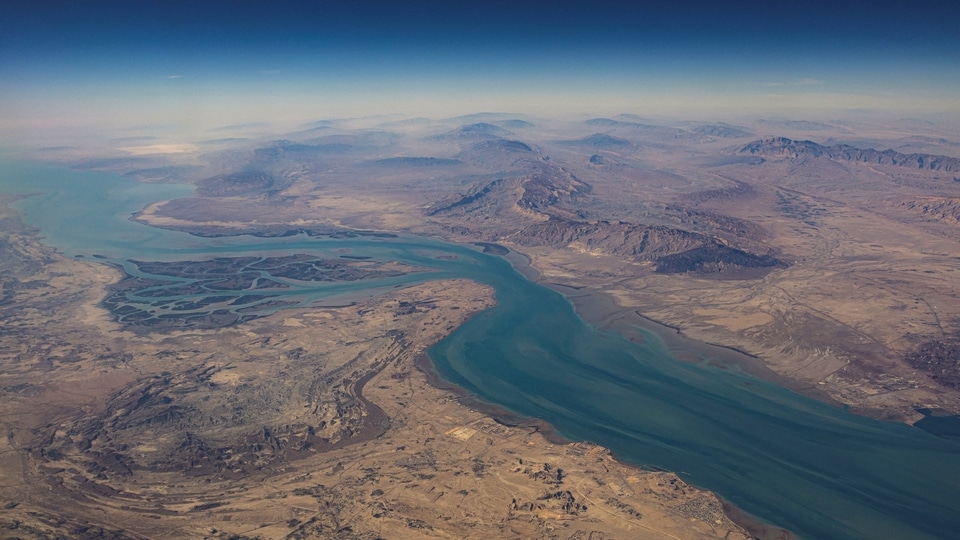
This explainer covers what Strait of Hormuz is, why it matters, and what the Iran attacks by Israel and the US means for the global economy—especially India.
What is the Strait of Hormuz?
The Strait of Hormuz is a narrow sea passage connecting the Persian Gulf to the Gulf of Oman, and, beyond that, the Arabian Sea and the Indian Ocean. It has Iran to the north and Oman and UAE to the south. The shipping lane is remarkably slim—two two-mile traffic lanes separated by a two-mile buffer zone—all within reach of Iranian shores.
Every major oil-producing nation in the Persian Gulf—Saudi Arabia, Iraq, Kuwait, the UAE, Qatar, Bahrain and Iran itself—must route its exports through this single passage. There is no overland alternative, no bypass canal, no pipelines.
Essentially, the Strait of Hormuz is irreplaceable for crude oil.
Why Strait of Hormuz is world's energy chokepoint
Roughly 20 million barrels of crude oil—or a fifth of the global consumption—pass through the Strait of Hormuz every day, according to the US Energy Information. The waterway also carries about 20% of the world's LNG supply with much of it from Qatar—the world's largest exporter. Then there's petroleum products and refined fuel. At any given hour, dozens of supertankers are in transit.
- No realistic alternative: Saudi Arabia's East-West Pipeline—a 1,200-km infrastructure to bypass the Strait of Hormuz—carries 5-7 million barrels per day to the Red Sea. The UAE's Abu Dhabi Crude Oil Pipeline adds about 1.5 million barrels per day. Combined, they don't make up half of what normally transits through Hormuz.
- The Iran factor: Iran's coastline forms the entire northern bank of the Strait of Hormuz. Tehran maintains a formidable navy fleet here, including anti-ship missiles, drones and sea mines. Tehran has in the past threatened to close Hormuz amid crises — most notably over US nuclear sanctions. As of writing this explainer, the waterway was open.
While oil markets are closed today, any threat to the Strait of Hormuz sends crude oil prices soaring 20-40% in the short-term.
Strait of Hormuz and India
Unlike Europe or even China which have pipeline networks, India relies almost entirely on seaborne crude. Its onshore refineries—including the world's largest operated by Reliance Industries Ltd. in Jamnagar, Gujarat, are designed for Gulf oil grades. Iraq—followed by Saudi Arabia and the UAE—are the biggest suppliers to India, with more than a million barrels coming through Hormuz.
It's worth noting here that crude oil makes up nearly 85% of India's total imports, making it nearly the world's third largest consumer. New Delhi has had to let go off cheaper Russian crude for a trade deal with the US, but the Venezuela route has opened.
- India's strategic reserves are thin: New Delhi holds 9.5 million barrels of strategic reserves—good enough for 9-10 days. This, even when combined with commercial reserves of 74-75 days falls short of International Energy Agency's recommendation of 90 days. Any disruption in the Strait of Hormuz due to the ongoing Iran attacks can disrupt this fragile balance.
- Dual threat — Hormuz and Red Sea: India's crude oil imports from non-Gulf sources, including from the US and Venezuela, are routed through the Red Sea via the Suez Canal. With the Houthis threatening to block that channel, the crude situation worsens for India.
- Remittances and Diaspora: About 90 lakh Indians live and work across the Gulf. With Tehran's retaliation expanding to Dubai and Abu Dhabi and even Bahrain, remittances to India comes under serious threat—as does lives of the millions.
ALSO READ | What’s at stake for crude oil as Israel, US pile up Iran attacks
To be sure, strategic importance of Strait of Hormuz is not new. The Iraq-Iran war of the 1980s was called the Tanker War as both nations attacked oil vessels in the vicinity. Today's crisis is the most severe escalation since the 1991 Gulf war.
The Strait of Hormuz, clearly, isn't just a geographical feature—but a geopolitical and economic flashpoint. Any further escalation could choke the world of its 21-mile pipeline.