
Venture capital is usually associated with moonshot technology bets. Lately, though, some venture investors have found new, more analog pursuits: sports teams, iconic real estate and even children’s toys.
Investors are looking for opportunities insulated from the AI boom, including businesses built around human experiences that ChatGPT can’t replace.
Josh Kushner, founder of investment firm Thrive Capital, is among the investors who have recently acquired stakes in some of America’s leading sports franchises, including the San Francisco Giants and a
Venture capital is usually associated with moonshot technology bets. Lately, though, some venture investors have found new, more analog pursuits: sports teams, iconic real estate and even children’s toys.
Investors are looking for opportunities insulated from the AI boom, including businesses built around human experiences that ChatGPT can’t replace.
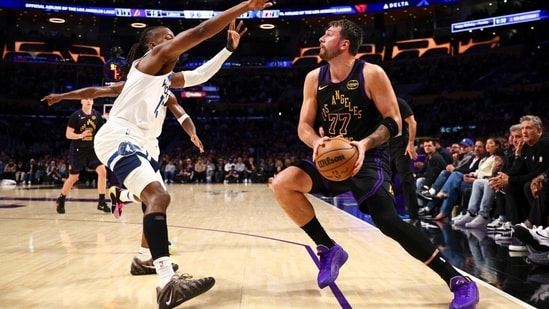
Josh Kushner, founder of investment firm Thrive Capital, is among the investors who have recently acquired stakes in some of America’s leading sports franchises, including the San Francisco Giants and a $12.5 billion deal that made the Los Angeles Lakers the most valuable sports team ever.
Jeff Bezos is part of a consortium of investors participating in a deal to buy a minority stake in the Liverpool Football Club in the U.K., alongside Facebook co-founder Eduardo Saverin, valuing the team at more than $7 billion. Marc Stad, the founder of Dragoneer Investment Group, is acquiring a controlling stake in the Minnesota Timberwolves and a group led by venture capitalist and OpenAI backer Vinod Khosla is acquiring the Seattle Seahawks.
These legendary teams are scarce assets with durable fan bases and predictable media-rights revenue and can provide wealthy investors with significant tax advantages.
Some venture firms are betting that sports teams are less vulnerable to the quick pace of AI development that has threatened to upend parts of the software, legal and financial industries.
“People want to watch actual real humans play sports,” said Sudeep Ramnani, founder of 885 Capital, an investor in Professional Fighters League, a mixed martial arts league. “It makes sense in the context of how the world is changing.”
Some investors expect the new wealth generated by the AI boom to fuel greater spending on live experiences, luxury travel, real estate and physical products.
Increasingly, investors are placing bets on niche, startup sports leagues like the Professional Fighters League, which was founded to challenge the UFC and recently merged with social-media influencer Jake Paul’s combat-sports company Most Valuable Promotions.
Investing in new sports leagues requires much less capital but comes with greater risks, some investors say. There is no guarantee they will build a real fan base, and there are concerns that shortening attention spans will make it harder to attract and retain audiences. AI-generated content is also increasingly competing for consumers’ time.
Harley Miller, founder of Left Lane Capital, is an early investor in Real American Freestyle, a family-friendly wrestling league co-founded by Hulk Hogan in 2025. Miller said the business has shown real momentum, with a growing fan base willing to travel to attend tournaments.
“These are hard assets, and they are difficult to replicate,” Miller said. “It’s not speculative stuff that is going to get mousetrapped by a new large language model release in a year.”
Left Lane is also an investor in the Pro Padel League, the Snow League—a professional winter-sports league founded by Shaun White—and League One Volleyball.
“These are not vanity trophy assets for us,” said Miller, whose firm’s other bets include consumer brands like Blank Street Coffee and 7th Street Burger. “We are looking to make venture-style returns,” typically a multiple of the original investment.
The hunt for AI-proof businesses has extended beyond sports and entertainment to hard assets like manufacturing and power.
Barry Diller’s People Inc. is in negotiations to take over MGM Resorts in a deal that values the casino giant at over $12 billion.
“While everyone was running into all sorts of ‘AI opportunities,’ I wanted to run the other way,” Diller said in an earlier interview with the Journal.
Beth Ferreira, a partner at the investment firm run by tennis star Serena Williams, which raised $111 million for its debut fund in 2022, calls investments spanning physical products, travel and wellness the “experience economy.” She has focused her efforts there with a thesis that people are spending more of their lives behind screens, making the moments they spend in the physical world more valuable.
“We’re really looking for founders who are building where technology personalizes the experience and optimizes the experience but doesn’t replace the experience,” Ferreira said.
Serena Ventures has met with potential investment targets from travel startups to a curling league. One place it has deployed capital is StickerBox, an AI-enabled children’s toy company. Kids can ask StickerBox to create an image, which the toy generates using AI and then prints as a physical sticker.
That bet has already paid off. StickerBox was acquired by Spin Master, the toy company that makes Paw Patrol play sets, in August. The sale valued StickerBox at between $35 million and $50 million.
“While it’s a counter bet against AI, it’s part of the rise of AI,” Ferreira said.
Write to Kate Clark at kate.clark@wsj.com
One Subscription.
Get 360° coverage—from daily headlines
to 100 year archives.
Archives
HT App & Website