Warren Buffett can take his time to reveal trades in Bank of America Corp. stock now that his conglomerate’s stake has been trimmed below a 10% regulatory threshold requiring rapid disclosure.
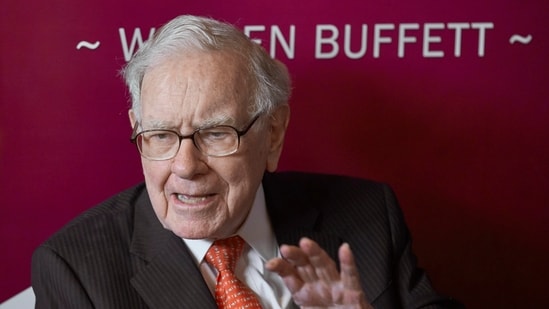
A selling spree that began in mid-July has helped his Berkshire Hathaway Inc. reap about $10.5 billion from its massive, years-long investment in the bank, whittling down the holding to 9.99% of the lender’s outstanding shares.
Through 15 rounds of disposals, US rules have required Buffett to disclose trades within a few days. But a regulatory filing Thursday shows the stake is now small enough that Buffett may provide updates quarterly — potentially leaving fellow shareholders in the dark for months if he sells further.
That may quiet a drama that keeps weighing on the minds of investors.
“At a minimum, we suspect this holder getting below 10% would lift a psychological hurdle and could allow the stock to regain some forward momentum,” Piper Sandler analyst Scott Siefers wrote in a note this month.
Bank of America’s stock has underperformed throughout the liquidations. It had been No. 1 in the 24-company KBW Bank Index this year as of July 16. Since then, it has been the second-worst performer. In the latest round, Berkshire unloaded $382.4 million of shares over three days.
{{/usCountry}}Bank of America’s stock has underperformed throughout the liquidations. It had been No. 1 in the 24-company KBW Bank Index this year as of July 16. Since then, it has been the second-worst performer. In the latest round, Berkshire unloaded $382.4 million of shares over three days.
{{/usCountry}}Buffett, 94, hasn’t commented on why he’s pulling back from the investment, which had long lent his imprimatur to Bank of America Chief Executive Officer Brian Moynihan. The billionaire’s Omaha, Nebraska-based conglomerate plowed $5 billion into the bank in 2011. In 2019, it applied for Federal Reserve approval to boost the holding beyond 10%.
Berkshire remains the bank’s biggest stockholder, with a stake worth about $31 billion, based on Thursday’s closing price. This year’s disposals have already helped Berkshire recoup more than it paid to acquire the holding.