California is set to end the sale of all new gas-burning cars by 2035 under the rules which are expected to be approved on Thursday. The move is aimed at dramatically accelerate the transition to electric vehicles across the United States if other states follow the same, Bloomberg reported.
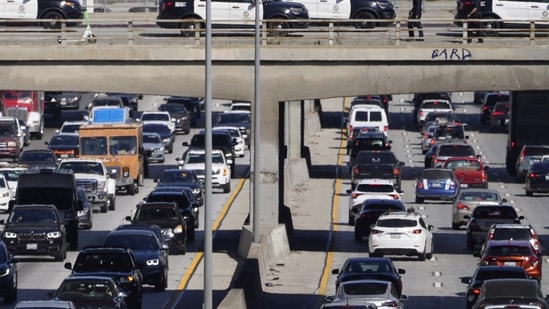
In 2020, California governor Gavin Newsom had announced the goal in an executive order. However, the new regulations will set a timetable to achieve it. It will require the carmakers to increase their sales of zero-emission cars. At least 17 other states including Colorado, Connecticut, Delaware, Maine, Maryland, Massachusetts and New Jersey follow California's auto-emission standards. The vote by the California Air Resources Board will have implications beyond the state borders and will force the automobile industry to speed up its switch to electric cars. California is the birthplace of Elon Musk's Tesla Inc and has been America's top market for the electric vehicles. The electric vehicles account for 15 per cent of the new cars registered this year, as per the California New Car Dealers Association records.
The new regulations would mean setting annual targets for boosting that percentage, starting at 35% in 2026 and hitting 68% in 2030. Plug-in hybrids and hydrogen-fuel cars are also included towards the goals. California has its own clean-vehicle incentive programme, which offers rebates of as much as $7,000 towards the purchase of zero-emission vehicles, Bloomberg report says. The cars costing more than $45,000 don't qualify for the rebate. The move is in sync with US President Joe Biden's efforts to push electric car sales. Last week, he signed The Inflation Reduction Act which includes tax credits of up to $7.500 to electric vehicle buyers subject to income restrictions. Most of the automakers have already announced plans to expedite production of electric vehicles. The industry is worried about getting locked into specific timelines for their adoption and many consumers may not be ready to dump gasoline. Electrics made up less than 6% of new car sales in the first half of this year, according to the Edmunds automotive information service. And EV prices, already higher than gas-powered cars, are rising as the war in Ukraine, supply chain problems and rising demand make the metals inside their rechargeable batteries more expensive.
{{/usCountry}}The new regulations would mean setting annual targets for boosting that percentage, starting at 35% in 2026 and hitting 68% in 2030. Plug-in hybrids and hydrogen-fuel cars are also included towards the goals. California has its own clean-vehicle incentive programme, which offers rebates of as much as $7,000 towards the purchase of zero-emission vehicles, Bloomberg report says. The cars costing more than $45,000 don't qualify for the rebate. The move is in sync with US President Joe Biden's efforts to push electric car sales. Last week, he signed The Inflation Reduction Act which includes tax credits of up to $7.500 to electric vehicle buyers subject to income restrictions. Most of the automakers have already announced plans to expedite production of electric vehicles. The industry is worried about getting locked into specific timelines for their adoption and many consumers may not be ready to dump gasoline. Electrics made up less than 6% of new car sales in the first half of this year, according to the Edmunds automotive information service. And EV prices, already higher than gas-powered cars, are rising as the war in Ukraine, supply chain problems and rising demand make the metals inside their rechargeable batteries more expensive.
{{/usCountry}}The average sales price for an EV in July was nearly $62,900, according to Edmunds, compared with $47,200 for all vehicles. "It's a worthy goal, but may be unrealistic given the charging infrastructure and likely increasing demand for power,” Brian Moody, executive editor for Kelley Blue Book and Autotrader, said in an emailed statement.