With schools closed for over two months now because of the Covid19 pandemic, the only source of learning for students is through mobile, SMS, television, radio or social media. For students from families that can afford it, keeping up with studies is not much of a problem. But what happens to those who cannot afford a Wi-Fi connection at home, let alone a smartphone?
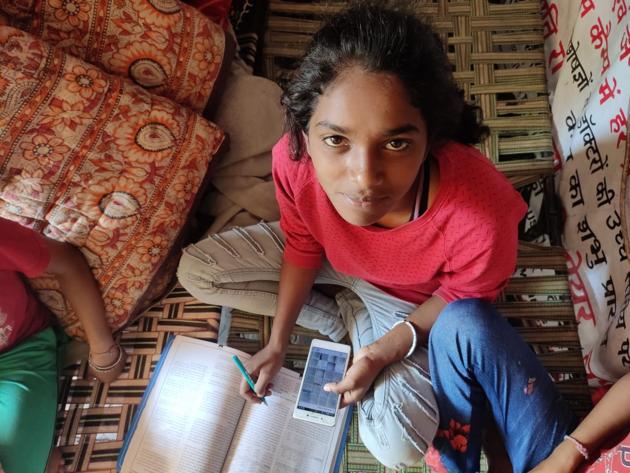
Consider this, both Agamjot Bajri and Harpali Chauhan study in Class 10. Son of two marketing agents, Bahri is a student of Chitkara International School in Sector 25. Logging in to an online class comes easy to him as he has an iPhone and four computers. Chauhan, who studies in Government High School (GHS), Sector 24, can only join her e-class through her daily wager father’s mobile phone, which she also shares with four of her siblings.
Sumedha Gautam, a teacher at a Sector 38 based school, says, “Now access to the internet and technology is a class-marker for lakhs of students. This means economically disadvantaged students will not get as much access to quality education as their peers will, which will push them even behind in studies.”
Bahri’s mother, Deepika complains that he has been spending too much time on his mobile phone and computers during the lockdown.“Earlier it was just an hour and now it stretches to over 10 hours, starting with social media, going on to online classes, games, coaching classes, cooking classes and finally back to social media again,” she says.
{{/usCountry}}Bahri’s mother, Deepika complains that he has been spending too much time on his mobile phone and computers during the lockdown.“Earlier it was just an hour and now it stretches to over 10 hours, starting with social media, going on to online classes, games, coaching classes, cooking classes and finally back to social media again,” she says.
{{/usCountry}}In comparison, Shiv Kumar, the son of a waste collector and Class 6 student at Government High School, Dadu Majra, is helping his father with the collection work and so has no time for studies. “I don’t have access to a mobile phone at all, let alone the online classes,” adds Kumar
Meeting overheads is not easy for families living under constrained budgets. Class 12 student Nishu’s mother is a domestic helper who recharges her mobile phone with a ₹10 voucher for 1 GB data only when her teacher sends assignments on WhatsApp.
Comparatively, the spends of a middleclass family on WiFi and mobile connections probably match what people like Nishu’s mother earn after a month’s hard labour.
“I spend ₹2,000 every month on Wi-Fi and around ₹1,000 on mobile data so that my son can access the online classes,” says Khushpreet Singh, a software engineer, whose son, Gagan, is in Class 11.
The parents of Manjot, a Class 10 student in a Sector 26 based private school, have also subscribed to an expensive e-learning app to help him stay ahead of his class in academics.