The Karnataka capital Bengaluru, is popularly known as the ‘Silicon Valley of India’ and the ‘start-up capital of India’, but citizens have neglected to upkeep one of its first titles, ‘the garden city’.
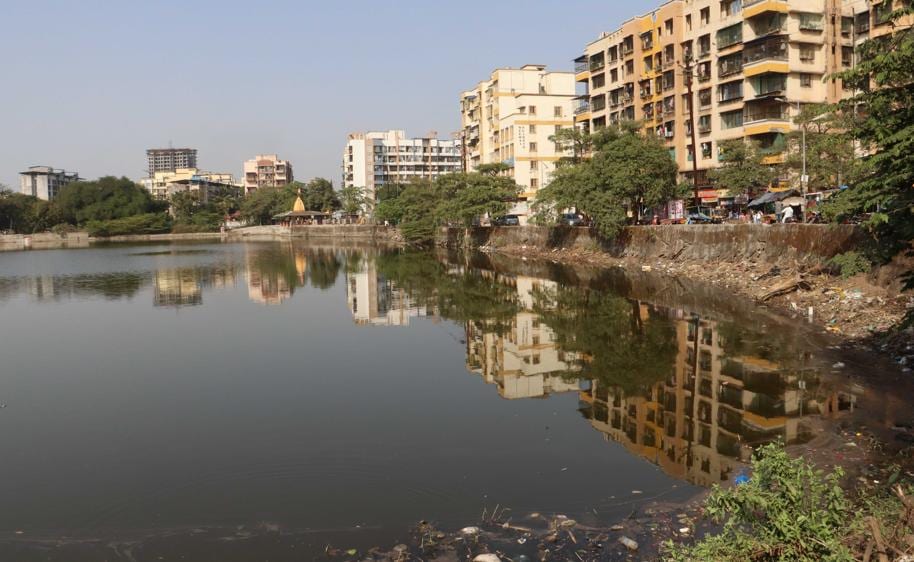
While employment opportunities and ease of conducting business have soared in the rapidly-growing city, millions today struggle for piped water, having to depend on a horde of privately-run tankers that pull water from wells inside and outside the city and deliver it to homes.
Former Prime Minister H D Deve Gowda launched an awareness campaign across the state on Tuesday in this matter. Called the ‘Janata Jaladhare’, the campaign was launched in Ramanagar, with the senior JD(S) leader saying, "We are in a crisis fighting for every drop of our water, and there is no question of letting farmers down. Let any party invite me for a struggle on water issues. I am ready to take part in it.”
A survey in March this year warned that the shortfall in water supply in 2021, as estimated by the Bangalore water supply and sewerage board (BWSSB), is 650 million litres per day (MLD), which is likely to go up to 1,450 MLD by 2031.
Bengaluru's size has more than tripled in just over a decade to 740 square kilometres, by swallowing dozens of settlements and villages in its periphery.
{{/usCountry}}Bengaluru's size has more than tripled in just over a decade to 740 square kilometres, by swallowing dozens of settlements and villages in its periphery.
{{/usCountry}}The city's population has also more than doubled to about 13 million since 2001 and is predicted to hit 20 million by 2031, a report said. Bengaluru's administration is therefore said to have been unprepared for the exponential growth in both the city itself and its constantly growing needs.
The BWSSB is therefore accused on grounds of not adequately planning to cater for Bengaluru's water requirements.
Bengaluru gets its water from a single source, the Cauvery river at Torekadinahalli. Around 18 thousand million cubic feet (tmcft) of water has been allocated currently to the city.
The water board is tasked with pulling nearly all of Bengaluru's water supply from the Cauvery River, which is more than 100 kilometres away from the city. Moreover, water needs to be pumped uphill to reach the sprawling city, which adds a cost of more than 6 million dollars a month in electricity.
However, good news is that the board is adding a new pipeline from the Cauvery, which is estimated to give the city an extra 750 million litres of water a day once the project is finished in 2023.
Are Bengaluru's sewage treatment plants enough for the city?
Bengaluru generates around 1,440 MLD of sewage, which is called one of the city's prime assets (apart from rain) when it comes to preventing doomsday on when the city runs out of water. So is the city recycling and treating enough sewage to delay the doomsday?
While Bengaluru has 24 sewage treatment plants (STPs), none of them treat the wastewater according to the norms prescribed by the Central Pollution Control board, a website reported in 2019.
The BWSSB has the capacity to treat only 1,057 MLD of sewage, with 110 villages in the city’s outskirts, which were added to the Bruhat Bengaluru Mahanagara Palike (BBMP) limits in 2005, not having any sewage connections at all, a The News Minute report said. The wastewater from these areas have previously been reported to flow directly into the lakes and ultimately the Vrishabhavathi and the Dakshina Pinakini Rivers.
Bengaluru has however finally reached a stage where it has the potential to treat all the waste generated by its residents, The New Indian Express reported. A second STP has been added in Rajarajeshwari Nagar, which has reportedly helped the city attain this milestone.
Moreover, the new Vrishabhavathi Valley Plant, adjacent to the Metro station, can treat up to 150 Million Litres Per Day (MLD) of sewage alone, the report said.
What can Bengaluru do to save more water?
Dr. Lingaraju Yale, a geo-hydrologist and former national director of the River Rejuvenation Project at the Art of Living, said, “Geologically, we have to consider the tectonic plates of a particular geographical area and note where the springs, tanks and bore wells are. We then plant trees along the natural path of water flow and increase the soil’s water absorption capacity. As groundwater surges, streams and springs become more affluent and join the river from underground. Over a period of six months, the closest river would have a strong flow and a noticeably significant increase in volume.”
Dr. Yale has worked to rejuvenate dying rivers across South India for over four decades. “The Western Ghats here are the groundwater rechargers. Most areas of Bengaluru have lost the capability to absorb rainwater. It is a direct consequence of urbanization. The city also needs a customized sewage management model. We see water seeping away during the monsoons, even causing floods because of our flawed drainage system,” he added.
“Hence, the natural paths of water flow must be identified and obstructions to these must be removed. With increasing green cover and letting water flow naturally in its geologically decided path, more water can be conserved. With Bengaluru’s favourable amounts of rain, we could have done wonders and stood as an example for managing water resources,” Dr. Yale said.