In a landmark development for forensic science in Karnataka, investigators used an advanced superimposition technique, never before employed in the state, to identify former Hassan MP Prajwal Revanna as the person seen in video evidence linked to a rape case.
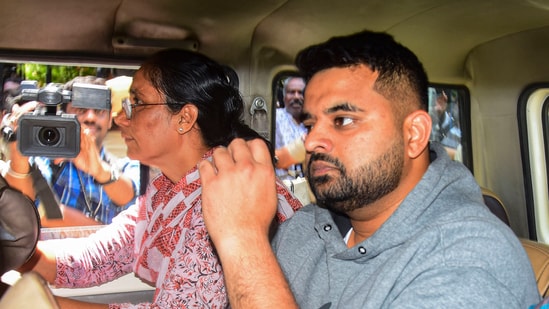
According to a report by The Hindu, the forensic approach involved matching the scene of the crime and specific bodily features, including genitalia, of the accused with visuals from sexual assault videos where the perpetrator's face was not visible.
(Also Read: ₹540-a-month prison life">Mutton Fridays, chicken Saturdays: Inside Prajwal Revanna’s ₹540-a-month prison life)
The details were confirmed in the judgment by Judge Santosh Gajanan Bhat of the Special Court of Session for criminal cases involving sitting and former MPs/MLAs, who convicted Revanna for rape, the report added.
He praised the Special Investigation Team (SIT) for their thorough and technologically advanced probe, calling it a “welcome step” and acknowledging the “limpid examination” carried out by the team. The SIT was led by B.K. Singh, Additional Director General of Police (ADGP), Criminal Investigation Department (CID).
{{/usCountry}}He praised the Special Investigation Team (SIT) for their thorough and technologically advanced probe, calling it a “welcome step” and acknowledging the “limpid examination” carried out by the team. The SIT was led by B.K. Singh, Additional Director General of Police (ADGP), Criminal Investigation Department (CID).
{{/usCountry}}Following Revanna’s arrest, a medical examination was conducted, and photographs of various parts of his body, including his genitals, were taken for comparison with visuals from the crime scene. Since the perpetrator’s face was not visible in the videos, investigators relied heavily on scientific comparisons, the report further added.
Photographs were also taken of the rooms where the alleged assaults occurred, one at a farmhouse in Gannikada and another at Revanna’s residence in Basavanagudi, to be superimposed over footage from the videos.
The forensic analysis extended beyond room environments according to the publication. “The superimposed image of the victim at the place of incident, and also the body parts, the fabric that was worn, were all compared. Further, the photograph of the accused concerning a specific identification mark, when superimposed and compared with the image, would indicate that the very same mole and identification mark matched with each other,” the judgment stated.
Further forensic evidence included a rare vein-pattern matching technique too. This first-of-its-kind deployment of forensic superimposition played a pivotal role in securing the conviction of the high-profile accused.
(Also Read: Bengaluru metro yellow line: Trains to run from 5 am to 11 pm, but only every 25 minutes)