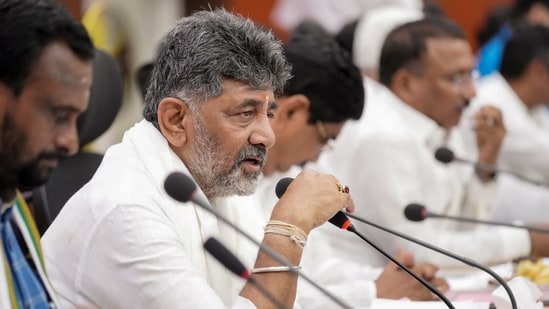
Karnataka Chief minister D K Shivakumar said on Monday that the state was preparing for worsening water and power shortages over the prevailing rainfall deficit that has spurred drought-like conditions in 200 out of 239 taluks in the state.
The state has already declared 101 taluks drought- hit, while the government plans to classify the remaining affected taluks under central guidelines. Shivakumar said crop losses were extensive and falling groundwater levels were hurting water supplies.
The power shortage is also becoming more acute, he said. Peak demand crossed 19,000 MW last week, forcing the state to buy electricity at ₹11 to ₹12 per unit. “Total power usage has grown due to increased consumption during night hours,” he said. The state’s rainfall deficit has deepened in September. The state logged only about 10 mm of rain against a normal 51 mm, which accounted for an 81% shortfall, government data showed.
Rainfall has remained below normal since the monsoon began in June. June recorded 116 mm against a normal 199 mm, a deficit of 42%. July received 192 mm against 271 mm, a 29% deficit, while August recorded 169 mm against the normal 220 mm.
{{/usCountry}}Rainfall has remained below normal since the monsoon began in June. June recorded 116 mm against a normal 199 mm, a deficit of 42%. July received 192 mm against 271 mm, a 29% deficit, while August recorded 169 mm against the normal 220 mm.
{{/usCountry}}Also Read: Dy CM Parameshwara urges CWMA to reconsider directions to release water to TN
Shivakumar said the state’s electricity generation capacity had improved, but additional power could still be procured from other states if required, at an extra cost.
“Irrespective of which state generates power, it can be supplied to Karnataka. However, this will have a supply cost. A meeting was held recently with energy minister KJ George and officials about the issue,” he said.
Deputy CM G Parameshwara on Monday asked the Cauvery Water Management Authority to reconsider its directions for releasing water, saying Karnataka’s reservoirs had fallen to levels that required the government to protect drinking water supplies. “Today, the storage in Kabini dam is already below 50 per cent, while Harangi dam has also fallen to around half of its capacity. Krishnaraja Sagar dam too has not reached the level we had expected and is around 55 to 60%,” he said.
Also Read: Karnataka: Heavy downpour eases water distress, train services affected, three killed
Karnataka had not refused to release water when supplies were adequate, he said. “When the situation is like this, how can we release water? The government has already decided that water should not be used for crops and should instead be conserved for drinking purposes,” added the minister.