Despite housing one of the country’s largest networks of government-run AMRIT pharmacies and Jan Aushadhi centres, the Post Graduate Institute of Medical Education and Research (PGIMER) procured majority of medicines from private chemist shops in 2024-25, an audit by the Indian Audit and Accounts Department has revealed.
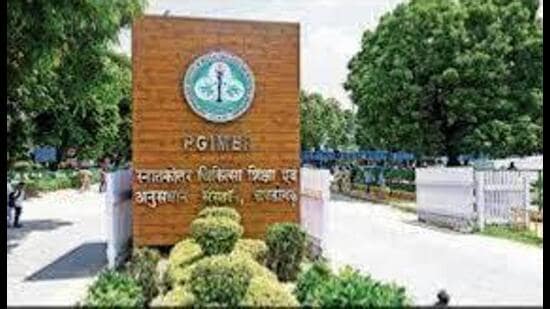
The audit found that 66% of the institute’s total medicine purchases in 2024-25 were made from private chemists, even though PGIMER’s procurement policy gives first preference to Jan Aushadhi centres and second preference to AMRIT pharmacies. Approved private chemists are meant to be the last procurement option.
According to the audit, procurement from AMRIT pharmacies and Jan Aushadhi centres accounted for 58% of PGIMER’s total medicine purchases worth ₹7.29 crore in 2021-22. Their combined share increased to 89% in 2022-23, when the total medicine procurement stood at ₹5.7 crore, and 90% in 2023-24 when ₹6.7 crore worth of medicines were purchased, before plunging to 34.6% in 2024-25. Interestingly, the year 2024-25 saw the highest medicine procurement of the four-year audit period, at ₹8.85 crore.
What rules say
{{/usCountry}}What rules say
{{/usCountry}}According to the provisions of General Financial Rules 2017 and its subsequent amendments, medicines approved under regular purchase of the institute are procured through open press tenders or limited quotations directly from manufacturing/marketing firms since these procurements involve bulk quantities. The medicines that are prescribed but not commonly used are arranged through local purchase mechanisms from Jan Aushadhi, AMRIT Pharmacy and approved vendors under rate contract. Local bulk purchases of medicines from Jan Aushadhi, AMRIT Pharmacy and approved vendor on rate contract are only done as a stop-gap arrangement by collecting proforma invoices.
In case the medicines are not available through regular hospital supply, these are to be purchased locally by giving first preference to Jan Aushadhi centres, followed by AMRIT pharmacies, the institute’s rate contract system and, lastly, approved private chemists. Preference is also to be given to generic medicines wherever available.
AMRIT, Jan Aushadhi short of stock: PGIMER reply to audit
The PGIMER, in its reply to the audit department, said that it was left with no option but to procure medicines from private chemists as the AMRIT and Jan Aushadhi centres did not have adequate stock. It further claimed that after receiving no response regarding arrangement of medicines, drugs for staff clinic beneficiaries had to be procured from approved private chemist shops during 2024-25.
The audit rejected the explanation, noting: “The reply of the institute is not acceptable as AMRIT pharmacy was to provide all medicines at moderate prices compared to commercial shops. For this reason, it was provided shops at central public works department rates which were much lesser than the prevailing market rates.”
According to the audit, an AMRIT pharmacy located in the emergency block pays a monthly rent of ₹70,591, while a private medical outlet previously operating from the same area pays substantially higher. Despite these concessions, the institute was unable to meet its medicine requirements through the government-supported pharmacies, the audit observed.
PGIMER has one of the highest numbers of AMRIT pharmacies in any public sector hospital in the country. While the institute now has 14 AMRIT stores, 10 were operational during 2024-25.
The audit further observed that Jan Aushadhi centres, which were allotted free space inside the institute, supplied only 2.59% to 6.53% of medicines during the audit period. Under the Memorandum of Understanding (MoU) signed between PGIMER and Hindustan Latex Limited, AMRIT pharmacies are required to ensure availability of medicines prescribed by various departments of the institute so that patients are not referred to private medical outlets.
A PGIMER official said Jan Aushadhi centres largely stock medicines linked to government schemes such as Ayushman Bharat, while AMRIT pharmacies maintain a wider range of medicines, including costly drugs and implants at discounted rates. The official added that medicines for rare diseases and certain implants are sometimes unavailable through AMRIT pharmacies and may need to be sourced from private suppliers due to their specialised nature and high cost.
When contacted, PGIMER’s official spokesperson said, “It has been observed that medicines procured on open tenders are more cost-effective compared to local purchases. Jan Aushadhi has an inventory of a very limited number of medicines which are mostly available in hospital supply. Medicines from approved vendors are procured exclusively for staff clinic beneficiaries and strictly in accordance with the approved procedures of the Institute. However, it is mentioned that 100% supply of medicines that are not available in the pharmacy, particularly for beneficiaries under schemes such as Ayushman Bharat, Janani Shishu Suraksha Karyakaram, Himachal healthcare and central government health scheme, and are arranged through AMRIT pharmacy.
An AMRIT pharmacy official, requesting anonymity, disputed the institute’s claim. “Our share of medicines supplied to PGIMER reduced significantly in 2024-25 because the institute did not place procurement orders with us for staff clinic beneficiaries. There was no shortage of medicines from our side. We cannot provide medicines unless orders are placed,” the official said.