A social audit of 444 government schools in Shimla district pointed out that 81% of the schools facility of clean drinking water while 43% are without safety fencing pointing towards deficiencies in infrastructure, basic amenities, student safety, child protection and academic monitoring, raising serious concerns over the implementation of Right to Education (RTE) standards in the state capital.
A comprehensive social audit of schools operating under the Sarva Shiksha Abhiyan (SSA) in Shimla district was conducted under which 444 government schools were covered. The team from Himachal Pradesh University, Shimla, is conducting a comprehensive social audit across all the 12 districts of the state and the reports along with findings will be submitted to the state government after one month for taking corrective measures. Shimla was the last district while the audit of 11 districts has already been completed. The audit of 444 schools in Shimla district represents the first phase of the district-level assessment, with the remaining schools expected to be covered in four subsequent phases.
47% of surveyed schools lacked adequate classroom space
The audit found that nearly 47% of surveyed schools lacked adequate classroom space, including sufficient rooms for teaching and non-teaching staff.
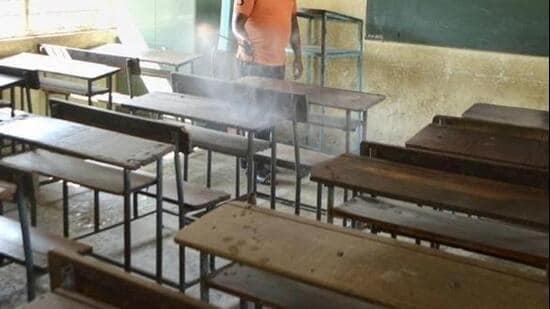
Around 78% of schools had inadequate or only partial furniture, forcing students in many institutions to study without proper seating arrangements. More than 43 % of surveyed schools did not have boundary walls or fencing, potentially exposing students to safety risks.
{{/usCountry}}Around 78% of schools had inadequate or only partial furniture, forcing students in many institutions to study without proper seating arrangements. More than 43 % of surveyed schools did not have boundary walls or fencing, potentially exposing students to safety risks.
{{/usCountry}}At the same time, nearly 79 % of schools were located in areas without motorable road access, thus the lack of connectivity forced students to walk long distances.
Around 23% of schools did not have functional toilets for girls, while approximately 30 % lacked functional toilets for boys. The audit further found that 5% of schools did not have separate kitchens for the Mid-Day Meal programme.
These findings were presented at a public hearing in Theog on Wednesday attended by more than 2,100 stakeholders, including parents, teachers, School Management Committee members, elected representatives, education officials and members of the local community. Himachal education minister Rohit Thakur participated in the hearing and responded to grievances raised by the public, with several issues being taken up on the spot.
Thakur said, “Our state has many achievements in education and ranks fifth in overall performance in the country, but we have many shortcomings as well, which have been pointed out in this social audit report. We will overcome all these deficiencies and gaps in the coming times.”
The social audit was conducted by a team from Himachal Pradesh University under the leadership of Dr Arpana Negi and Dr Randhir Ranta. The team assessed 444 schools, nearly 20% of the 2,068 schools in Shimla district. The remaining institutions will be covered in four subsequent phases.
“This comprehensive report points to numerous challenges and gaps in the school education system. The performance of Shimla schools falls short of the quality standards guaranteed under the Right to Education Act,” said Dr Ranta.
‘Menstrual hygiene management needs urgent attention’
The audit pointed out that the menstrual hygiene management required immediate attention as the audit pointed out that more than 13% of schools did not provide sanitary pads to adolescent girls.
The audit team said access to menstrual hygiene facilities was important not only for health and dignity but also for ensuring regular attendance among adolescent girls.
School safety committees missing
School safety committees had not been constituted in nearly 58% of the schools surveyed, according to the findings. Complaint and suggestion boxes were also absent in around three-fourths of the institutions, limiting formal avenues for students and parents to report grievances.