
Another minister opposed the proposed move of the Himachal Pradesh government to create new districts, saying that the creation of new districts should only be considered after the Census is completed.
In October this year, the state government constituted a four-member commission headed by retired high court judge Dharam Chand Chaudhary. Approved by the cabinet in May, the decision reopens a politically sensitive issue as the state prepares for assembly elections in December 2027. This marked the first major administrative reorganisation exercise in the state in 54 years. The last reorganisation occurred on September 1, 1972, when three new districts were carved out of Kangra, increasing the total from nine to 12.
However, the move has not been accepted by the cabinet ministers. After public works department minister Vikramaditya Singh’s opposition to the division of Shimla district, and MLA Raghubir Singh Bali’s opposition to the division of Kangra district, now agriculture minister, Chander Kumar, has not explicitly opposed the move, but has offered some advice to the government.
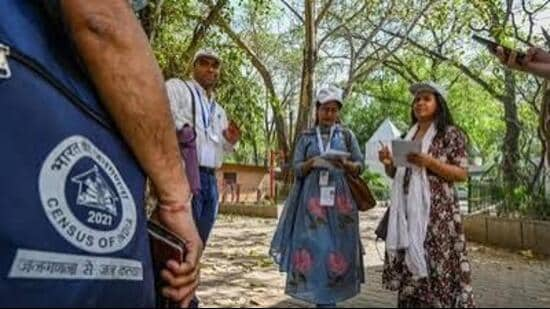
Chander Kumar, while speaking to the media in Shimla on Friday said, “It would be premature to discuss the creation of new districts at this stage. The census must be completed first, and administrative requirements should then be assessed based on the population data. Creating new districts without concrete data and a clear necessity could impose an additional financial burden on the government.”
{{/usCountry}}Chander Kumar, while speaking to the media in Shimla on Friday said, “It would be premature to discuss the creation of new districts at this stage. The census must be completed first, and administrative requirements should then be assessed based on the population data. Creating new districts without concrete data and a clear necessity could impose an additional financial burden on the government.”
{{/usCountry}}Kumar has questioned the very necessity of creating new districts. He said that creating a new district requires establishing an entirely separate administrative infrastructure—ranging from a deputy commissioner’s office to the deployment of officials, staff, and other administrative resources across various departments.
“This would increase government expenditure, potentially diverting a significant portion of the budget—otherwise earmarked for development—toward maintaining this administrative apparatus,” he said.
Differences within Congress over creation of new districts: Kashyap
Former BJP state president and Member of Parliament Suresh Kashyap raised questions regarding the internal divisions within the Congress concerning the creation of new districts. He pointed out that ministers and MLAs within the Congress government are expressing conflicting views on the matter, which casts doubt on the government’s policy clarity and the level of coordination among its leadership.
Referring to Kumar’s statement, the BJP MP said that citing the potential for increased administrative expenditure, the minister suggested that such a process should only be considered after a census.
Kashyap said that chief minister Sukhvinder Singh Sukhu must clarify the government’s actual policy regarding the creation of new districts. “The government should disclose the extent to which it has assessed the additional expenditure, public amenities, and development-related requirements arising from the administrative reorganisation,” Kashyap added.
ABOUT THE AUTHOR
Shailee Dogra is a Principal Correspondent covering Himachal Pradesh. While working with Hindustan Times since February 2006, her journalism experience spans across covering crime, court, Mohali, Panchkula, in addition to covering the Punjab and Haryana High Court. Reporting for Himachal Bureau, she covers politics, security, public policy, finance, industries and commerce, rural development, legal affairs, environment. Her focus is the socio-political landscape of the hill state, with a specific emphasis on the environment, forest conservation, drug menace, affairs related to tribal areas of the state.