
 E-Paper



Dalai Lama’s ‘amchis’ to now get recognition
Sowa Rigpa is commonly known as ‘amchi’, a localised form of Tibetan medicine, which is one of the oldest, living, and well-documented medical traditions of the world

 Prefer HTon Google


Himachal Pradesh government on Thursday gave its nod to provide a no-objection certificate (NOC) for the recognition of medical degrees by Men-Tsee-Khang Sowa Rigpa College and Hospital and Tibetan Medical and Astro Institute set up by Tibetan spiritual leader The Dalai Lama in Dharamshala.
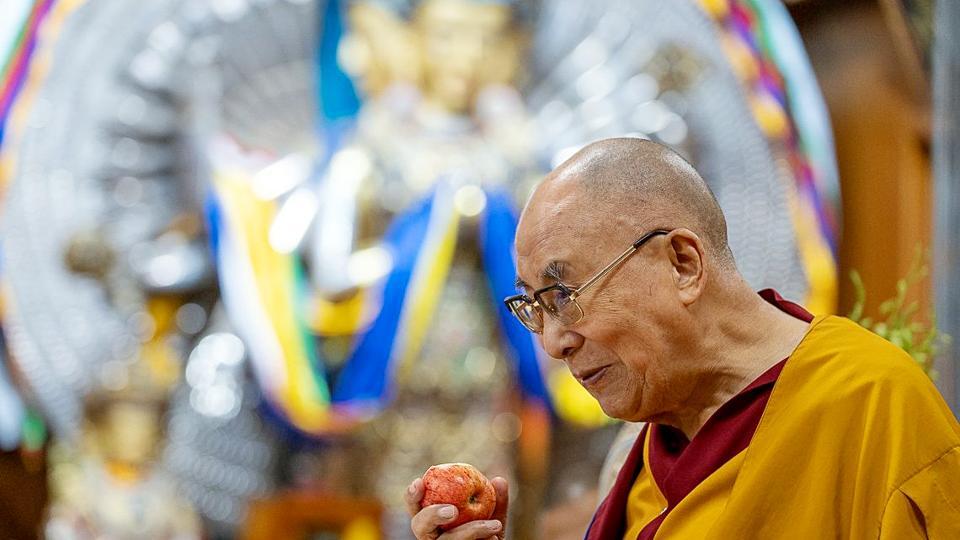
The Tibetan government-in-exile, better known as the Central Tibetan Administration, set up by The Dalia Lama had sought permission from the government for granting Bachelor of Sowa Rigpa Medicine and Surgery degrees under the provisions of Indian Medicine Central Council (Requirement of Minimum Standards for under-graduate Sowa-Rigpa Colleges and attached Hospitals) Regulations, 2017. The institute in Dharamshala is in the vicinity of the Central Tibetan Administration secretariate.
Sowa Rigpa is commonly known as ‘amchi’, a localised form of Tibetan medicine, which is one of the oldest, living, and well-documented medical traditions of the world. It has been a popular practice in Tibet, Mongolia, Bhutan, some parts of China, Nepal, Himalayan regions of India and a few parts of the former Soviet Union.
There are various schools of thought about the origin of this tradition. While some scholars believe that it was originated from India, some say China and others consider it to be born out of Tibet itself. The majority of theory and practice of Sowa Rigpa is similar to ayurveda. The first ayurvedic influence came to Tibet during the third century AD, but it became popular only after the seventh century with the approach of Buddhism to Tibet. Thereafter, this trend of exportation of Indian medical literature, along with Buddhism and other Indian art and sciences, continued till the early 19th century.
Traditionally, the amchi practitioners (amchis) are trained under the traditional educational system, either under private guru-shishya tradition or under gyud-pa (lineage) system in families in which the knowledge is passed down from father to son through generations.
It takes several years to become a skilful amchi, which requires hard theoretical and practical training. After finishing his/her training, the trainee amchi has to give an examination in front of the entire community in the presence of a few expert amchis in a ceremony to confer the designation of amchi on him/her.
For higher training, those from the Indian Himalayan region used to go to study with reputed scholars or to any of the medical colleges in Tibet in the past. Some from these regions preferred to go to Tibet to begin their education of Sowa Rigpa.


